You can trace sprinklers back to Leonardo da Vinci’s 15th‑century sketches, which imagined a pipe network that could flood a kitchen, though they lacked heat‑sensitive valves and needed manual triggering. The first practical fire‑extinguishing device appeared in 1723 when Ambrose Godfrey paired a gun‑powder charge with a liquid reservoir to blast water onto a blaze. A larger‑scale manual system was installed in London’s Theatre Royal in 1812, using a 95,000‑liter reservoir and perforated pipes. Automatic, heat‑responsive designs emerged in the 1870s with Philip W. Pratt’s valve and Henry S. Parmalee’s glass‑bulb sprinkler, leading to Grinnell’s 1881 Model A and the 1890 glass‑disc head that refined reliability and set the stage for modern standards. If you keep exploring, you’ll see how each breakthrough shaped today’s fire‑safety codes.
Fire Sprinkler History: 15th‑Century Roots
When you trace the origins of fire‑sprinkler technology back to the 15th century, Leonardo da Vinci’s sketches emerge as the earliest documented prototype. You’ll notice his design relied on simple pipe network concepts: a series of overhead pipes feeding nozzles that could flood a kitchen when a fire ignited a conveyor oven. Because the system lacked heat‑sensitive valves, you had to trigger it manually, making it a rudimentary manual triggering system. The test showed water poured out uncontrollably, over‑flooding the space and proving the concept impractical for real‑world use. Nonetheless, these sketches established a theoretical framework that later engineers refined, linking Renaissance experimentation to the evolution of perforated pipe sprinkler systems. Modern sprinklers rely on thermal activation to discharge automatically when exposed to sufficient heat. Contemporary standards typically set the activation temperature near 155 °F for standard sprinklers, ensuring rapid response while minimizing false activations. Early fire‑suppression systems often used gravity‑fed reservoirs to deliver water without the need for pumps.
Fire Sprinkler History: 1723 Gun‑Powder Prototype
How did an 18th‑century chemist turn a cask of liquid into the world’s first automated sprinkler? Ambrose Godfrey, a German‑born apothecary, patented a device in England in 1723 that historians label the earliest fire extinguisher and the first successful sprinkler. You’ll see a cask of extinguishing liquid paired with a pewter chamber holding gunpowder, linked by fuses. When you pull the fuse, the explosion forces the liquid onto a blaze—a crude automation that bypasses human sprink. Yet the system suffers from early 18th century prototypes’ manual activation challenges; you must ignite the fuse each time, limiting reliability. Sources note that despite its impracticality, Godfrey’s design seeded later extinguisher evolution and demonstrated that mechanized fire suppression was possible centuries before modern systems. Sprinklers and smoke detectors operate as separate safety systems, with sprinklers not containing detectors. Modern systems rely on corrosion‑resistant materials to ensure long‑term functionality.
Fire Sprinkler History: 1812 Theatre Pipe System
Although the concept of mechanized fire suppression had already emerged in the early 1700s, it wasn’t until 1812 that the world’s first recognized sprinkler system was installed in London’s Theatre Royal on Drury Lane. You’ll see that William Congreve’s design relied on a 95,000‑liter airtight reservoir feeding a 250 mm main pipe, which branched into 13 mm perforated pipes that sprayed water outward. The system’s operational dependency on a manual external valve meant effectiveness hinged on an operator’s rapid response, while spatial coverage limitations arose because all heads fired as a single unit rather than individually. Congreve improved John Carey’s 1806 pipe concept, adding a fire‑department connection and establishing a template that later industrial installations would adopt. Modern systems now integrate automatic detection sensors that trigger valves instantly when heat or smoke is detected. Early sprinkler designs demonstrated that even rudimentary systems could significantly reduce fire damage compared to having suppression. This early integration of fire alarms with sprinkler control laid the groundwork for today’s coordinated response mechanisms.
Fire Sprinkler History: 1872 Automatic Valve Patent
Although the earlier pipe‑based systems relied on manual operation, Philip W. Pratt’s 1872 patent introduced the first truly automatic sprinkler, a breakthrough that reshaped fire‑suppression engineering. You’ll see that Pratt’s valve design used a fuse‑held plug and a weighted cord; when a fire melted the fuse, the cord pulled the plug open, allowing water to surge through perforated pipes. The pressure‑driven spinning head then rotated two perforated arms, spraying water in a circular pattern. Sources from the NFPA Journal note that this mechanism replaced earlier static pipes and enabled reliable, self‑activating discharge. Industry installation impact was immediate—factories in Massachusetts adopted the system, proving that automatic sprinklers could protect large, high‑risk spaces without human intervention. Modern systems still rely on heat‑sensitive glass bulbs to trigger activation, demonstrating the lasting influence of Pratt’s design. The adoption of dry‑pipe configurations later allowed sprinkler systems to be safely installed in environments where freezing temperatures could otherwise compromise performance. The wet‑pipe system remains the most widely installed type due to its rapid response capability.

UL, CUL & FM Certified-FM Approved 3053441 and UL / CUL Listed EX6430. 1/2 " NPT (National Pipe Thread) American thread fire sprinkler heads. Underwriter Laboratories Listed. These 1/2 inch NPT pendent fire sprinkler heads fit new installation and replacement for residential, commercial and industrial fire protection systems. Trusted by contractors and property managers, they offer inspector-verified, code-compliant fire safety solutions and support bulk ordering for construction projects

FM Approved 3053441and UL / CUL listed EX6430. 1/2 " NPT (National National Pipe Thread) American thread fire sprinkler heads

Fire Sprinkler History: 1874 Heat‑Sensitive Glass Bulb
Philip W. Pratt’s 1872 valve sparked the first automatic sprinkler, but its fuse‑held plug still required a relatively high temperature to melt. In 1874 Henry S. Parmalee refined Pratt’s concept by introducing a heat‑sensitive glass bulb that replaced the bulky fuse. You’ll see the bulb’s liquid—often a glycerin mixture—expands when fire raises ambient temperature, bursting the sealed glass and releasing water. The design hinges on a precise solder alloy composition that melts at a calibrated point, ensuring the valve opens only when necessary. You must also meet specific water pressure requirements; adequate pressure forces the water through the newly opened valve and drives the sprinkler’s discharge pattern. This combination of glass‑burst mechanics and controlled solder melt marked a decisive shift toward faster, more reliable fire suppression. Regular maintenance, including dust removal and rust inspection, is essential to keep the system functional. Properly conducting a hydrostatic pressure test verifies the integrity of the piping network before installation.
Fire Sprinkler History: 1881 Grinnell Improvements
The 1881 Grinnell patent turned Parmelee’s glass‑bulb concept into a truly “sensitive sprinkler” by moving the fusible joint out of the water’s direct path. You’ll see that Grinnell patent improvements placed a flexible diaphragm with a centrally‑seated valve, relieving water‑pressure strain on the low‑fusing soldered joint. This redesign preserved the rapid response of Parmelee’s bulb while eliminating premature leakage, a change documented in contemporary engineering reports. You also notice that Grinnell entered a royalty agreement manufacturing arrangement with Henry Parmelee in 1878, allowing him to produce Parmelee heads while earning fees per unit. By 1882 the Model A sprinkler, installed in over 10,000 buildings, extinguished more than 1,000 fires, cementing Grinnell’s influence on fire‑protection standards and insurance rating practices. The red color coding of sprinkler pipes ensures quick identification for fire‑code compliance. Modern sprinkler systems significantly lower casualty rates by early fire suppression and providing safer evacuation routes. Fire extinguishers remain required in many jurisdictions to address fires that may not be fully controlled by sprinklers alone.
Fire Sprinkler History: 1890 Glass Disc Head Innovation
Grinnell’s 1881 redesign eliminated premature leaks, the next logical step came in 1890 when he introduced the glass‑disc head—a upright sprinkler head that swapped the solder‑sealed holes of Parmelee’s earlier design for a semi‑spherical glass valve seat held by a three‑piece fusible element. You’ll notice the glass valve seat features a metal‑capped, semi spherical glass valve that isolates the fusible link from pipe heat, preventing accidental discharge. The three‑piece fusible element melts at fire‑triggered temperatures, releasing water through the upright nozzle while a toothed deflector spreads the spray evenly. Sources show this design built directly on Grinnell’s 1882 patent, fixing Parmalee’s melting‑hole flaw and establishing a reliable, leak‑free automatic system that still underpins modern sprinklers. Proper installation often requires pipe welding to join sections securely. Maintaining a minimum clearance of 6 inches between sprinkler piping and ductwork helps prevent heat transfer and condensation. UV protection is essential when CPVC sprinkler pipe is exposed to prevent degradation from sunlight.

For replacing plastic or brass nozzles in low-profile “flush” spray heads
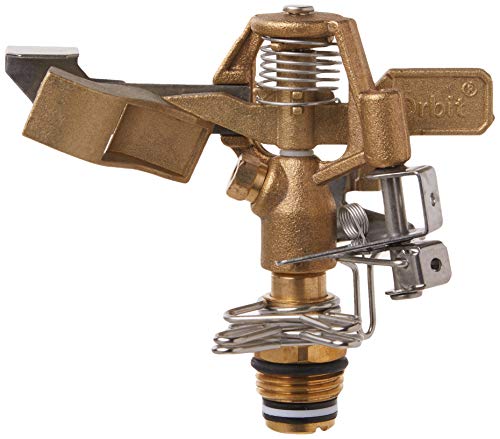
LARGE-AREA COVERAGE: Sprays up to 90 ft. in diameter, covering 6,360 sq. ft. when set to a full circle.
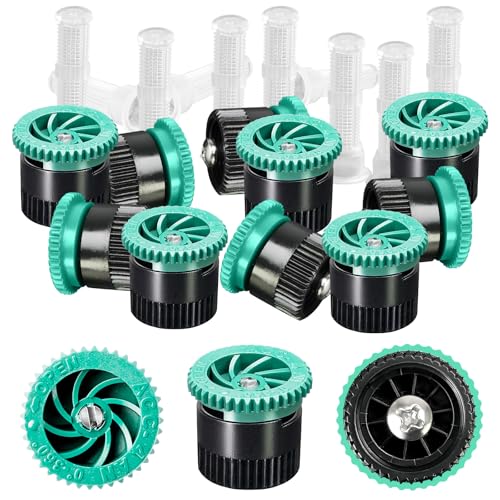
What you will get: you will receive 10 pieces variable arc nozzles, enough for your replacements or share with friends and neighbors.
Fire Sprinkler History: How Early Designs Shaped Modern Standards
When you trace fire‑sprinkler evolution, the patchwork of 19th‑century experiments—ranging from Carey’s 1806 perforated‑pipe concept to Parmalee’s 1874 heat‑shattering bulb—provides the technical DNA that modern standards still reference. You’ll notice early 19th century precursors, like John Carey’s London patent and the 1812 Theatre Royal installation, introduced gravity‑fed perforated piping that proved water could be distributed without manual activation. Renaissance engineering innovations, exemplified by Leonardo da Vinci’s conceptual sprinkler, foreshadowed the idea of integrating fire suppression into building systems. By the 1870s, Pratt and Phelps added automatic intent, while Parmalee’s bulb mechanism supplied reliable temperature‑triggered discharge. Grinnell’s 1881 sensitive sprinkler and dry‑pipe valve refined reliability, prompting UL and FM rule‑making. Those incremental advances cemented the performance criteria that NFPA standards still enforce today. Modern irrigation design also relies on pressure regulation to maintain consistent flow across diverse terrain.

Compact Design: With dimensions of 1x1x8 inches, this rooftop sprinkler is compact and can fit in most spaces.

🛠️ EASY TO INSTALL – Features a standard 1-inch inlet connection for fast, tool-free setup with most residential water or irrigation systems.

Defend What Matters Most – This rooftop sprinkler for wildfire helps pre-wet roofs, eaves, gutters, homes, cabins, and fences before embers arrive, adding a practical layer of preparedness to your property’s fire protection systems.