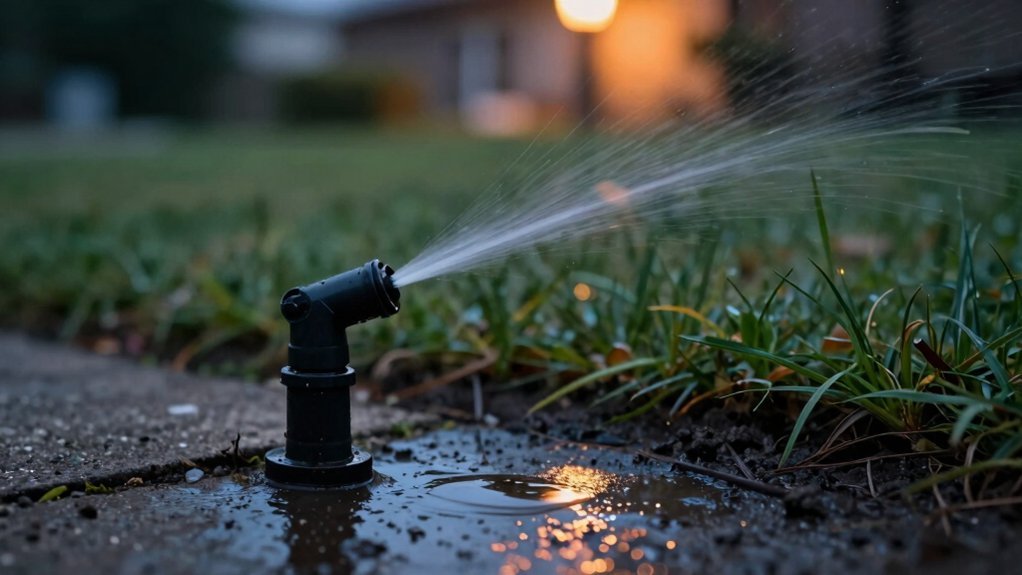
You’ll find that a properly sized concrete or plastic donut sits over the sprinkler head, spreads mower weight, and blocks foot traffic, so the rotor stays centered and the blade can’t cut the head. The tapered edge rests flush with the grass, and the reinforced‑concrete protects against light vehicle loads, extending the valve’s life. Installation is tool‑free—just press the donut into place, backfill, and test a mower pass. Keep reading for sizing charts, material comparisons, and maintenance tips.
What Are Sprinkler Donuts and How Do They Work?
Most homeowners think of sprinkler donuts as simple plastic rings, but they’re actually reinforced‑concrete protectors that sit around each sprinkler head. You’ll pick the right size—3/8‑inch for flush heads, 2‑inch for pop‑ups—based on head diameter and grass height. When you set the donut, make sure the sprinkler head alignment stays true: the rotor should sit centrally in the ring, and the ring’s tapered edge must rest evenly on the soil. Adjust the proper depth adjustment so the concrete sits just above ground level, preventing mowers from crushing the head while keeping the spray pattern clear. Installation is tool‑free; just press the donut over the head, verify alignment, and you’ve added a durable, low‑maintenance shield that lasts decades. Turf aggressively buries sprinkler heads, so regular trimming of the donut is essential. Cracked seals can cause leaks if the donut is installed too tightly, so check for proper fit before final placement. Proper spacing of heads ensures uniform coverage and water conservation, especially when considering the spray radius of each sprinkler. Expanding the coverage area can also reduce water waste by allowing each head to operate at its optimal sprinkler radius.
Do Sprinkler Donuts Stop Mower and Foot‑Traffic Damage?
Now that you know what sprinkler donuts are and how they fit around the head, let’s see how they keep mowers and foot traffic from ruining your system. Concrete donuts spread a mower’s weight over a flat, pyramid‑shaped top, so the blade slides across without crushing the head. Install each donut about 1½ in. deep, pack the soil firmly, and align the top flush with the grass to meet donut positioning requirements. The hardened surface also endures pedestrians and occasional vehicle wheels, preventing pipe damage and eliminating tripping hazards. Because concrete’s density resists compression, durability considerations focus on proper depth and tight packing rather than material wear. Once set, no extra maintenance is needed for foot‑traffic zones. Driving over sprinkler heads can cause pipe rupture if the head is not properly protected. Remember to check head height before mowing to avoid accidental damage. Proper installation also ensures a watertight seal, which is essential for preventing water leakage in the irrigation system.
How Do Different Donut Sizes Match Specific Sprinkler Types?
A 3/8‑inch donut fits flush‑head and pop‑up sprinklers in short grass, keeping the spray clear and preventing blades from choking the nozzle. Follow donut sizing guidelines and measure the head before you cut a hole; a snug fit meets sprinkler head clearance requirements and stops grass from crowding the nozzle. For taller turf, step up to a 2‑inch donut on pop‑up sprays; the larger diameter gives extra protection against longer blades and reduces how often you’ll need to clear the head. Most donuts work with bodies up to 2.5 inches in diameter, but check the manufacturer’s chart for any exceptions. Use a garden trowel to dig a shallow trench, place the donut, then backfill with soil or quick‑setting cement to lock it in place. This DIY approach keeps your irrigation efficient and your lawn healthy. Proper soil moisture monitoring ensures optimal sprinkler depth for consistent water distribution. Correct sprinkler height also promotes uniform water coverage across the sod, preventing dry spots and over‑watering. Choosing the right sprinkler head height maximizes coverage while minimizing waste.
Concrete vs. Plastic Sprinkler Donuts: Which Holds Up Better?
Choosing the right donut material matters just as much as picking the correct size. Concrete donuts give you decades of durability, especially fiber‑reinforced versions, and their weight stops heads from sinking in high‑traffic zones. You’ll notice concrete donut aesthetics—clean, solid lines that blend with hardscape—but expect heavier handling and possible cracking from mower impacts. Plastic donuts, usually ABS or polypropylene, stay lightweight, boosting sprinkler donut installation efficiency and making DIY placement a breeze. They resist impact without brittleness, ideal for quiet garden sections where equipment traffic is low. While concrete excels under vehicles and lawn gear, plastic offers lower maintenance and less risk of breakage, though it may settle in heavily used areas. Choose based on traffic, aesthetics, and long‑term upkeep. Grass encroachment can be effectively prevented by using a donut that creates a barrier around the sprinkler head. Proper sealing of valve connections reduces moisture infiltration and extends system lifespan. Additionally, installing a waterproof cover over the valve protects it from weather damage. Properly grounding the valve housing can also mitigate the risk of electrical interference during storm events.
How to Install a Sprinkler Donut for a Snug, Level Fit
Getting your sprinkler donut to sit snug and level starts with a clean, flat workspace around the head. First, mark the head’s location, then clear a two‑inch radius of grass with a trowel. Dig a shallow hole one to 1.5 inches deep, softening the soil so the donut will rest evenly. Measure the head’s diameter and cut the donut’s bottom lines to match, ensuring a tight fit installation. Push the shaft through the cut hole, align the tabs, and seat the donut at ground level or half an inch above the head. Lower the cap so the spring snaps into the donut’s lip, then tighten for precise sprinkler alignment. Fill the interior with Quickrete or a PVC plug for extra weight, blend the surrounding topsoil, and smooth the surface. Test the mower pass‑over after the season to confirm stability. Ensures a perfect fit by cutting the lines to match the sprinkler head’s shaft diameter. Properly matching the garden hose thread size ensures a secure connection and prevents leaks. Selecting a hose with the appropriate pressure rating helps maintain the donut’s stability under high‑flow conditions. Using a 5/8 inch hose can accommodate larger flow rates for extensive lawns.
How to Fix Common Donut‑Related Problems on Pop‑Up Heads?
If your pop‑up head won’t rise or stays stuck, the culprit is usually a donut‑related issue you can address yourself. First, troubleshoot clogged risers: press the riser down firmly with your foot while the zone runs, then release. Repeat four or five times to flush sand that may be wedged between the riser and cap. After shutting off water, pull the riser up by hand; it should move freely against spring resistance. If it still binds, replace the sprinkler. Next, clear debris from nozzles: unscrew each nozzle, blow out grit with a screwdriver, or poke the opening with a stiff wire. For stubborn clogs, soak the head before blowing. Finally, inspect the riser seal and spring seat; replace them if worn. This DIY routine restores pop‑up action without calling a pro. Excavate the area carefully to avoid further damage to the underground PVC plumbing. Ensure you check the local code requirements before beginning any relocation work. Remember to call 811 before digging to locate any hidden underground utilities and prevent accidental strikes. Regular maintenance can also prevent debris buildup that commonly causes sprinkler heads to jam.
When Sprinkler Donuts Are Worth Using in High‑Traffic & Road‑Side Areas?
When you have a lawn that endures frequent mower passes or a roadside that sees regular vehicle traffic, installing sprinkler donuts can be a game‑changer. You’ll find Low Impact Durability in compacted soil, because the threaded elbow flex hose absorbs vehicle drive‑over forces while the donut’s height keeps mower blades from striking the head. For roadside edges, add soil under the donut to maintain elevation; double layers prevent sinking and restore height after compaction. The donuts also give Sprinkler Head Protection from both mower strikes and vehicle pressure, so heads stay functional longer. Trim grass inside the donut, pry out a worn unit, and replace it quickly—maintenance stays minimal while your irrigation stays reliable. Proper drainage prevents excess moisture that can otherwise weaken the surrounding soil and foundation. Over‑saturation from poor drainage can accelerate sinkhole formation under high‑traffic irrigation zones.
Should You Put a Donut in This Zone? A Quick Decision Checklist
A quick decision checklist helps you determine whether a sprinkler donut belongs in a specific zone, letting you match the right size and material to grass length, mower traffic, vehicle proximity, and maintenance needs. First, assess grass height: short grass calls for a 3/8‑in. donut, while rising lawn height means you need a 2‑in. version to let pop‑up heads emerge. Next, evaluate mower traffic—walk‑behind mowers usually skip donuts, but heavy riding mowers benefit from cheap, high visibility protection. Then, consider vehicle proximity; driveway or road‑side zones merit concrete donuts to spread load and prevent sinking. Finally, gauge maintenance level: high‑maintenance lawns demand monthly checks, low‑maintenance areas can skip donuts altogether. Choose size and material accordingly. Non‑pop‑up heads need protection from grass growth.
Maintenance Tips to Keep Sprinkler Donuts From Trapping Grass
Even after a solid installation, sprinkler donuts can become grass traps unless you stay on top of regular upkeep. Start with a weekly donut inspection during rainy season; look for grass, stolons, or thatch building up around each donut. Use a Norbit sprinkler donut cutter to trim the turf, keeping the concrete guide clear and the heads free from overgrowth. After each mowing, verify that no debris or soil shifts have created a pocket. Perform consistent donut maintenance by cleaning the concrete ring and raising any sunken heads with a pop‑up repair tool. Add a quarterly professional check for all zones, and keep a soft‑bristled brush handy for nozzle cleaning. This routine prevents grass from burying your heads and preserves even watering. Adjustments are quick, minor fixes that restore system performance.
Do Donuts Really Extend Sprinkler Lifespan? Test Results
Regular inspections keep the concrete rings clear, but the real question is whether those rings actually prolong a sprinkler’s life. When you ran a donut effectiveness comparison, the data showed no measurable drop in sprinkler head corrosion rates. In fact, modern pop‑up heads kept moving freely, while the donuts often restricted spray patterns and trapped debris. Your test sample—1 % of sprinklers per NFPA 25—revealed that heads with donuts corroded at the same pace as those without, and in some cases the restriction accelerated wear. The VdS study backs this, noting 73 % corrosion in dry systems after 12.5 years regardless of donuts. Skip the rings, focus on regular cleaning and proper installation to truly extend lifespan.