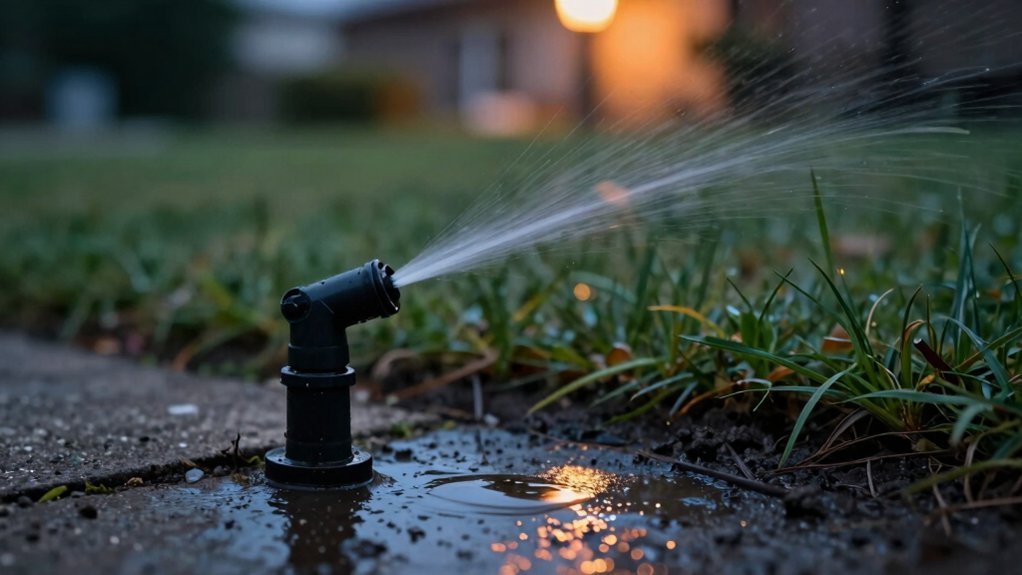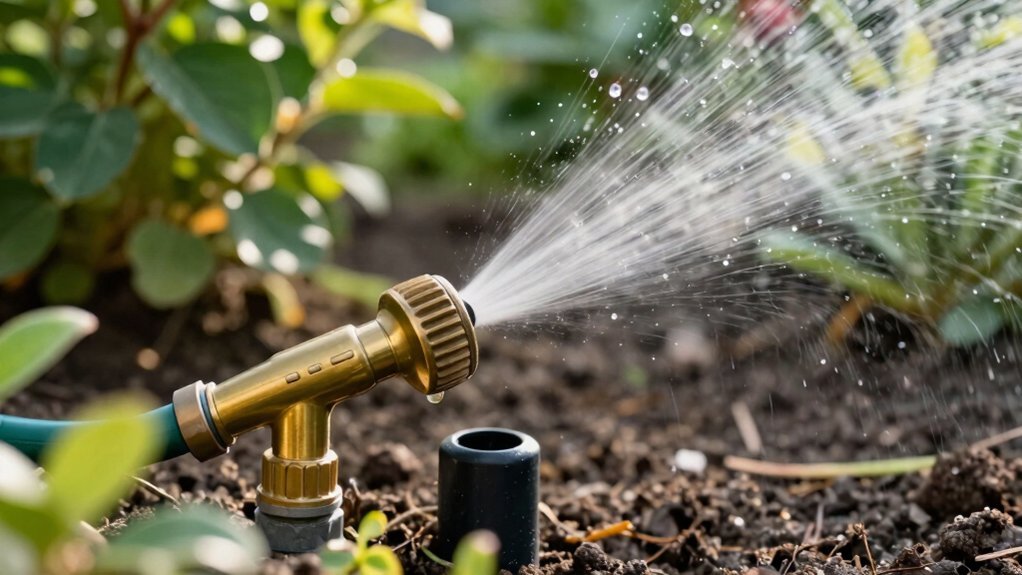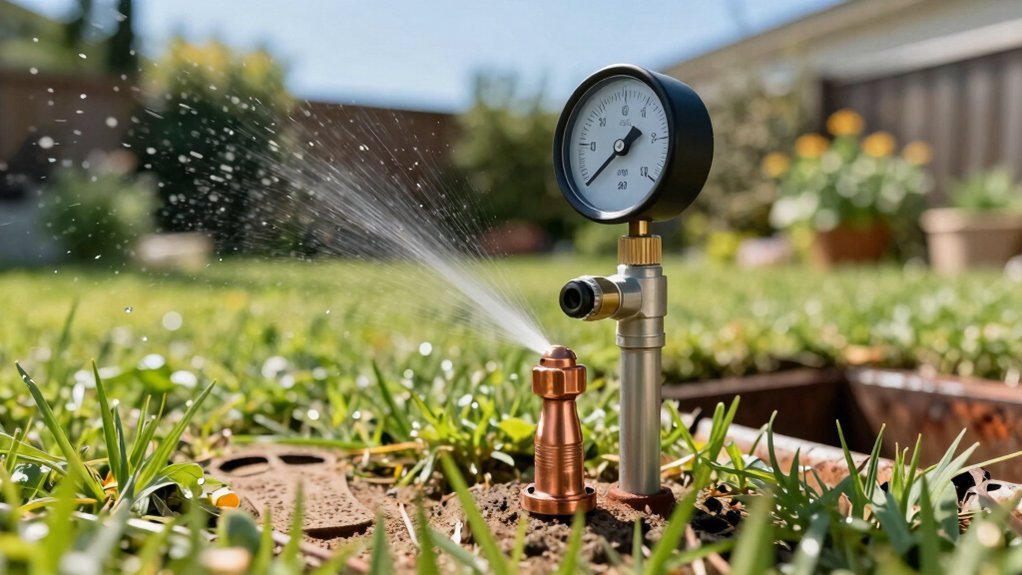
Mark each head with a bright flag or stake, then raise your mower deck a few inches and do a dry‑run test before cutting. Use swing‑joint donuts or buried heads so the blade glides safely, and trim the grass around each head with a weed whacker or hand clippers. Keep the blade sharp, turn off irrigation, and inspect any impacts right away. Follow these steps and you’ll mow confidently without damaging the system, plus uncover more tricks ahead.
Mow Over Sprinkler Heads Safely
When you mow, keep the sprinkler heads out of the mower’s path by marking them clearly and setting the blade height high enough to clear the heads; visual cue placement is your first line of defense. Plant bright flags or stakes next to each head, especially non‑pop‑up types, so you spot them before you cut. Then apply protective mowing strategies: raise the deck, run a dry‑run test, and use swing‑joint donuts or buried heads to let the mower glide safely. Trim the grass around each head with a weed whacker or hand clippers to keep the area visible. Regularly check blade height, turn off irrigation, and inspect any impact immediately. These steps keep your lawn pristine and your sprinklers intact. Grass overgrowth can block the sprinkler head from rising, so regular trimming is essential. Using a metal detector can help you locate underground sprinkler lines before you start mowing. Call 811 before any digging project to ensure you know where underground utilities are located. Consider employing a metal detector sweep to map out hidden irrigation components and avoid accidental damage.

Oregon Replacement Deck Leveling Gauge

Convertible Design: The removable wheeled deck allows quick transformation into a small lawn mower for versatile yard care

Multi-Function Convenience: Easily switch between mowing, trimming, and edging for three-in-one versatility with your string trimmer
Fix Minor Sprinkler Head Issues Quickly Before Cutting Grass
One quick way to keep your lawn looking sharp is to tackle any minor sprinkler‑head problems before you start mowing. First, shut off the water at the main valve or controller; this stops pressure and lets you dig safely. Use a trowel to expose the base a few inches, being careful not to hit nearby pipes. If the spray looks uneven, remove the nozzle and rinse out debris to fix clogged spray nozzle. Flush the body, then reinstall the nozzle and turn the water back on. Test spray pattern post repair by observing coverage and adjusting the radius screw if needed. Quick checks for leaks, rotation, and spray direction guarantee the head works properly before you cut the grass. Tightening the radius screw reduces the water distance and amount. Cracked seals can cause leaks, so inspect them while the head is exposed. Properly adjusting the sprinkler head ensures even coverage and conserves water. Undamaged tubing prevents costly repairs and maintains consistent irrigation.
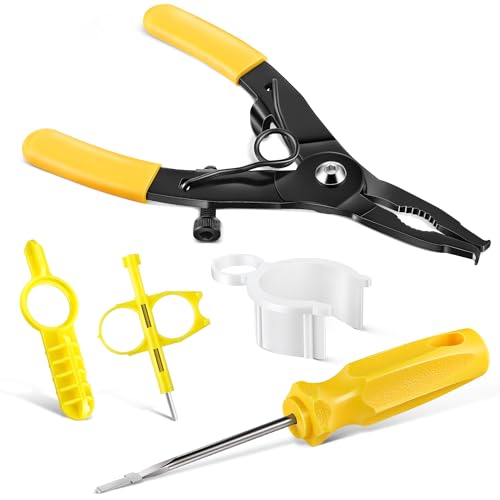
[5 Pack Sprinkler Head Tool for Lawn Irrigation]This 5 Pack sprinkler head tool kit includes everything you need to maintain and adjust your sprinkler system: rotor adjustment tool screwdriver, spray head pull up tool, hold up collar, sprinkler rotor adjustment tool and sprinkler key tool. Whether you're adjusting rotor heads or replacing nozzles, this Gulfmew all in one set is designed compatible with RainBird, compatible with Hunter

For installation and maintenance of spray head sprinklers, nozzles, and risers

⭐【8 PACK SPRINKLER TOOL KIT】This 8 pack sprinkler head tool set includes everything you need for lawn irrigation maintenance: 1 pc rotor adjustment screwdriver, 1 pc spray head pull up tool, 3 pcs rotor nozzles tool, 3 pcs PGP adjustment tool. Designed compatible with Rain Bird and compatible with Hunter, this sprinkler head adjustment tool kit helps you easily adjust rotor heads, replace nozzles, and maintain your sprinkler system with one convenient set
How to Tell If a Sprinkler Head Is Ready for Mowing?
If you spot brown patches, soggy areas, or unusually tall grass around a sprinkler, those visual cues tell you the head isn’t ready for mowing yet; first, walk the lawn and check each head for proper sprinkler head alignment. Look for even spray patterns and no water buildup; misaligned heads often miss targets or create wide arcs. Next, run a quick functional test: activate the system and watch each head pop up fully, spray consistently, then retract. Any head that dribbles, clogs, or stays stuck signals a problem. Inspect for cracks, bends, or tilted nozzles that could affect consistent sprinkler head operation. When every head shows uniform coverage, no leaks, and smooth movement, you can safely mow. Identify the head by comparing its nozzle shape and spray pattern to the visual guide. Understanding the color code on a sprinkler head can also help verify its type and compatibility before mowing. Regularly cleaning mineral buildup from the nozzle prevents clogging and maintains even spray.
Trim Grass Around Sprinkler Heads Efficiently
Even with a thriving lawn, the area right around each sprinkler head can quickly become a tangled mess, but a quick, systematic trim keeps the water flow clear and the grass healthy. Start by turning the water on and using the HeadsUp Sprinkler Trimmer; place the tool over the head, twist for three seconds, then lift to clear grass and debris. For stubborn overgrowth, insert a bulb planter around the base, twist back and forth, and pull out the clump. If you prefer a permanent barrier, install concrete donuts or use a Norbit Sprinkler Doughnut Cutter for a clean circle that matches the head’s diameter. Always check the spray pattern after adjusting sprinkler heads, and keep the area free of weeds to protect sprinkler heads. Repeat every three to four weeks during active growth. Turf aggressively buries sprinkler heads, so regular trimming prevents them from being hidden again. Understanding the valve operation helps ensure the water pressure remains optimal for consistent spray. Properly maintaining the main line reduces the risk of leaks and ensures even distribution across the system.

HEAVY-DUTY STEEL SHAFT – 5/8" powder-coated structural steel resists bending and rust

POWERTRIM CUTTING BLADE: PowerTrim Pro Series 7-inch diameter cutting blade. Trimmer head designed to fit most straight shaft power trimmer brands. (Includes 1-inch (20mm) spacer for trimmers with larger arbors).
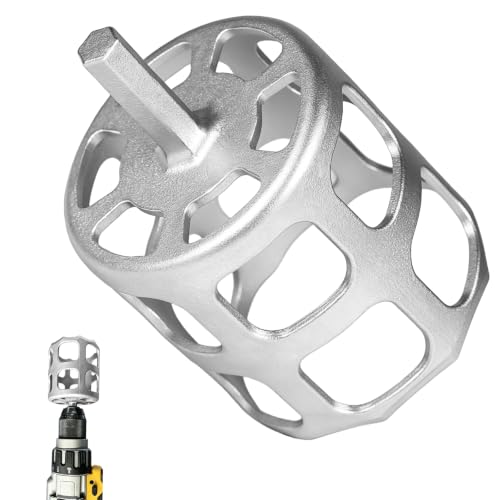
【Universal Fit for Standard 2.75 Inch Sprinkler Heads】: Specifically Engineered with a 2.75-inch cutting diameter to perfectly fit most common pop-up sprinklers, mini rotors, and small spray heads. This stainless grass sprinkler headtrimmer tool ensures a precise trim without damaging the sprinkler.2.75" sprinkler head grass trimmer works with major brands including with Rain Bird / Hunter etc. TIP: NOT FIT for common size 3.5".
Maintain Sprinkler Heads for Reliable Retraction
Keeping your sprinkler heads retracting reliably starts with a regular, hands‑on maintenance routine that catches issues before they cause costly damage. First, run the system and check sprinkler head heights while each zone operates; any head that stays low or leans tells you it’s sunken or tilted. Dig around a sunken head, lift it to ground level, and repack soil tightly so it clears the grass when popping up. For tilted heads, straighten them and repack the base, then prune any roots that push the nozzle off‑axis. Monthly, remove grass, dirt, and rocks from the nozzle, unscrew the top, brush the filter, and soak it in vinegar for 15 minutes. This routine helps you identify recurring sprinkler issues before they become costly failures. Measure depth of each head to ensure it is within the proper range. Burying sprinkler lines at a depth of 6 to 12 inches helps maintain consistent water pressure and protects the system from frost and foot traffic. Proper sprinkler head height ensures optimal coverage and minimizes water waste. Understanding spray radius is essential for spacing heads to achieve uniform coverage while conserving water.

Smart Irrigation Starts Here - The Rain Bird 1804VAN 1800 Series Pack of 5 features 4-inch pop-up sprinkler heads with a fixed spray, variable arc nozzle and 1/2 in. female threaded inlet, made in the USA and built for precise irrigation in lawns, garden beds, and landscaped areas in residential and professional systems.

ADJUSTABLE ARC & SPRAY DISTANCE: Includes a preinstalled 3.0 GPM nozzle with an arc that adjusts from 40° to 360°, ideal for both full and part circle coverage. Delivers a spray distance of approximately 22 to 52 feet, with optional nozzles (sold separately) allowing further customization.

Sprinkler Head Pull Up Tool: Effortlessly lift and adjust sprinkler heads with the Spray Head Pull Up Tool, designed for easy use on buried pop up sprinklers. Compatible with Hunter, Rain Bird Sprinkler Heads, it's perfect for lawn irrigation system maintenance, nozzle replacement, rotor adjustment, and sprinkler cleaning
When You Should Call a Pro for Faulty Sprinkler Heads
After you’ve inspected and cleaned each head, you’ll start noticing signs that a DIY fix won’t cut it. If you see recurring leaks that tighten seals can’t stop, or water pooling after shutdown, call a pro. Persistent drips usually mean seal damage, corrosion, or a hidden pipe crack that needs expert diagnosis. Cracks, dents, or misaligned heads that sputter, dribble, or mist indicate permanent sprinkler head damage—replace them before they ruin your lawn’s uniformity. Heads that refuse to pop up, or low‑pressure geysers, suggest valve or electrical faults; only a technician should tackle those. When any of these issues appear, schedule professional service to prevent costly water‑bill spikes and extensive system failure. Debris buildup can also cause the nozzle to jam, leading to uneven spray patterns. A clogged nozzle often shows a narrow spray that reduces coverage and can be fixed by cleaning or replacing the head. A worn nozzle can create thin string‑like streams that further disrupt uniform watering.
Smart Irrigation Starts Here - The Rain Bird 1804VAN 1800 Series Pack of 4 features 4-inch pop-up sprinkler heads with a fixed spray, variable arc nozzle and 1/2 in. female threaded inlet, made in the USA and built for precise irrigation in lawns, garden beds, and landscaped areas in residential and professional systems.
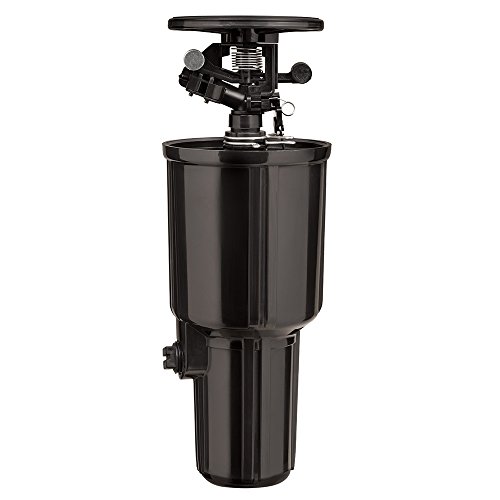
For watering areas with up to 35 feet of spacing between sprinkler heads; 3-inch pop-up riser height ensures that the nozzle clears medium grass
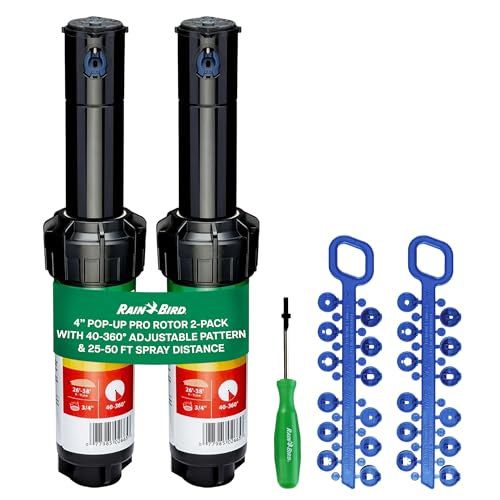
All-In-One Rotor Service Bundle - Rain Bird 5000 rotor 2-pack with Rain Curtain nozzles (8 low-angle, 8 standard-angle) plus CPRTOOL. 40–360° adjustable arc, 25–50 ft spray, supports even coverage and fast adjustments without digging.