Choose nickel‑plated brass quick‑connect fittings that match your hose’s inner diameter (⅜‑¾ in) and ¾‑inch GHT standard for a leak‑free, high‑pressure seal. Look for swivel handles, serviceable O‑rings, and a semi‑collapsible design that stretches up to three times its length without kinking. Prioritize a brass core with a HV200‑300 nickel coating for corrosion resistance and crush‑proof strength up to 150 PSI. These specs guarantee reliable connections for watering, sprinklers, and power‑washing, and the next sections reveal the top models.
Key Garden Hose Fitting Materials: Plastic, Brass, and Aluminum
Most gardeners start by comparing three core fitting materials—plastic, brass, and aluminum—because each offers a distinct balance of strength, weight, and cost. When you assess fitting functionality, you’ll notice plastic’s rigid PVC offers low‑cost, lightweight options, but UV exposure can degrade the polymer, limiting long‑term reliability. Brass fittings deliver superior durability, resisting corrosion and handling up to 150 psi; their high‑temperature ductility and chrome or nickel coating extend lifespan beyond a decade, making them ideal for high‑pressure irrigation and frequent fitting usage. Aluminum fittings, often hard‑anodized, provide a lighter alternative and decent crush resistance, yet they oxidize and can galvanically corrode when paired with brass, reducing interior hose diameter and restricting flow. Selecting the right material hinges on pressure demands, environmental exposure, and required lifespan. Rubber hoses are more durable and longer‑lasting than vinyl, providing better value over time. Metal garden hoses offer enhanced durability that can offset their higher initial cost over many years of use. Choosing the appropriate hose diameter, such as a 5/8 inch for heavy‑duty irrigation, ensures optimal flow and pressure compatibility with the selected fittings. Understanding the thread pitch differences helps prevent leaks when mixing hose and NPT components.
What to Look for in Garden Hose Fittings Before You Buy
When you shop for garden‑hose fittings, start by confirming the hose’s inner diameter—⅜, ½, ⅝, or ¾ inch—and matching it to a fitting that uses the same size and the standard ¾‑inch GHT (or ⅝‑inch GHT when applicable). Verify hose diameter versatility by checking if the fitting’s ferrule and thread accommodate multiple sizes; a universal design reduces inventory. Confirm male female coupling compatibility: each end must present a male thread to receive a female counterpart, preserving a leak‑proof seal. Examine thread standards—ANSI ¾”–11.5 NH or NHR—to guarantee alignment with spigots and accessories. Prioritize nickel‑plated brass for corrosion resistance, crush‑resistance for pressure up to 150 PSI, and ribbed ferrules that grip internally expanded fittings. Choose swivel handles to prevent twisting during connection. Quick connect fittings provide full water flow without a restricted entrance, allowing easy and quick connection/disconnection of hose accessories. Remember that ¾‑inch GHT is the most common garden hose thread standard in North America, ensuring compatibility across a wide range of fittings and accessories. Understanding the difference between standard GHT and male/female threads helps avoid mismatched connections. For optimal performance, maintain water pressure between 40 and 80 psi to ensure consistent flow without over‑stress on fittings.
Why Eley Brass Quick‑Connect Beats Other Garden Hose Fittings
Eley’s brass quick‑connect outshines competing fittings thanks to its commercial‑grade, lead‑free ECO brass construction, which guarantees drinking‑water safety and eliminates galvanic corrosion. You’ll notice the strong build construction immediately: each component is machine‑made with professional precision, and the massive all‑brass body resists damage far better than plastic or aluminum alternatives. The corrosion‑resistant design prevents any welding to faucets, ensuring a 10‑year warranty backs long‑term reliability. Water flows unrestricted through the 3/4‑inch aperture, preserving pressure while the push‑and‑click mechanism locks two stainless‑steel pins into place, delivering a leak‑proof seal that survives high pressure. The O‑ring is serviceable, and the easy‑release sleeve lets you disconnect with a 1/8‑inch pull, saving time and effort on every watering task. The system can be used anywhere there’s a garden hose connection, not just at the end of the hose, making it highly versatile for all watering setups. Proper hose length helps maintain optimal pressure, especially when using a 3‑inch‑diameter fitting. Using a hose connector ensures a secure and leak‑free joint before installation.
How Semi‑Collapsible Fitting Designs Enhance Hose Flexibility
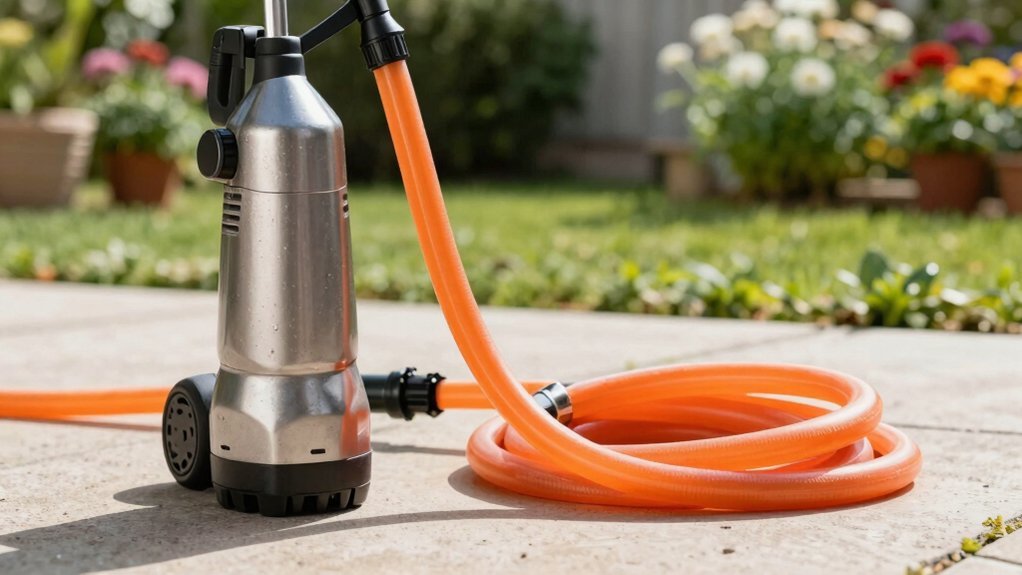
The robust brass quick‑connect that Eley offers sets a high bar for durability, but the real breakthrough in garden irrigation lies in semi‑collapsible fitting designs. When water pressure builds, the semi‑collapsible flexibility lets the hose stretch up to three times its original length, while the pressurized expansion maintains a uniform diameter that prevents kinking. As soon as you shut off the tap, the material contracts automatically, returning to a compact coil that occupies less than half the space of a conventional reel. This lightweight, reinforced tubing reduces physical strain by roughly 30 % and lets you maneuver around tight beds or patios without dragging a heavy, rigid hose. The design also minimizes water loss, delivering steady flow even in confined garden layouts. The hose expands up to 3 times its size and includes 4 extra washers for secure connections. Occasional light‑use tasks benefit most from this adaptable system.
Benefits of Nickel‑Plated Crush‑Proof Fittings for Heavy‑Duty Garden Hose Use
If you need a fitting that can survive the rigors of heavy‑duty garden hose work, nickel‑plated crush‑proof connectors deliver the needed edge. The nickel layer creates a barrier that blocks moisture, chemicals, and air pollutants, giving the fitting exceptional corrosion resistance properties even in marine or chemically aggressive environments. Beneath the plating, a brass core supplies the mechanical strength required for high‑pressure operation, while the nickel surface—hardness HV200‑300—significantly boosts wear and seal performance. Repeated insertions and removals cause minimal abrasion, and the polished nickel finish eliminates microscopic gaps, ensuring airtight, leak‑proof connections. Spring‑loaded grips clamp securely without scratching the hose, maintaining integrity under vibration and pressure cycles, and extending service life while keeping maintenance costs low. Pressure washers often require hoses rated for higher PSI than standard garden hoses, so using a hose with an adequate pressure rating is essential for safety and performance. Properly matching the hose’s PSI rating to the washer’s output prevents over‑pressurization and potential damage. Using a garden hose pressure washer can be effective for light cleaning tasks when the hose diameter and length are optimized for sufficient flow.
How to Choose the Right Coupling Material for Your Project
Nickel‑plated crush‑proof fittings showcase how material choice impacts durability, and that same principle guides the selection of coupling material for any hose project. When you evaluate couplings, start with corrosion resistance comparisons: brass offers long‑term protection, especially with chrome or nickel plating, while stainless steel tops the list for harsh chemicals and weather. Plastic scores high in rust resistance but can crack under extreme heat, so weigh chemical compatibility factors against your environment. Aluminum balances weight and moderate corrosion resistance, yet it’s prone to cross‑threading damage. Budget dictates whether you opt for premium brass or cost‑effective plastic, but pressure rating and thread type must match your hose system. Choose the material that satisfies both durability and safety requirements. Ensure the hose you pair with these fittings is lead‑free to avoid contaminating water. The hose’s diameter determines how much water can flow through the fitting, influencing overall performance. Selecting the correct washer size is essential to prevent leaks and maintain optimal flow.
Spotting Leak‑Proof Connections With Ribbed Ferrules on Garden Hoses
Ever wondered why ribbed ferrules keep garden‑hose connections leak‑free? You’ll notice the ribs pinch the hose against the internally expanded fitting, creating a tight seal that a smooth ferrule can’t match. The brass composition provides a leak proof design while supporting sustainable material usage, and the .687″ ID fits 11/16″ hoses without reducing flow. After crimping, inspect the ferrule for a flush, gap‑free contact with the ribbed barb; any misalignment or over‑tightening will show up as a water‑jet spray or pressure drop. Verify the O‑ring washer sits snugly, and run a pressure test—no air loss confirms a proper, durable connection. This visual and pressure check guarantees the ribbed ferrule performs as intended. Understanding hose diameter impact on flow helps you choose the right size for efficient watering. Proper sizing also ensures the hose can meet the flow rate demands of typical residential irrigation systems.
Installing Leak‑Proof Ribbed Ferrule Connections
Ribbed ferrules give you a reliable, leak‑proof joint, and installing them correctly locks that performance. First, cut the hose to the exact length, strip the outer jacket just enough to expose the core, and slide the tube onto the fitting body’s inner shoulder. Align the ferrule so its cone faces the body and verify the insertion depth. Place the nut and second ferrule over the tube, hand‑tighten to avoid cross‑threading, then mark the nut at 6 o’clock. Hold the body with a backup wrench, tighten the nut 1‑1/4 turns past finger‑tight, and finish with a torque wrench to the manufacturer’s spec. Apply pipe dope if required. Pressurize the line, use a leak detection solution or pressure gauge, and retighten up to 1/8 turn if bubbles appear. Use a compact wire stripper to ensure precise cuts and clean insulation removal. For added protection, wrap Teflon tape around the threaded sections before assembly. Selecting the right spray pattern can significantly improve water distribution for diverse garden layouts. A typical garden hose can waste up to 600 gallons per hour if left running continuously.
Top Fittings for Watering, Sprinklers, and Power‑Washing
Three main fitting families dominate watering, sprinkler, and power‑washing setups: quick‑connect systems, shut‑off valves, and standard‑thread couplings. Quick‑connect sets, like Eley’s lead‑free ECO brass kits, use sliding stainless‑steel pins that lock 3/4‑inch GHT threads without tools, preserving hose durability while delivering full‑flow volume for efficient water conservation. Pair a swiveling shut‑off valve before the socket to release pressure, stop flow instantly, and protect delicate sprinkler heads during power‑washing. Standard‑thread couplings follow ANSI ¾‑inch‑11.5 NH/NHR standards; choose NH for machined threads or NHR for rolled threads such as Swan’s male thread, ensuring a tight, leak‑free joint. Brass and aluminum couplings add strength, while ergonomic grips on Swan hoses act like a wrench, preventing over‑tightening and extending hose life.