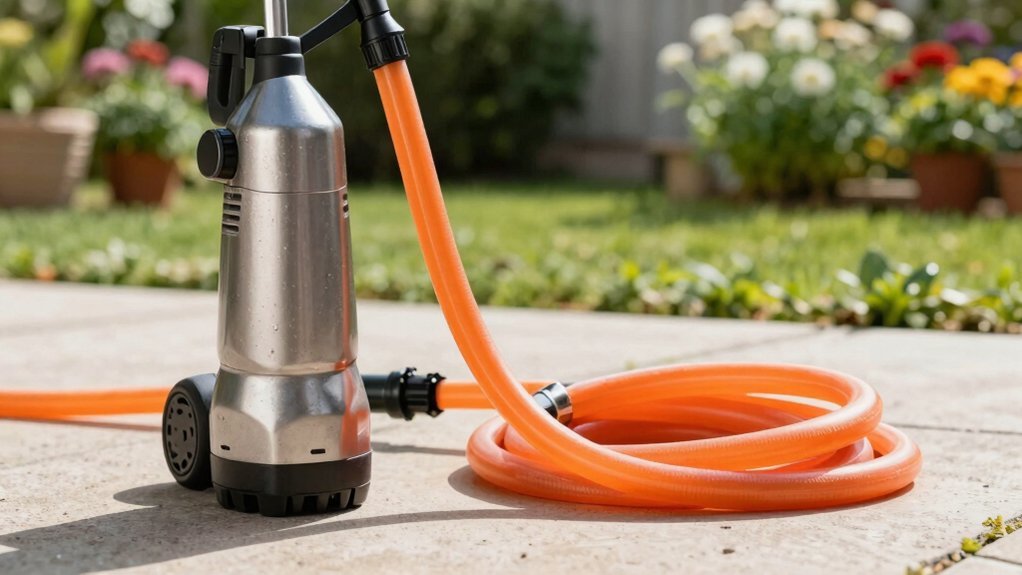
No, you shouldn’t hook a regular garden hose to your RV’s drinking‑water system. Garden hoses aren’t rated for potable water, so they can leach lead, BPA, phthalates, and other heavy metals into the water. Their rubber or recycled‑plastic construction isn’t designed for the constant pressure of an RV, which can cause ruptures, deformation, and biofilm growth that leads to gastrointestinal illness. Switching to an FDA‑approved, lead‑free RV hose eliminates these hazards and guarantees safe, clean water for your trips. Keep reading to ascertain how to choose the right hose size and install proper pressure regulation.
Is a Garden Hose Safe for RV Drinking Water?
Is a garden hose safe for RV drinking water? You should assume it isn’t. Green garden hoses lack potable‑water rating and can leach heavy metals, lead, BPA, and phthalates, creating water quality concerns and off‑flavors. Their rubber or recycled‑plastic construction isn’t designed for constant RV pressure, so they may rupture or deform, compromising drinking water safety. Instead, select a hose expressly labeled “potable” or “drinking‑water safe.” These hoses use virgin PVC or polyurethane, are lead‑free, BPA‑free, and meet Federal Safe Drinking Water Act standards. They withstand 400 + PSI, resist UV degradation, and feature Guard‑n‑Grip fittings for reliable connections. Keep hose length short to reduce strain and guarantee consistent pressure throughout your system. RV water hoses are BPA‑free and meet low lead requirements. Checking for a lead‑free certification can further ensure safety. Drinking from a garden hose can expose you to biofilm bacteria that cause gastrointestinal distress.
What Chemicals Leach From Garden Hoses?
Because garden hoses are often made from PVC, rubber, and brass components, they can release a suite of hazardous chemicals into the water they carry. You’ll notice lead accumulation when brass fittings leach lead at concentrations 10‑100 × the allowable limit, especially in green or yellow hoses pre‑2007. Plastic leachates such as phthalates (e.g., DEHP 25 ppb) and BPA (up to 87 ppb) also migrate from PVC walls, intensified by heat and sunlight. Stagnant water held 48 hours concentrates these toxins, producing foaming and a menthol odor. The combined exposure elevates risks of hormonal disruption, liver toxicity, and developmental harm. To protect your RV’s drinking system, avoid non‑drinking‑water‑rated hoses and store them away from direct sun. Running water for several minutes before use helps flush out concentrated chemicals. Legionella growth can also occur in hose water that remains stagnant, posing an additional health risk. Water quality is the primary factor determining taste and safety. Mowing over sprinkler heads requires careful attention to avoid damaging the system.
How Do FDA‑Approved, Lead‑Free RV Hoses Keep You Healthy?
When you connect an FDA‑approved, lead‑free RV hose, the material composition—typically non‑PVC polyurethane or specially formulated rubber—prevents leaching of toxic metals and plasticizers, ensuring the water you drink, cook, and bathe with stays chemically pure. The hose’s material performance properties include BPA‑free, phthalate‑free, and bromine‑free formulations that block endocrine disruptors and organotoxins. FDA certification guarantees zero lead, cadmium, and antimony release, even under UV exposure or thermal stress. Follow storage environment considerations: keep the hose out of direct sunlight, avoid extreme temperature swings, and store it coiled without kinks to preserve polymer integrity. Regularly inspect couplings for wear; any degradation could compromise the lead‑free barrier and reintroduce contaminants. Proper water pressure is essential for optimal hose performance, and most residential systems operate between 40‑80 psi to deliver consistent flow. Backflow preventers are also recommended when connecting a hose to a potable water source to guard against contamination. Installing an anti‑siphon valve can further protect against backflow in irrigation setups.
How to Choose the Right RV Drinking Water Hose Size & Length?
Choosing the right RV drinking‑water hose hinges on balancing flow capacity with practical handling. For most campgrounds, a 25‑foot hose is appropriate; it fits storage compartments and avoids the awkward coil of a 50‑foot length. If you need extra reach, pair a 25‑foot primary with a shorter extension rather than using a single long hose. Select a 5/8‑inch diameter when you expect strong shower pressure or multiple fixtures, as it maintains 44 gpm at 40 psi over 25 feet, while a 1/2‑inch hose delivers 24 gpm and suffices for short runs. Prioritize hose durability concerns by choosing a flexible, flat PVC hose with an AS4020‑rated interior and brass or 304 stainless‑steel couplers. Follow maintenance requirements: inspect fittings for corrosion, store the hose coiled to prevent kinks, and replace any worn sections before each trip. Use a black collapsible hose for flushing the black tank to avoid contaminating the fresh water supply. Garden hose diameters affect the flow rate and pressure needed for RV water systems. Understanding standard garden hose thread sizes helps ensure compatible connections and prevent leaks. Garden hose threads use a straight‑thread seal that differs from the tapered NPT design.
Why Is a 35‑Foot Potable‑Water Hose the Sweet Spot for Most RVs?
If you park at a typical campground where the water spigot sits 30‑70 feet away, a 35‑foot potable‑water hose gives you enough length to reach the source without excess slack. This length matches most private‑site layouts and accommodates remote parks where connections sit 60‑75 feet away, while staying compact enough for quick coil‑up and storage in a bag. The 35‑foot Zero‑G hose balances manageability and reach, avoiding the bulk of 50‑foot units and the shortfall of 25‑foot hoses. It works for all RV sizes, lets you add 10‑ or 25‑foot extensions when needed, and pairs well with water storage options. Apply hose protection methods—such as UV‑resistant sleeves and kink‑free couplings—to preserve durability and maintain safe, potable flow. Drinking water hoses are government approved for safe consumption. Choose fittings that match the standard ¾‑inch garden hose thread to ensure a secure, leak‑free connection. The flow rate of a hose is influenced by its diameter and the water pressure at the source. Selecting the proper pressure rating helps prevent bursts and ensures consistent water delivery.
How to Install a Pressure Regulator for Safe RV Water Flow?
Installing a pressure regulator right at the campground spigot is the most reliable way to protect your RV’s plumbing from the often‑excessive 200 psi pressures found at many sites. First, hand‑tighten the regulator onto the spigot threads, ensuring the arrow points toward the RV. Connect your hose to the regulator outlet, then check the gauge for a reading below 60 psi. If you use an adjustable model, turn the set‑screw clockwise to raise pressure or counter‑clockwise to lower it, remembering to relieve hose pressure before each adjustment. Common regulator installation issues include cross‑threading, overtightening, and neglecting the flow‑direction arrow, which can cause leaks or backflow. Verify a secure seal, then test for drips before hooking up your RV. Adding a pressure‑rated hose can further safeguard against sudden spikes. Proper placement is essential to prevent pressure build‑up in the hose. Using a hose of larger diameter helps maintain flow when multiple hoses are connected. Regularly inspect the hose for kinks and blockages to ensure optimal pressure.
How to Color‑Code and Filter Your RV Drinking Water Hose System?
After you’ve secured a pressure regulator at the spigot, the next step is to keep the water you draw from it clearly identified and protected from contamination. Choose a white or blue hose, both labeled “drinking water safe” and FDA‑approved, and attach a food‑grade label if the liner isn’t pre‑marked. Store the hose in a dedicated storage location separate from green garden hoses, using opaque containers to prevent UV degradation. Apply a matching colored cap or strap to each hose end for quick visual verification. Install a certified inline filter—preferably a carbon‑block model—between the regulator and the hose to remove chlorine and particulates. Follow seasonal storage requirements: purge the hose of water, dry it thoroughly, and relocate it to a climate‑controlled area during winter to avoid cracking and mold growth. The hose’s true flex inner core ensures consistent flow and durability. Using a low‑flow nozzle can reduce water use to as little as 5 gallons per minute while still providing sufficient pressure for RV needs. Remember to tighten the connector securely to prevent leaks.
What Mistakes Turn Garden Hoses Into Health Hazards?
When you connect a garden hose to your RV’s water system, common mistakes can turn a simple convenience into a serious health hazard. Using PVC or vinyl hoses exposes you to phthalates, bromine, antimony, and lead that leach faster when the hose heats in sun, creating cross‑contamination risks. Leaving water stagnant in a hose lets bacteria, fungi, and algae proliferate, especially if the hose sits on soil where insects can introduce pathogens. Flushing the hose inadequately traps warm, sitting water that releases additional toxins. Selecting alternative hose materials—such as food‑grade silicone, stainless steel, or certified low‑leach polyethylene—reduces chemical leaching and bacterial growth. Always store hoses in shade, purge before use, and replace any hose showing discoloration, foam, or a minty odor. Water temperature can rise up to 140 °F in direct sunlight, increasing leaching rates.
How to Maintain a Clean, Long‑Lasting RV Drinking Water System?
Keeping your RV’s drinking‑water system clean and durable requires a disciplined routine of sanitizing, flushing, inspecting, and testing. Follow a regular sanitization schedule: fill the fresh‑water tank halfway, add a quarter‑cup bleach per 15 gal, run the solution through every faucet until you smell bleach, let it sit 4–10 hours, then drain to waste. Refill and flush twice with fresh water until no odor remains. Before each trip, blow out lines with an RV blow‑out plug, then flush each fixture until water runs clear. Inspect hoses, connections, and filters for leaks or blockages; clean filters and soap‑wash waste tanks. Conduct water‑quality tests after each treatment. Apply winterizing precautions by blowing out lines, flushing antifreeze residues, and repeating the sanitization process during de‑winterizing. Mold and mildew can grow in the water lines and tank during winter storage.