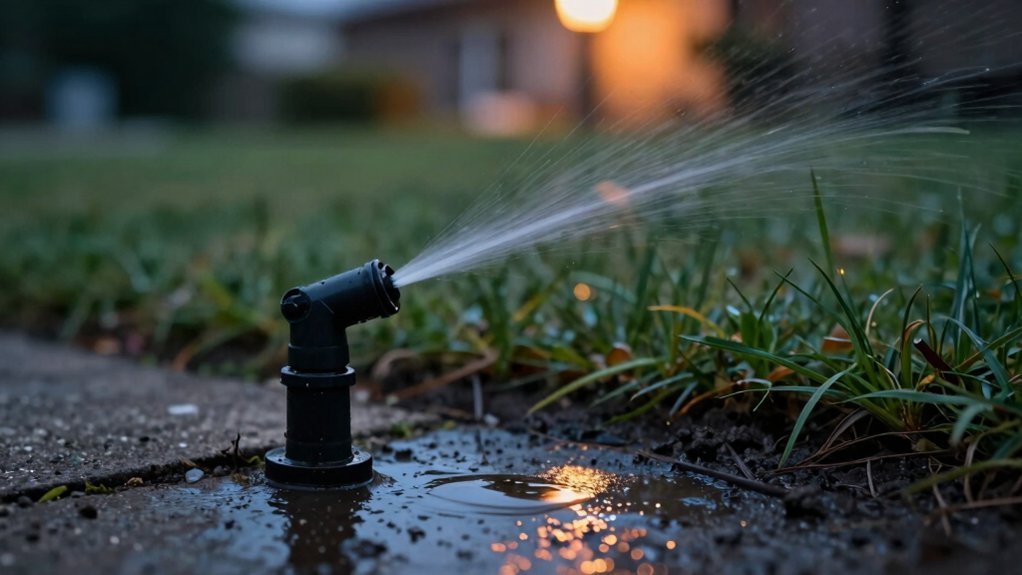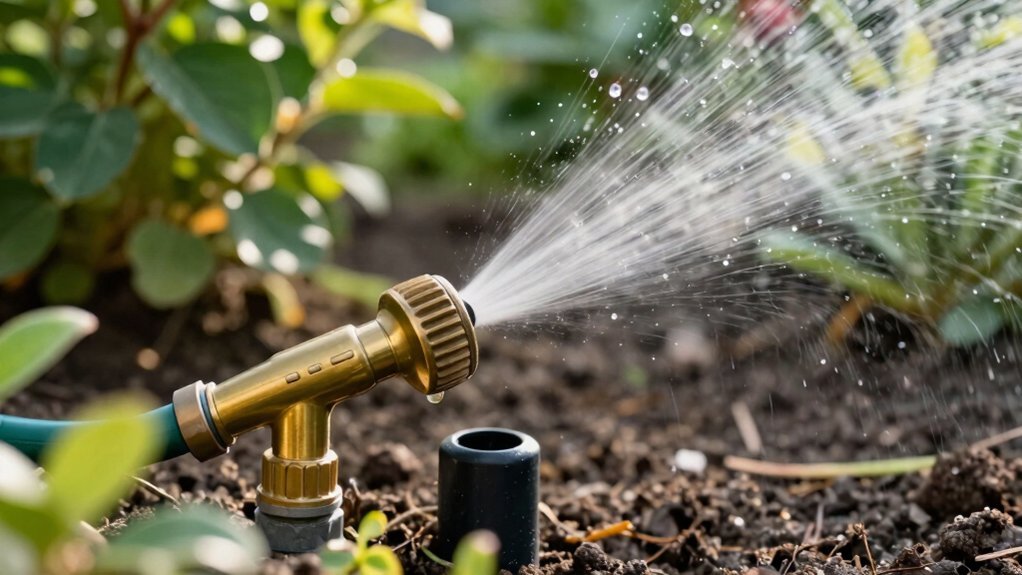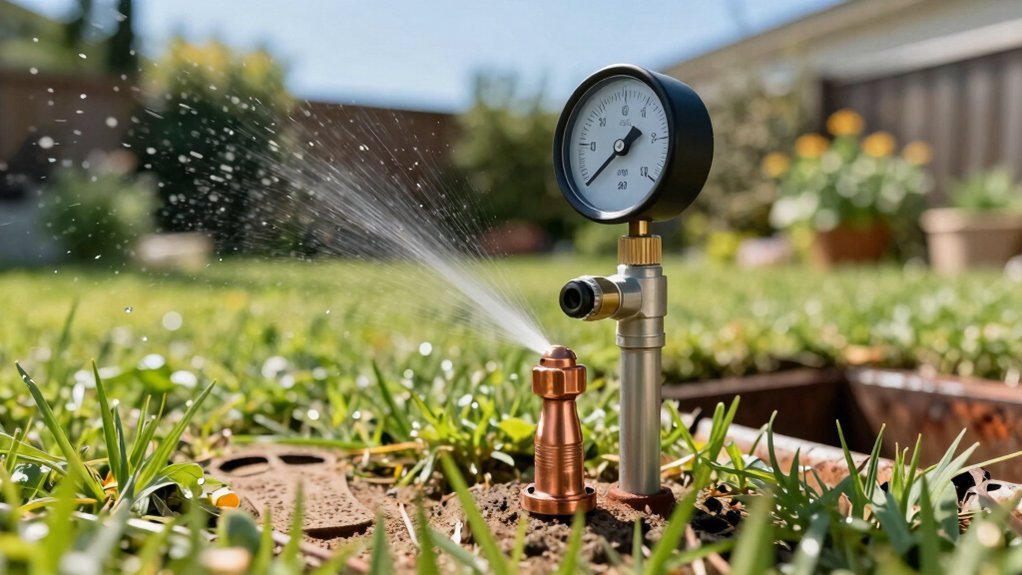
Yes—smart sprinkler systems can slash your water use by 20‑30 % on average. Weather‑driven controllers adjust run times based on temperature, wind, and precipitation, while rain and soil‑moisture sensors pause watering when conditions are met. Zone‑specific, high‑efficiency heads and drip emitters deliver water only where plants need it, and automatic shut‑off valves stop leaks instantly. Tracking gallons and tweaking ET schedules further boosts savings, and the next sections reveal how each feature contributes to those results.
How Automatic Shut‑Off Valves Reduce Waste in Smart Irrigation
How does a smart irrigation system actually cut water waste? You monitor volumetric flow through a diaphragm‑activated hydraulic valve that pairs with a vertical turbine meter. Leak detection algorithms scan usage patterns for spikes, continuous flow, or burst events, flagging anomalies within seconds. When a leak triggers, the valve closes automatically, halting flow without electricity. The Z‑Wave link pushes alerts to your app, so connectivity troubleshooting becomes a matter of checking protocol status rather than sensor health. You can retrofit the controller on ¾”‑6” pipes, indoor or outdoor, and set sensitivity thresholds that eliminate false positives. By sealing leaks instantly, you shave up to 90 % off total waste, turning reactive repairs into preventive automation. Choosing a low‑flow head can further reduce water consumption while maintaining lawn health. Properly sized check valves can also prevent backflow, protecting water quality and maintaining system pressure. Installing a reduced pressure zone ensures that any contaminated water cannot re‑enter the potable supply, safeguarding overall water quality.
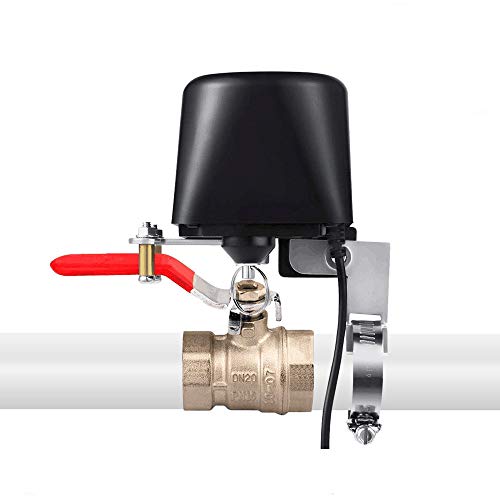
Ensure strong 2.4Ghz WiFi coverage for reliable operation. Proper alignment is CRITICAL: the pivot point of the opener MUST be directly above the valve's pivot point. Misalignment will cause insufficient force to open the valve and may damage the unit due to mechanical stress. Triple-check Alignment, Alignment, Alignment...!

These essential drip irrigation parts feature a precision-engineered barbed design that creates a super-tight, leak-proof connection with standard 1/4" tubing. Perfect for customizing water flow to individual plants, our valves outperform generic sprinkler valves with their robust UV-resistant that withstands years of outdoor use.
Why Rain & Moisture Sensors Are Essential for Smart Irrigation
After sealing leaks with automatic shut‑off valves, the next biggest water‑saving lever is real‑time environmental sensing. You’ll see that rain sensors cut overwatering by pausing irrigation when precipitation hits, delivering up to 35 % lower water use on farms. Soil‑moisture sensors override schedules once root‑zone moisture is sufficient, saving an average home over 15 000 gallons per year. Smart sensor accuracy drives these gains: advanced gauges out‑perform standard ones, feeding precise data to IoT‑enabled controllers that adjust for rain, wind, and temperature. The resulting sustainable irrigation benefits include lower utility bills, reduced energy demand, and healthier plants with fewer pest and disease pressures—all quantifiable, data‑rich outcomes that eliminate guesswork and maximize efficiency. Proper sensor placement is critical to avoid false triggers caused by wind‑blown rain or uneven soil moisture. The sensors rely on electrical conductivity measurements to determine moisture levels accurately.
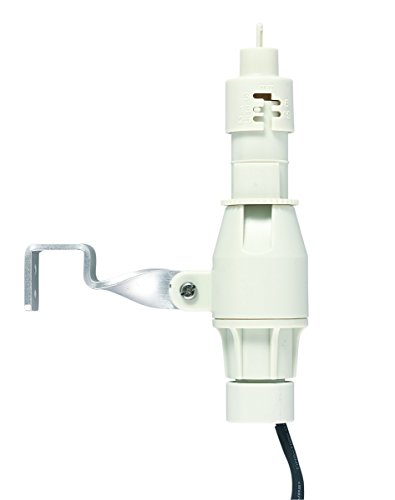
For automatically detecting rainfall or low temperature conditions

Upgrade Existing Controllers with Wireless Access - Transform compatible irrigation controllers into connected systems with this 2nd generation WiFi accessory. Quick Pair technology enables fast setup, while sprinkler controller connectivity and wireless irrigation management help simplify daily operation.
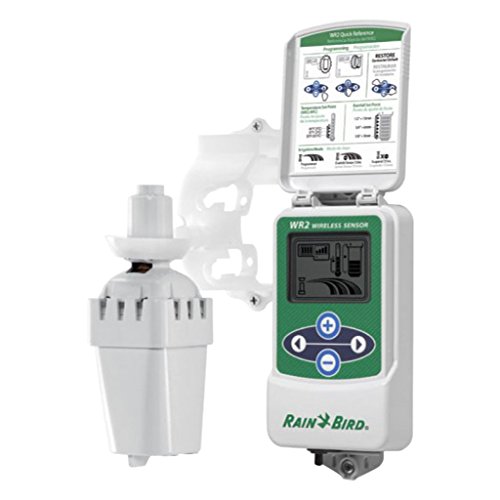
Wireless rain sensor shuts off irrigation when it rains - Freeze sensor shuts off irrigation when temperature drops below set point - Saves up to 35% on water usage
How Zoned Irrigation Guarantees Even Coverage & Savings
You divide your landscape into irrigation zones, each section receives exactly the flow it needs, eliminating the runoff and over‑watering that typically waste up to 50 % of outdoor water. You then assign high‑efficiency rotary nozzles to each zone, calibrating variable water flow to match plant demand. Contour‑based layout plus catch‑can testing yields uniform distribution within ±5 % of target depth. By grouping turf, ornamental beds, and trees separately, you prevent overtreatment of drought‑tolerant shrubs while delivering deep, infrequent watering to trees. Seasonal adjustments fine‑tune run‑times, reducing pressure regulator settings (e.g., PRS30/40) by 30 % and cutting annual usage in half. The data‑driven approach translates to measurable savings, healthier landscapes, and compliance with EPA efficiency benchmarks. Modern systems often incorporate soil moisture sensors to further optimize irrigation timing. Overlapping sprinkler spray patterns ensure that any gaps are covered, providing uniform lawn coverage across the entire zone.

Approved for sale/meets pressure regulation legislation requirements in: CA, CO, HI, VT, MA, ME, NY, OR, RI, WA, and Washington DC

Hand adjustable, pro-grade nozzle sprays multiple rotating streams of large water droplets in a 45 to 270° pattern

Rainbird R-VAN 14 (45-270 degrees) in a bag
Early‑Morning Watering: Best Time for Smart Irrigation
By zoning your irrigation you already control flow per plant type; the next step is timing. You should schedule sprinklers between 5:00 a.m. and 9:00 a.m. to capture the delay timing benefits and dew point adjustments that maximize soil uptake. Data from Iowa State show foliage dries within 35 minutes in full sun and 70 minutes in shade, cutting fungal risk by over 60 %. Early‑morning temperatures are 15 % cooler than midday, reducing evaporation and wind‑driven loss. Your smart controller can finish before sunrise, keeping municipal pressure stable and avoiding the 98 °F afternoon penalty. By aligning cycles with the dew point curve, you preserve water, limit disease, and improve bill savings—all without the night‑watering lag. Sprinklers running during the hottest part of the day cause high evaporation and waste water. Monitoring soil moisture thresholds helps prevent over‑watering during unexpected rain events. Automated systems also enable precision dosing by adjusting flow rates based on real‑time sensor feedback. Implementing soil moisture sensors provides continuous data that fine‑tunes irrigation schedules for optimal water use.
Boost Precision With High‑Efficiency Heads & Drip Systems
How much water could you save by swapping traditional heads for high‑efficiency, multi‑stream rotational sprinklers and drip emitters? Your calculations show a 30 % drop in total consumption when you replace fixed‑spray heads with rotary nozzles that cut precipitation rates to 1 in/hr and produce larger droplets that resist drift. Field data report a 45 % improvement in sprinkler head performance uniformity, eliminating over‑ and underwatering across zones up to 30 ft. Drip emitters add point‑source delivery, further reducing runoff on slopes and in semi‑arid soils. By integrating these components into an efficient landscape design, you achieve consistent soil moisture, lower evaporative loss, and cut water bills while meeting regional restrictions. Outdoor irrigation accounts for about half of overall water use in Denver. The systematic zoning approach further refines water allocation by matching irrigation schedules to plant water‑use patterns. Properly balancing soil moisture across zones maximizes plant health and minimizes waste. Implementing properoptimal layout strategies ensures uniform coverage and minimizes water waste.

5 pcs of Rainbird R-VAN 14 (45-270 degrees) in a bag


5 Pack of Rotary Nozzles. Adjust arc and radius without tools
Smart Controllers: Weather‑Based Scheduling Explained
When you install a weather‑based smart controller, it continuously calculates evapotranspiration (ET) from real‑time temperature, wind, solar radiation, and humidity data, then adjusts irrigation run times to match the exact water needs of your plants. The unit pulls site‑specific variables—soil type, sprinkler application rate, landscape slope—and fuses them with ET to produce a daily schedule. Advanced features such as rain‑skip, freeze protection, and wind‑delay automatically suppress cycles when precipitation, sub‑zero temps, or high winds are detected. Remote accessibility lets you monitor ET trends, override thresholds, and view savings metrics from any device. Data show WaterSense‑labeled controllers cut water use by roughly 26 % when deployed correctly. Predictive adjustments further fine‑tune watering based on forecast temperature and rainfall. Integrating a soil moisture sensor can further refine watering by providing real‑time feedback on ground water levels. Understanding sprinkler head flow is essential for sizing the system to meet the calculated demand.

DITCH THE DIAL – Upgrade to smart irrigation with the free Rachio app for precise, easy control.

Smart Irrigation Control Anywhere: The Orbit B-hyve Indoor Smart Sprinkler Controller provides smart sprinkler timer functionality for efficient yard irrigation

Indoor WiFi sprinkler timer puts control of your sprinkler system in the palm of your hand with intuitive Rain Bird mobile app
Matching Sprinkler Heads to Plant Types for Smart Irrigation
Weather‑based smart controllers fine‑tune run times, but the real water savings hinge on pairing the right sprinkler head with each plant group. You’ll see that spray heads work best on lawns under 18 ft, so you space them 8‑15 ft for head‑to‑head coverage and set PSI at 20‑30. Adjusting flow rates prevents the twice‑as‑fast delivery from overwatering. For turf beyond 18 ft, gear‑drive rotors cover 15‑50 ft; match spacing to PSI (e.g., 35 ft needs 36 PSI) and use low‑angle rotors on slopes. Drip emitters serve beds and shrubs, isolated in their own zone to avoid runoff. Bubblers provide gentle, fixed patterns for delicate plants. Selecting proper spray patterns and separating zones by plant water needs maximizes Water Use Intensity, cutting irrigation use by roughly 50 %. Soil type also influences head selection because sandy soils drain faster and may require higher flow rates to maintain moisture. Understanding flow rate variations across head types helps fine‑tune delivery to match plant water requirements. A well‑designed nozzle maintains steady uniform flow by minimizing turbulence and keeping pressure consistent.
Real‑World Results: California Smart Irrigation Water Savings
If you look at the data from California’s smart‑irrigation pilots, the numbers speak for themselves: eight parks in Woodland cut water use by roughly 30 % and saved about $40 000 a year, while residential users in Southern California report 20 %–50 % reductions, trimming annual consumption from 15 000 gal to 7 500–12 000 gal. The Woodland case shows a $222 000 system cost recouped in five years, driven by real world cost savings and a ten‑year controller lifespan. Southern California homeowners see 20 %–50 % drops, translating into hundreds of dollars saved on bills. Community projects in Simi Valley and Santa Clarita cut water, energy, staff time, and vehicle miles, confirming that smart irrigation design delivers measurable, repeatable savings across public and private landscapes.
Monthly Checklist to Keep Your Smart Irrigation System Efficient
The California pilots show that smart controllers can slash water use by up to 30 %, so the next step is to guarantee that performance stays steady month‑by‑month. Each month, log your system’s total gallons, compare it to the previous month, and flag any deviation over 5 %. Then, optimize programming by reviewing ET‑based schedules, correcting accidental extra run times, and applying seasonal reduction percentages. Verify rain/freeze sensors fire correctly and aren’t overriding programmed cycles. Inspect heads and nozzles for misting or wear; replace mismatched or damaged parts, and certify MPR consistency. Check drip emitters for pressure‑compensation, plug orphans, and clean filters. Finally, run a wet‑test, record leaks, and update your irrigation management plan to maintain data‑driven efficiency. Uniform coverage is achieved when sprinkler heads are spaced to overlap just enough for full lawn hydration without excessive redundancy. Proper sprinkler radius calculation ensures that each head’s spray pattern fully covers its designated area while minimizing overlap.
When to Upgrade Your Sprinkler System for Better Conservation
A sprinkler system that’s over ten years old typically shows a 5‑10 % rise in monthly water usage, signaling that its components are losing efficiency. Your water audits will reveal that leaky valves, aging heads, and a non‑weather‑responsive timer contribute to higher bills. When repair frequency exceeds one component per season—heads breaking, valves sticking, controller failures—you’ve crossed the cost‑benefit threshold for a full upgrade. Track system maintenance logs; if you’ve replaced heads or valves annually for three years straight, the cumulative expense outweighs the savings from a new weather‑wise controller, which can cut consumption by 30‑40 %. Plan the upgrade before the 15‑year mark to capture efficiency gains and avoid escalating water waste.