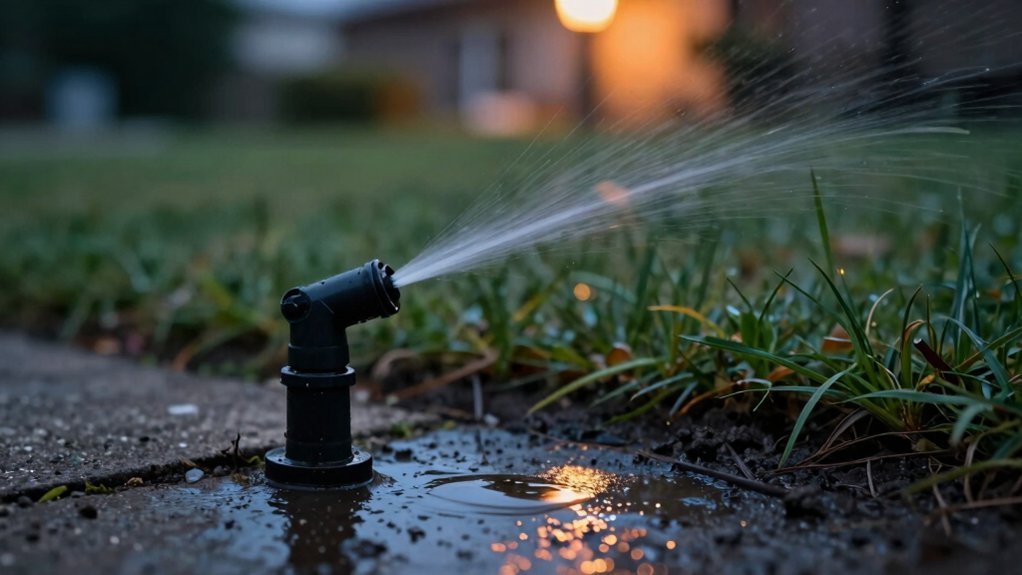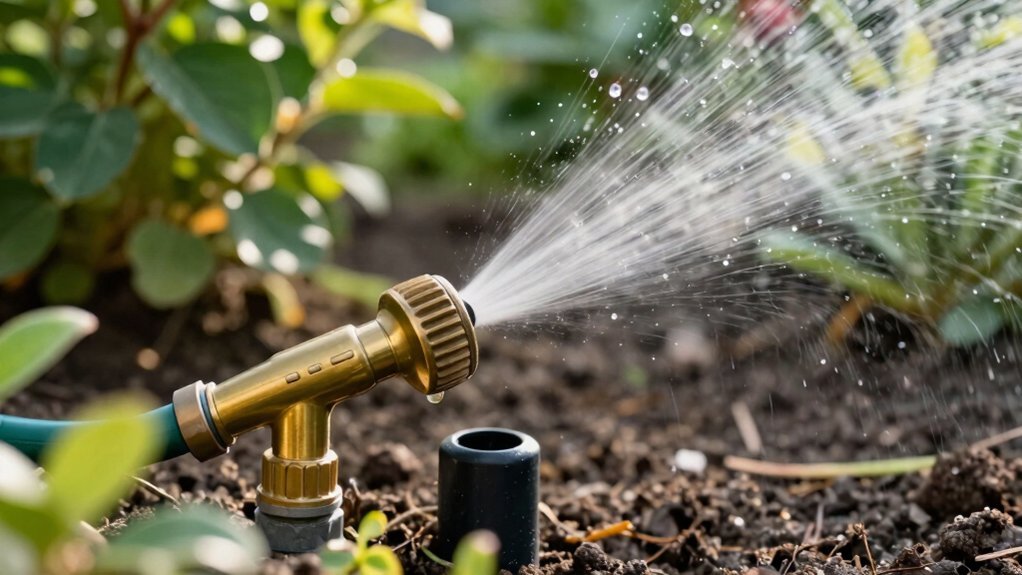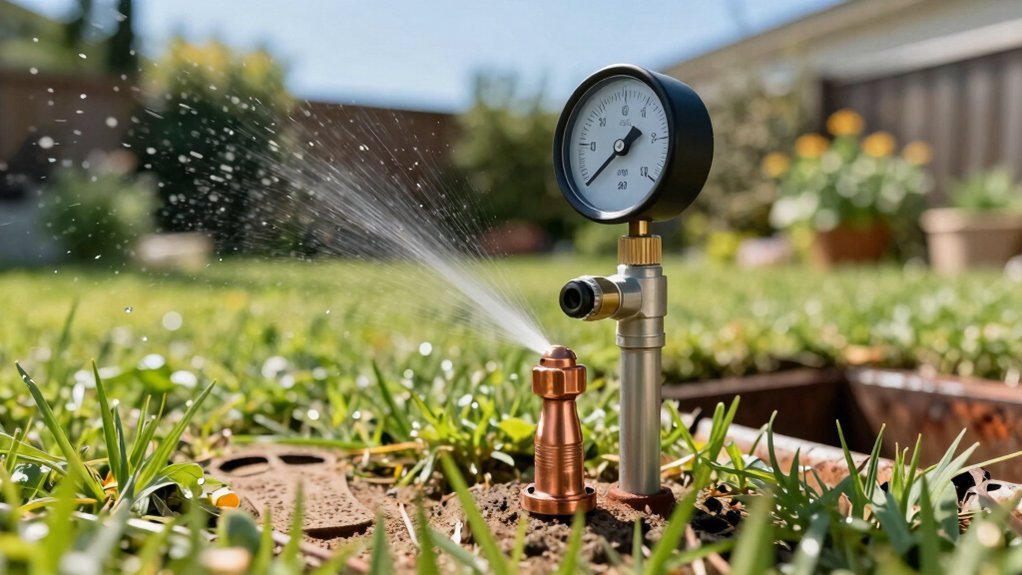
If your garden exceeds 25 ft × 25 ft, has varied plant zones, or contains fast‑draining sand and slow‑draining slopes, a sprinkler system will cut water waste and labor. Small, uniform beds or xeriscape areas can thrive with drip lines, soaker hoses, or manual watering. Check your home’s water pressure and flow capacity before committing. Separate head types into zones for 100 % overlap and avoid mixed‑type inefficiencies. Continue to uncover which controller, sensor, and scheduling combo maximizes efficiency.
How to Decide If a Sprinkler System Fits Your Garden’s Size and Layout
Any garden can be evaluated in a few clear steps to see if a sprinkler system makes sense. First, map your layout: draw squares or rectangles for lawns, flower beds, and walkways, noting zones that need distinct watering. Measure the area; if it exceeds 25’ × 25′, plan large‑area rotors spaced 25’–40′. Below that threshold, use small sprinklers spaced 8’–17′. Next, record proper water usage metrics: gauge GPM and pressure with a calibrated meter, not a bucket test. Verify that your home’s plumbing can sustain the required flow without exceeding capacity. Finally, design zones for 100% overlap, keeping mixed head types out of the same zone. Consider drip irrigation for zones that require precise moisture control. Follow these steps for a precise DIY sprinkler installation. Understanding pressure differential helps ensure each zone receives consistent flow. Adjust head spacing based on spray radius to achieve uniform coverage while conserving water.

SUPERIOR YARD WATERING - The Saturn III gear-drive rotor offers precise and efficient water distribution for your yard sprinklers. ADJUSTABLE ARC AND DISTANCE - With its...
Select the Right System for Your Plants and Soil
After mapping your garden’s layout and confirming water‑availability, match each plant group to the irrigation method that best suits its root zone and the soil’s drainage characteristics. Prioritizing water conservation, you’ll assign fixed spray heads to small flower beds on fast‑draining sand, while using rotary heads on slow‑draining slopes to curb runoff. For medium‑to‑large lawns, rotor or impact sprinklers deliver even coverage with high pressure; for shrubs and trees, bubblers or soaker hoses keep moisture at depth without puddling. Drip emitters, pressure‑compensating if needed, serve garden beds, containers, and crops, minimizing waste on heavy soils. Balancing irrigation needs, zone plants by hydrozone, separate spray/rotary from drip/bubblers, and adjust patterns as the layout evolves. This schematic approach guarantees precise, efficient watering across diverse plant types and soil conditions. Understanding water pressure is essential for selecting the right sprinkler type. Proper zone sizing ensures that each zone stays within the flow rate limits for optimal performance. Selecting a hose with a larger diameter can significantly increase gallons per minute delivery.
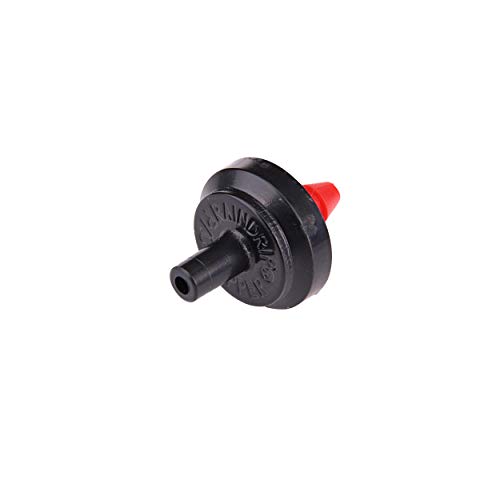
PRESSURE-COMPENSATING EMITTER: Maintains a constant 1/2 GPH flow rate even when the water pressure changes
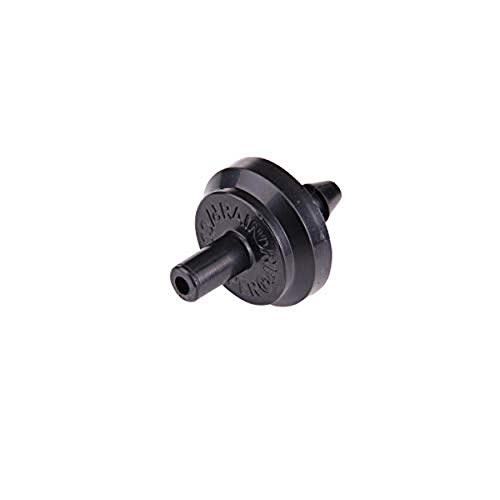
PRESSURE-COMPENSATING EMITTER: Maintains a constant 1 GPH flow rate even when the water pressure changes

PRESSURE-COMPENSATING EMITTER: Maintains a constant 2 GPH flow rate even when the water pressure changes
Comparing Water Savings: Drip Irrigation vs. Sprinkler Systems vs. Manual Hoses
How much water can you actually save by choosing the right irrigation method? Drip irrigation, a high‑efficiency system, delivers water straight to roots, cutting use 30‑70 % compared to sprinklers and up to 80 % versus hoses. Its 90 % plant‑use efficiency beats sprinkler 65‑75 % rates, especially on slopes or in heat, where evaporation and runoff dominate. Sprinklers waste water on sidewalks, weeds, and through overspray, while manual hoses lack precision, causing runoff and overwatering. By adopting drip, you align with water‑conservation practices that lower pressure (8‑20 psi) and reduce energy use. In contrast, sprinklers operate at 45‑70 psi, inflating loss. The net result: drip saves up to 70 % water over sprinklers and far more than hoses. Modern systems often incorporate moisture sensors that automatically adjust watering schedules based on real‑time soil conditions. Understanding timer programming helps maximize efficiency and prevent waste. Properly installed and maintained systems can further reduce water loss through smart controllers.

【Upgraded Tube Design & Water Saving】 Our adjustable garden watering system is upgraded to 1/2” diameter to support high water pressure. The 1/2” tee connector in the package so you can easily set up 2 drip irrigation systems as needed. Garden watering systems minimize stage water loss by recharging water directly to plant roots. While traditional irrigation often results in wasted water, this drip irrigation system saves up to 70% of water, no need for manual watering, saves water.

Be a Gardening Master with the help of our superior and complete Drip Irrigation Kit: 10 Drip Irrigation Emitters Vortex + 20 Drip Emitters Spray + 50ft flexible & durable 5/16 irrigation tubing + 50ft 1/4 inch Drip Irrigation Tubing + 12 tubing coupler + 5 ¼ Tubing Tee Splitter + Tubing End Plugs + Water Connector + 1 x Complete Instructions Guide Hard Copy + 2 Grow your Own Vegetables & Fruits Guide full with pieces of advice and practical tips Digital Format.

✔Comprehensive Drip Irrigation Kit:MIXC drip irrigation system, equipped with a versatile range of components, caters to all your garden watering needs.Includes essential parts such as 197ft 1/4'' irrigation tube, 33ft 1/2'' irrigation tube, 1/2‘’ Lock Barbed Tee connectors, drip emitter streams, vortex emitters, Blue Mist Nozzles, Quick connection tees, Faucet Connector, and more.
Hidden Costs of Sprinkler Systems: Installation, Maintenance, and Seasonal Prep
While drip irrigation can slash water use by up to 70 %, the hidden expenses of a sprinkler system quickly add up. You’ll need professional permit requirements that cost $35‑$200, plus city registration and application fees ranging $50‑$450 annually. Labor dominates the budget: at $50‑$100 per hour, a 4‑hour install on a quarter‑acre lawn runs $2,000‑$4,000, accounting for 60 % of total cost. Trenching adds $4‑$12 per linear foot, and rocky soil can tack on $0.40 per foot; proper trenching techniques are essential to avoid utility damage and costly repairs. Ongoing maintenance runs $100‑$600 yearly, while winterization and spring startup each demand $50‑$230. Neglecting these steps shortens system life to 5‑7 years, versus 15+ with diligent care. The high cost of materials further drives up the overall expense.

Effortless Yard Irrigation Setup: The Orbit All-in-One Automatic Watering System simplifies yard irrigation with a complete 2-zone automatic sprinkler system designed to deliver consistent watering

For installation and maintenance of spray head sprinklers, nozzles, and risers

HIGH-FLOW WATER DELIVERY: Compared with standard 1/4" tubing,our 12mm tubing (upgraded from restrictive 1/4") features a notably larger inner diameter to dramatically increase water volume.This guarantees sufficient supply even at the end of your irrigation system while extending sprinkler coverage. The high-flow design distributes moisture evenly across the entire garden, eliminating dry spots and localized shortages to naturally promote robust, uniform plant health.
Smart Controllers, Soil Sensors, and Weather‑Based Scheduling for Precise Watering
When you pair a smart controller with soil‑moisture sensors and weather‑based scheduling, the system automatically tailors each zone’s run time to real‑time conditions, cutting waste and enhancing plant health. The controller reads ET data from a Solar Sync sensor, applies rain‑skip and freeze‑skip logic, then adjusts run lengths by up to 50 % (Hydrawise). Soil sensors feed moisture readings per zone, letting you fine‑tune layered irrigation systems for lawns, flower beds, and vegetable plots. Mobile apps let you monitor, tweak, and program multiple start times without manual checks. EPA‑approved modules preserve conservation strategies within local regulations while maintaining ideal hydration. Wi‑Fi connectivity, leak detection, and multi‑zone support create a compact, efficient watering network that scales from six to eight zones. Proper pump sizing ensures adequate pressure for larger systems or elevation changes, and a pressure‑boost pump can compensate for low municipal water pressure. A pressure tank helps maintain consistent water pressure and reduces pump cycling, extending system life. Accurate head loss calculations prevent undersized pumps from causing uneven coverage across the garden.

【Real-Time Plant Tracking】 Accurately monitor soil moisture and air temperature via the RAINPOINT App in real time, ensuring consistent care and healthier plant roots.

【Solar-Powered Smart Watering】This RainPoint WiFi watering system supports solar charging to help reduce frequent manual charging and plug-in dependence, making long-term plant care easier with less daily attention.
Zigbee Hub Required: Compatible with standard Zigbee 3.0, such as Echo (4th Gen), Echo Plus (1st Gen and 2nd Gen), Echo Studio, Eero 6, Eero Pro 6, Home Assistant (ZHA & Z2M), Hubitat and SmartThings Aeotec, Homey, Homey Bridge, Homey Pro. A Zigbee hub is required. Gen2 is optimized for stronger and more stable wireless performance, helping ensure consistent data transmission
When a Sprinkler System Isn’t Needed and Simple Irrigation Works Better
Most gardens don’t need a full‑blown sprinkler system; a few simple tools can meet their water needs just as well. If you have a native or xeriscape garden, the plants already tolerate low moisture, so handwatering flexibility often suffices. In rain‑rich climates, seasonal weather variations naturally supply most of the water, and a hose or watering can delivers the occasional extra inch without waste. Small beds, containers, and raised plots respond well to manual watering or a semi‑permanent drip hose, providing 1–1.5 inches weekly while avoiding hose dragging. Drip or soaker hoses target roots, cut evaporation, and keep foliage dry, reducing disease. Embrace these low‑tech methods for precise, cost‑effective irrigation. Consistent, even watering promotes deep root growth and helps prevent disease, especially when using soil moisture monitoring to fine‑tune irrigation schedules. Proper hose selection and pressure settings can further improve water distribution efficiency. Checking for cracked seals in drip emitters can prevent unexpected leaks and maintain steady flow.