Sprinklers spray water onto your trampoline’s fabric and metal, so the fabric soaks, stiffens and loses bounce while the galvanized steel frame and springs corrode faster. High-density weave helps the mat dry quicker, but repeated wetting erodes tensile strength and invites mold. Rust shows up as orange-brown streaks or flaky powder, especially at spring attachment points. Keep the system clean, adjust heads, and run a monthly inspection to catch early damage. Follow simple drainage and cover tips, and you’ll uncover even more ways to protect your backyard fun.
Explain Sprinkler Impact on Trampoline Materials
When sprinklers spray a trampoline, the water seeps into the permeable fabric and stays trapped in the fibers, so the mat stays saturated longer than it would after a brief rain. You notice the water absorption rate spikes as the weave density determines how quickly moisture fills the interstices. This prolonged saturation alters texture; fibers stiffen once the water dries, reducing bounce consistency. Material resilience becomes critical—high‑density fabrics retain less water and recover shape faster, while low‑density mats warp and fade. Repeated cycles of wetting and drying erode tensile strength, encouraging mold on the underside and compromising visual appeal. By examining absorption characteristics and choosing moisture‑resistant constructions, you preserve performance and extend the trampoline’s functional lifespan. The rust‑proof coating on the frame further protects against corrosion caused by constant exposure to water. Proper drainage is essential to prevent standing water that could lead to electrical hazards near any nearby power sources. Regular exposure to stagnant water can also foster bacterial growth, increasing the risk of skin irritation for users. Water temperature can rise to 140 °F in direct sunlight, potentially accelerating material degradation.
Why Sprinkler‑Induced Metal Corrosion Is the Real Risk
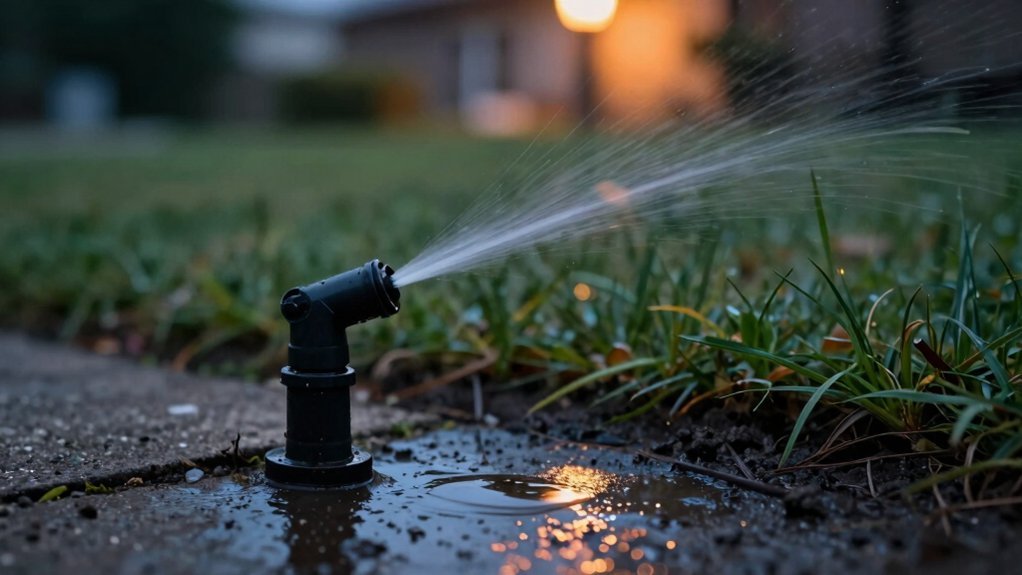
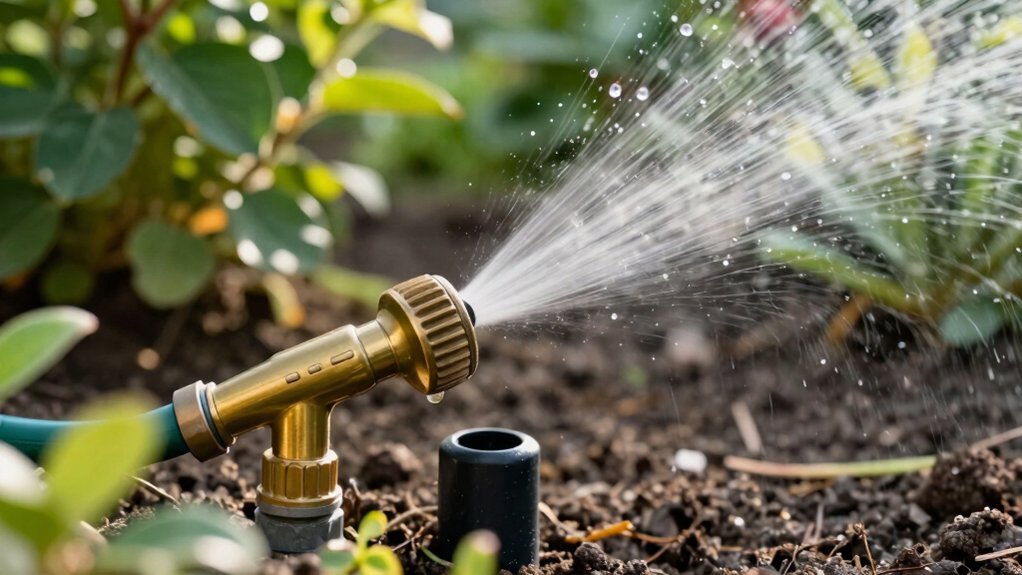
Why does the constant spray from sprinklers matter more than a brief rain? Because a steady mist keeps metal surfaces wet, feeding moisture retention concerns that a fleeting shower can’t match. The zinc layer on galvanized steel resists occasional dampness, but continuous exposure dissolves that barrier, allowing oxygen to bond with iron and trigger rapid rust progression. Sprinkler water pools in debris,dripping, and acidic soil, creating a micro‑environment where corrosion accelerates. Even powder‑coated or primed frames eventually absorb water, compromising structural integrity at welds and joints. By recognizing how persistent spray undermines protective coatings, you can prioritize drainage, sealants, and regular anti‑rust treatments to keep your trampoline safe and functional. Dirt accumulation also traps moisture against the metal, further accelerating rust formation. Proper hose selection can minimize pressure loss and ensure an even distribution of water, reducing the chance of localized over‑wetting that promotes rust. Moisture‑resistant valve design helps prevent water damage to irrigation components.
How to Spot Sprinkler‑Related Rust on Frames and Springs
Do you notice orange‑brown streaks or flaky powder on your trampoline’s metal? That’s the first clue that water‑driven corrosion is attacking frames and springs. Conduct in depth visual diagnostics during each periodic component inspection. Look for orange‑brown discoloration, rough or bumpy texture, and powdery flakes that peel off with a light scrape. Pay special attention to spring attachment points, base legs touching soil, and horizontal bars where water pools. Dark rust spots concentrate near joints and coils; a dull tap sound or reduced bounce signals weakened springs. If you spot pitting, tiny holes, or chipped galvanization, you’ve identified early rust. Document each finding, then address the source before the corrosion spreads. Using an airtight container to test rust removal solutions can speed up the cleaning process. Understanding the hose’s pressure rating helps you choose a sprinkler system that minimizes excess water force on the trampoline. Selecting an appropriately sized hose can reduce pressure loss and keep water flow consistent.
Sprinkler‑Weather Preventive Maintenance Checklist
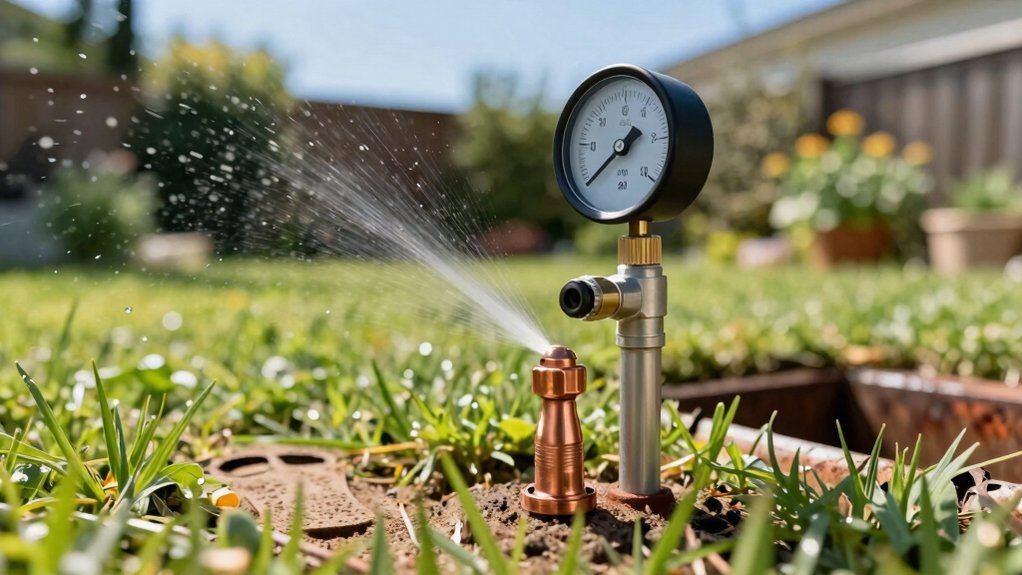
If you want your sprinkler system to stay reliable year‑round, start each season with a concise, weather‑aware preventive‑maintenance checklist. Begin with a deep clean of filters and sprinkler heads after winter, then turn the water supply on slowly to spot damage. Adjust head direction for ideal coverage, test output with the tuna‑can method, and program the controller for the growing season. Follow monthly inspections: visually scan zones in operation, trim obstructing grass, verify spray patterns, and watch the water bill for spikes. Seasonal tweaks include reducing schedules for summer heat, recalibrating for cooler fall, and setting rain mode for winter. For cleaning, soak heads in warm water with rust remover, scrub with a toothbrush, flush valves, and lubricate moving parts. Schedule sprinkler head replacement when wear appears, and align all actions with local watering guidelines. Regular monitoring also helps detect early leaks, which is essential for fire safety compliance and protecting property. Understanding water pressure fundamentals ensures each zone receives the correct flow for optimal performance. Modern sprinklers often incorporate moisture sensors that shut off water when soil is already saturated, further conserving water.
Stop Water Pooling Around In‑Ground Trampolines
After you’ve run the sprinkler‑weather checklist, the next step is to keep water from collecting in the trampoline pit. Proper drainage techniques start with site preparation: grade the lawn so rain runs away from the pit, or add a shallow swale that channels flow toward a French drain. Install a gravel‑and‑sand base; the gravel improves percolation, while the sand distributes water evenly, preventing localized pooling. Integrate drainage tiles or vented pads into the trampoline platform design, and consider a sump pump at the lowest point for heavy storms. Landscape with berms or a rain garden to absorb excess runoff, and use a fitted waterproof cover when the trampoline is idle. Regularly clear debris from drains to maintain efficiency. Tree roots can infiltrate underground structures, so installing a root barrier around the trench helps prevent future pipe damage. Before you begin any digging, remember to call 811 to locate any underground utilities and avoid accidental strikes. Burying sprinkler lines at a depth of 6 to 12 inches helps maintain consistent water pressure and protects the pipes from frost damage.
Safety Tips for Jumping on a Wet Trampoline
Even when the grass is still damp, you must treat a wet trampoline as a high‑risk surface; slip potential spikes, weight capacity drops, and mat fibers weaken. First, enforce safety training for users: teach children to land feet‑first, keep jumps controlled, and avoid flips until the surface dries fully. Assign an adult supervisor, position spotters around the rim, and ban unsupervised access by removing ladders or chairs. Dry the mat swiftly with a towel, then use a blower or sunlight to guarantee no moisture remains. Store the trampoline under a cover when not in use, following proper storage practices to prevent water accumulation. Finally, inspect the netting and seams before each session, and keep a two‑meter clearance zone. Properly draining an irrigation system can prevent pipe damage during freezing temperatures. Freezing temperatures can cause water in exposed pipes to solidify, increasing the risk of damage. Water expansion creates pressure that can crack or burst pipes.
Pick the Best Rust‑Resistant Covers & Sprays
Keeping a trampoline dry is only half the battle; protecting its frame from rust guarantees long‑term performance. To protect wood trampoline components and rust proofing galvanized coils, start with a high‑quality PVC‑coated cover. Avyna Pro‑Line and JumpSport models combine water‑resistant PVC with UV‑blocking layers, sealing the mat and frame from rain, snow, and sunlight. Pair the cover with a rust‑inhibiting spray designed for outdoor metal; apply it after each season, focusing on seams and bolts. Rust converters treat any early spots, turning oxidation into a protective barrier. Regular inspections let you spot pitting before it spreads, while the spray’s anti‑corrosion formula extends the life of galvanized coils. This analytical, functional approach maintains aesthetics and maximizes durability. Ensure you drain and store hoses indoors during winter to prevent freezing damage. Properly install self‑regulating heat tape on any garden hose used near the trampoline to avoid overheating risks. Check your main water valve before turning off the sprinkler system to prevent accidental water flow onto the trampoline.