Yes, you can connect a garden hose to a washing machine if you use a ¾‑inch brass adapter that matches the hose’s FHT and the machine’s MHT threads, seal the joints with Teflon tape, and hand‑tighten before giving each nut a quarter‑turn with a wrench to avoid overtightening. Make sure the hose’s pressure rating and flow (GPM) meet the appliance’s specs, and check for kinks, cracks, or leaks before running a cycle. Proper drainage and a check valve will prevent backflow, and the next sections will show you exactly how to install everything safely.
Safely Connect a Garden Hose to Your Washing Machine
If you want to hook a garden hose to your washer, start by selecting a proper adapter—whether a Y‑connector with rubber washers, a double‑ended female connector, or a flexible 1″‑ID hose—so both hot and cold in can be supplied securely. Hand‑tighten each threaded joint, then finish with a wrench or channellock to avoid overtightening. Wrap Teflon tape around all connections and confirm every washer is seated; this prevents leaks that raise washing machine flood risk and mitigates laundry room flooding concerns. Verify hot‑cold lines with color‑coded hoses, then test each inlet individually before full operation. Secure fastening and proper hose sizing also curb water hammer, preserving system integrity and keeping your laundry area dry. Use a Y‑connector to connect the garden hose to the washer’s inlet. Check hose diameters before cutting any damaged sections to ensure a snug fit. Understanding the standard GHT thread helps ensure compatibility between hose and washer fittings. Consider pressure drop when adding multiple hose sections to maintain adequate water flow.
Why a Garden Hose May Cause Pump Burnout or Leaks
A garden hose can quickly push a washing‑machine pump into burnout or cause leaks because its pressure rating, material durability, and hydraulic response are mismatched with the appliance’s demands. You’ll see hose degradation risk as rubber hardens, cracks, and loses flexibility under temperature swings and sustained high pressure. The pump receives insufficient GPM, prompting cavitation and overload, while sudden shut‑offs create water‑hammer spikes that the hose cannot dampen due to its lack of shock absorption. Kinks, blockages, and low‑quality casings further restrict flow, forcing the impeller to run dry or spin irregularly, which overheats the motor. Poor fittings and aged walls produce leaks that can burst explosively, jeopardizing both pump and home. Selecting a hose with an appropriate pressure rating is essential for safe operation. Most residential hoses operate effectively between 40 and 80 psi which aligns with typical household water pressure. Choosing a hose with a larger diameter can improve flow and reduce strain on the pump.
Select the Correct Brass Adapter and Thread Seal
Choosing the right brass adapter and guaranteeing a proper thread seal are essential steps for connecting a garden hose to a washing‑machine inlet without leaks. First, verify that the adapter matches the standard ¾‑inch FHT × ¾‑inch MHT size; this assures compatibility with both the hose and the machine’s inlet. Use proper threading techniques: hand‑tighten the male thread, then apply a quarter‑turn with a wrench, avoiding over‑tightening that could strip the threads. Because brass offers superior resistance to material corrosion concerns, a plain or chrome‑plated brass piece will maintain integrity under 200 PSI pressure. Opt for a straight ¾ × ¾ connector for a direct link or a 90‑degree elbow if routing demands a bend. Ascertain the seal is snug; the precision‑machined threads provide a leak‑proof fit without additional tape. The Teflon backup ring ensures a tight seal between the plastic nozzle and metal ring. Standard hose thread sizes such as ¾‑inch are widely used in North America, ensuring broad compatibility.

Includes 2 pieces brass pipe with double male, 2 pieces brass connector with double female swivel and 4 extra garden hose washers.
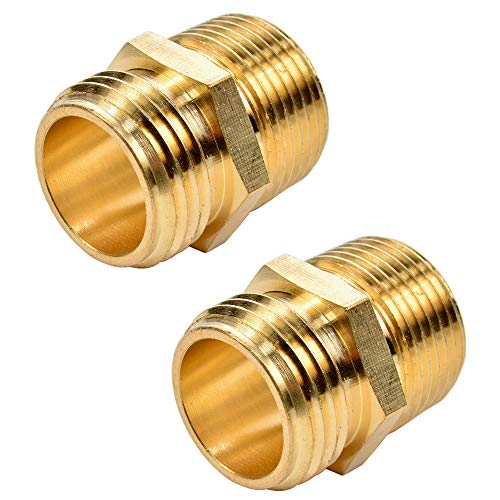
3/4" to 3/4" Male hose adapter, Adapter for connecting hose or fittings of different types

Type: Standard 3/4 inch garden hose thread female to 3/4 inch national pipe thread male.
How to Install the Chosen Brass Adapter on the Hose
Before you start, gather safety glasses, a bucket, a towel, and the appropriate wrench, then shut off the water supply to keep the work area dry. Verify the brass adapter matches the hose threading; inspect it for cracks or burrs. Insert the tab connector body into the faucet opening, aligning the screw slots, and push until it seats fully without forcing. Slide the rubber washer onto the threaded end, then hand‑tighten the nut for proper securement. Position the hose end over the washer, push it onto the connector body, and tighten the nut clockwise, applying gradual pressure to avoid stripping. Use pliers for a final quarter‑turn, then slowly restore water flow to test for leaks, adjusting the washer if needed. This routine supports preventive maintenance and guarantees a reliable connection. Ensure the rubber washer/o-ring is placed correctly to prevent leakage. Selecting the correct washer size helps maintain optimal water flow and prevents leaks. For an extra seal, consider using Teflon tape around the threads before tightening. Check the water pressure rating of the splitter to ensure it meets the washing machine’s requirements.

Secure Connection & Leak Prevention:Features a 3/8" male thread for the pressure washer adapter and a 3/4" female thread . Precision-cut threads ensure a leak-free seal without tape or tools.

Package Include: 2 pcs 3/4 inch double male garden hose connector, 2 pcs spare hose washers.

[Smart Extension] Extend your pressure washer hose attachments' reach without relocating your prssure washers.
Control Drainage and Prevent Backflow When Using a Garden Hose
When you position the drain hose higher than the washing‑machine tub, gravity keeps the water inside until the cycle finishes, preventing premature emptying. To achieve proper water level retention, set the hose at least 30 cm above the tub’s peak level and secure it with a clamp that won’t slip. Install a double‑ended female connector with a washer on the inlet side; this acts as a check valve for effective backflow prevention. Cap any unused inlet ports with a threaded cap to block reverse flow. Direct the hose into a tilted bucket angled away from the machine, ensuring the bucket can hold the full discharge volume. Verify all threaded joints with plumber’s tape and tighten clamps just enough to avoid hose damage. Test the system under pressure before running a full cycle. Properly maintaining the backflow preventer ensures compliance with local plumbing codes and protects your home’s water supply. Understanding the risk of contamination helps homeowners decide when a preventer is essential. An anti‑siphon valve can provide additional protection against backflow in high‑risk installations.
Future‑Proof Options: Dedicated Supply Hoses & Brief L2L Overview
Securing the drain hose at a proper height stops premature emptying, but the supply side still needs a reliable, future‑proof connection. Choose a dedicated supply hose with a 1/2″ inner diameter and standard 3/4‑in FHT fittings for secure hookup. Braided stainless steel offers clear stainless steel advantages: it resists weakening, leaking, and bursting under high pressure, stays flexible, and prevents corrosion from minerals and chemicals. Compared with rubber hose comparisons, EPDM rubber handles temperature but lacks that corrosion resistance and erodes faster. For most homes, a 4‑ft stainless steel hose provides lasting performance, while EPDM rubber serves as a cost‑effective backup. L2L (laundry‑to‑laundry) systems use these dedicated hoses to maintain pressure integrity across multiple machines, further future‑proofing your setup. The flow rate of a hose is also influenced by its diameter and length, with larger diameters and shorter lengths delivering higher gallons per minute (GPM) flow capacity. Selecting a hose with an appropriate diameter ensures optimal water volume for various gardening tasks. Longer hoses increase friction loss, which can reduce pressure at the nozzle.