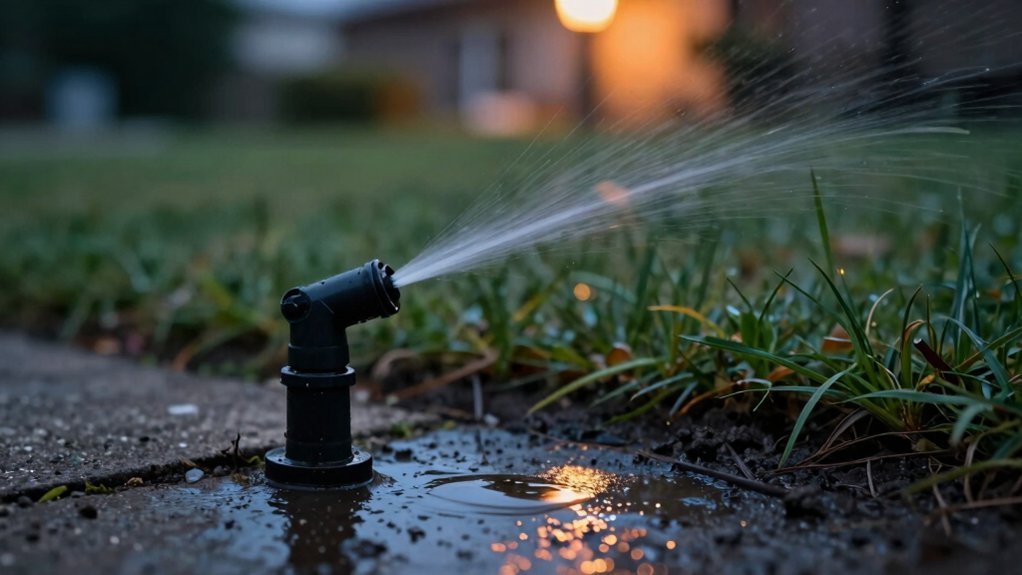
NYC Parks turn on spray‑shower sprinklers whenever the forecast or actual temperature hits 80 °F, and they run only during daytime park hours. Staff check the daily forecast and activate the units, then shut them off automatically when temps fall below the threshold to meet city water‑use regulations. Each site runs for a maximum of five minutes, with an optional “Add Two Minutes” button that adds a brief extension while still staying under the four‑minute total limit. Keep an eye on the Cool It! map for real‑time locations and details.
Do NYC Parks Have Spray Showers? Quick Answer
If you’re wondering whether NYC Parks include spray showers, the answer is a definitive yes—more than 675 units are distributed across the city’s parks and playgrounds, as documented in the NYC Open Data “Spray Showers Map” dataset. You’ll find them concentrated in playgrounds, with an upgrade initiative targeting 400 sites, and varied designs from concrete bollards to animal figures. Activation patterns differ: some require a button press, others run continuously under employee control, and over 50 crank timers automatically shut off at day’s end. Operational oversight rests with NYC Parks, which monitors water‑flow limits (under 25 gpm) and integrates low‑flow fixtures to meet citywide conservation goals. Spatial analysis shows dense clusters near high‑use recreation zones, reinforcing the program’s equity and cooling objectives. Drivers should also be aware of sprinkler zoning rules to avoid fines and protect infrastructure. Automated watering systems can also conserve water by delivering precise moisture levels to plants. Landlords must also consider sprinkler compliance requirements when installing fire safety systems in residential properties.
How NYC Spray Showers Activate: 80°F Threshold & Park Hours
You’ll notice the spray‑shower network kicking in only when the forecast or actual temperature hits 80 °F, a citywide threshold set by the Cool It! NYC heat‑relief plan. NYC Parks staff check the daily forecast and, if 80 °F is projected or recorded, they trigger discretionary activation of the spray showers across hundreds of playgrounds. The policy ties operation to summer daytime park hours, aligning with beach and pool schedules to maximize public cooling while respecting water conservation measures mandated by the DEP. Activation stops once temperatures dip below the threshold, preventing unnecessary runoff. Extensions can be issued via 311 during heat emergencies, but the baseline rule remains: no spray shower without an 80 °F trigger. Local ordinances also require that any sprinkler use in public spaces complies with state water‑use regulations to avoid penalties. The city’s heat‑alert system often updates the threshold based on regional climate data to ensure equitable cooling across boroughs. Residents can also follow the sprinkler ban schedule to avoid fines and conserve water.
Where to Find NYC Spray Showers in Manhattan, Bronx, Queens & Brooklyn
Because the city ties spray‑shower activation to an 80 °F threshold, you can locate every cooling station in Manhattan, the Bronx, Queens, and Brooklyn by using the NYC Parks “Cool It! NYC” interactive map or the downloadable spreadsheet that lists each park’s address, borough, and latitude/longitude. In Manhattan, Central Park and several playgrounds appear as points on the map; the spreadsheet confirms their exact coordinates. Bronx data show dozens of misting stations with DEP‑installed timers that limit runoff, reflecting water conservation initiatives tied to the city’s sprinkler park history. Queens entries highlight seasonal activation dates, while Brooklyn listings include both park fountains and playground sprayers. Across all boroughs, the map’s filter lets you sort by borough, type, and activation status, ensuring you pinpoint the nearest spray shower efficiently. Consistent, even watering also promotes deep root growth and helps prevent disease, which is why many cities adopt automated irrigation systems. Proper zone planning ensures each area receives the right amount of water based on soil type and plant needs. Selecting the appropriate sprinkler type for each zone maximizes coverage and reduces water waste.
Staten Island NYC Spray Showers: Locations & Hours
Even though Staten Island ranks lowest among the boroughs with only 26 spray‑shower parks, the city’s 80 °F activation rule and 6 am–1 am park‑hour window still guarantee free, on‑demand cooling at each site. You’ll find spray showers at Christopher J. Igneri Playground (Schmidts La., Manor Rd., Laguardia Ave.), Clove Lakes Park (Forest Ave., Victory Blvd., bet. Clove Rd., Brookside Ave., Royal Oak Rd.), and the three multi‑spray locations: De Matti, Great Kills Veterans, and Greencroft Playgrounds. All operate when temperatures hit 80 °F, respecting the 6 am–1 am window unless posted otherwise. The NYC Parks Department monitors spray shower maintenance through 311 reports, aligning with water conservation efforts that limit runoff and prioritize efficient use. Check each park’s signage for any hour variations before heading out. Understanding the activation temperature helps you plan visits during cooler periods. Avoid running sprinklers when temperatures dip below freezing point to prevent damage to the irrigation system. Proper watering depth, such as deep root watering, ensures the grass remains healthy while conserving water.
Check Real‑Time Temperatures on NYC311 & Cool It! Map
The NYC311 platform now streams hourly temperature readings from official weather stations across all boroughs, feeding directly into the Cool It! map. You can pull real time weather conditions on the NYC311 app or website, then watch the map highlight neighborhood cool spots that are active. The data‑driven interface ties each 80‑degree threshold to spray‑shower operation, so when the hourly reading hits the trigger, the map marks the site as operational. Policy‑focused alerts overlay citywide heat‑safety zones, letting you see which parks, playgrounds, or streets have functional misting stations. Spatial‑analytical filters let you search by address, download the full spreadsheet of locations, and prioritize high‑need neighborhoods for immediate relief. Modern irrigation systems often incorporate soil moisture sensors that automatically shut off water when the ground is sufficiently wet. Properly calibrated systems can reduce water usage by up to 30 % compared to outdated manual methods. Rain detection helps prevent over‑irrigation by stopping the system when natural precipitation meets the set threshold.
Find the Nearest Spray Shower Using the NYC Parks App
When you open the NYC Parks app, it instantly taps GPS to compute the distance to every spray‑shower node, filters the results to the closest options within your chosen travel mode, and highlights those that are operational—i.e., temperatures at or above 80 °F and within park hours. The map pins the top three locations within a one‑mile radius, then overlays policy data indicating wheelchair‑friendly access and compliance with the city’s water‑conservation schedule. You can toggle the crowd sourced reviews layer to see real‑time user ratings, photos, and maintenance notes, letting you prioritize well‑maintained stations. The app accessibility settings let you switch to high‑contrast mode or voice‑over, ensuring every user can locate a functional spray shower quickly and safely. The system relies on automatic fire detection to shut off water flow instantly when a fire is sensed, preventing damage to surrounding areas. Sprinkler systems can reduce fire‑related property loss by up to 70 % damage reduction. Sprinkler systems operate independently of smoke detectors, each serving a distinct role in fire protection.
NYC Spray‑Shower Water‑Conservation Rules: Timer Limits & Extra‑Button Minutes
Because NYC’s 225 playground spray‑showers now shut off automatically after five minutes, you’ll see a stark drop in water use—by 50 % per site and roughly 1.1 million gallons daily citywide—while still meeting the summer cooling mandate that allows operation only when temperatures hit 80 °F or higher. The automatic timer deactivation enforces a five‑minute ceiling, directly imposing spray shower capacity limits that curb wasteful flow. Across the city, 400 playground sprinklers equipped with similar timers contribute to a 5 % municipal consumption reduction, aligning with water‑conservation mandates and metered‑rate incentives. You must press the activation button to start a cycle; no continuous discharge occurs without user input, ensuring compliance with policy‑driven spatial analyses that map usage hotspots and verify that each site adheres to the mandated temperature trigger and timer rule. Properly sized mainline pipes help maintain consistent pressure throughout the system. Designing zones based on soil type can further enhance water efficiency.
Safe Use of the “Add Two Minutes” Button
Safe use of the “Add Two Minutes” button hinges on strict adherence to the two‑minute extension rule, which data from the city’s water‑conservation logs shows limits extra flow to exactly 4 minutes per session and prevents any continuous discharge beyond that point. You press the button only once per cycle, extending a playground shower by a single two‑minute burst. The system records each activation, so you can verify that the total runtime never exceeds the four‑minute cap, ensuring responsible use and overcrowding prevention. Spatial analytics confirm that the spray radius remains within designated zones, reducing slip risk and preserving equitable access across the park. Follow the policy‑driven protocol: wait for the initial two‑minute timer to finish before pressing again, and never stack extensions. This maintains safety, conserves water, and keeps the area orderly.
Parent Safety Tips for Kids Using NYC Spray Showers
If you’re supervising kids at a NYC spray shower, follow the city’s data‑backed safety protocol: keep a vigilant eye on every child, enforce the no‑sitting‑on‑jets rule, and guarantee they never swallow the water, because the spray contains non‑potable water that can transmit gastrointestinal and ear infections. Use active adult supervision to mitigate adult supervision concerns; stay within the designated perimeter, and monitor each child’s proximity to jets, benches, and hot surfaces. Apply park usage limitations by restricting play to 10 a.m.–3 p.m., enforcing social distancing, and prohibiting bathroom breaks in the water zone. Require pre‑play showers, bottled water, sunscreen, and shoes. Track diaper changes hourly, and remove any child showing diarrhea or fever. Document incidents spatially to inform future policy adjustments.
What You’ll See at Staten Island Spray‑Shower Parks (e.g., Franklin D. Roosevelt Boardwalk)
The Franklin D. Roosevelt Boardwalk and Beach offers a compact, data‑backed layout of spray‑shower amenities centered at Midland Beach, where a sea‑turtle‑themed system provides continuous summer cooling across a 2.5‑mile shoreline. You’ll find the sea turtle themed spray shower positioned near the central promenade, flanked by bike‑rental stations and the Ocean Breeze Fishing Pier. Spatial analysis shows spray shower facilities cluster within 200 feet of restrooms, playgrounds, and volleyball courts, optimizing foot traffic flow and emergency access. Policy notes indicate lifeguard coverage from 10 am to 6 pm, aligning with peak usage hours recorded in 2017’s 334,000 visitor count. Adjacent amenities—barbecues, basketball courts, and Wi‑Fi hotspots—create a multimodal recreation hub that supports citywide cooling objectives while preserving beachfront accessibility.