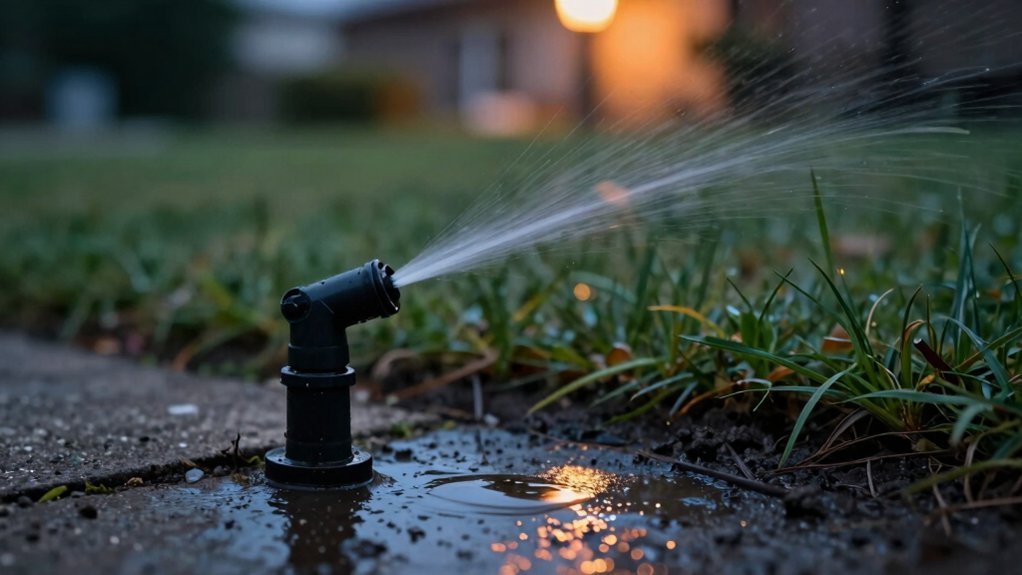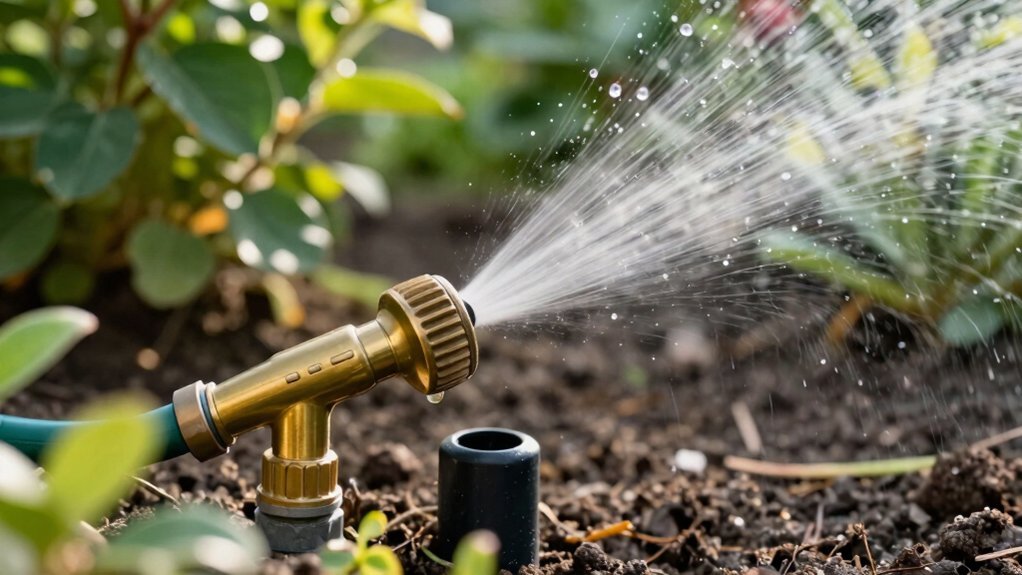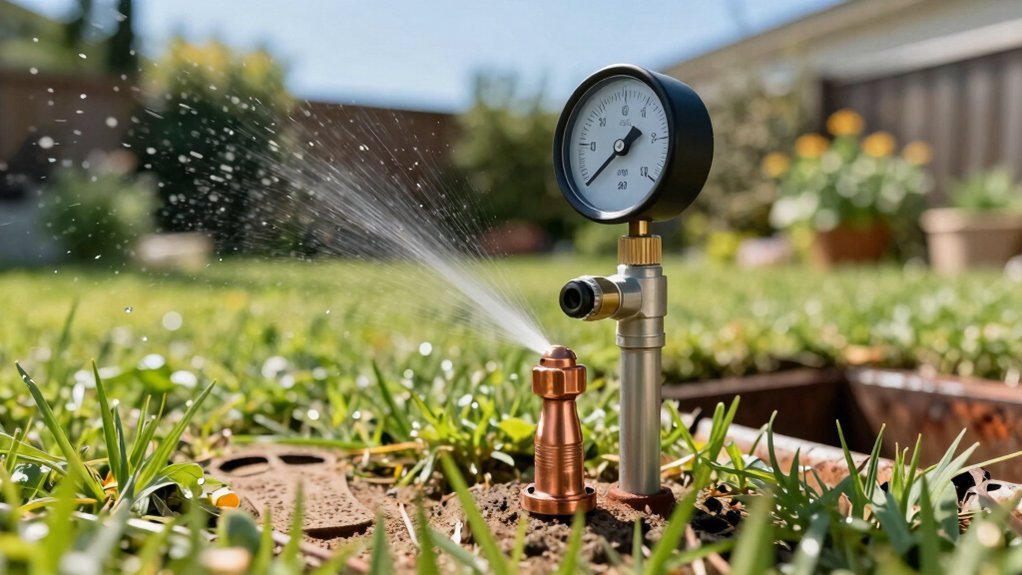
All right, you can mount an anti‑siphon valve above ground, just keep it at least six inches above the tallest sprinkler head—many codes push that to twelve inches. Obviously you’ll need a sturdy housing or conduit to shield it from frost and debris, and a 24 V solenoid like Rain Bird CP075 works fine up to 150 psi. Now check your local backflow rules; some places demand a minimum clearance and a pressure test of 30 psi. If you follow those steps, you’ll avoid leaks and stay code‑compliant, and the next section shows you exactly how to install and maintain it.
When Is an Above‑Ground Anti‑Siphon Valve the Right Choice?
Look, if you’re setting up a modest residential sprinkler system and you don’t want to wrestle with a maze of underground plumbing, an above‑ground anti‑siphon valve is usually the right call. You’ll pick it when local code selection mandates backflow protection near fertilizers or drinking‑water lines—most municipalities require a 6‑inch minimum clearance, and many ask for 12 inches. The valve’s built‑in float acts as a vacuum breaker, so you avoid contaminating your household supply without extra fittings. Now, check warranty coverage: brands like Orbit and Rain Bird often back their AVB and PVB models for five years, but only if you install it per the manufacturer’s tilt and height guidelines. Obviously, it’s best for low‑hazard, small‑scale setups; larger zones usually need inline RPZ units. All right, keep it above ground, tilt it slightly, and you’ll stay compliant and dry. The device can be quickly disassembled for repair because its simple construction allows easy access to the solenoid and float. Homeowners should also review their policy’s water damage clause to confirm whether sprinkler‑related repairs are covered. When using Teflon tape on the riser threads, ensure the tape is applied in a clockwise direction to prevent it from unravelling during tightening. Properly installed backflow preventers like a double check valve can further safeguard water quality by stopping reverse flow.
How High Should Your Above‑Ground Anti‑Siphon Valve Be?
If you’re hanging an above‑ground anti‑siphon valve, you’ll need to keep it at least six inches above the highest sprinkler head—most codes say six to twelve inches, and that extra clearance isn’t just a suggestion, it’s what creates the pressure differential that stops backflow. Now, check your local code compliance; many jurisdictions, especially California, insist on a minimum of six inches, with some PVB models demanding twelve. Look, measuring from the highest emitter gives you a safe baseline, then add a couple of extra inches for future repairs. Obviously, you’ll want to run pressure testing after installation to confirm the valve holds at least 30 psi without leaking. All right, use PTFE tape, PVC primer, and glue, level the valve, and you’re set. Use pliers to tighten the valve securely without over‑tightening. Understanding average repair costs helps you budget for any unexpected issues that may arise during installation. The valve’s role in preventing cross‑connection contamination is critical for protecting potable water supplies. Regularly inspecting the system can reveal uneven watering early, allowing you to address valve wear before it causes larger problems.
How Do Climate Conditions Affect Above‑Ground Anti‑Siphon Valves?
What’s the biggest thing that can turn your above‑ground anti‑siphon valve from a reliable guardian into a leaky liability? The climate durability of your valve hinges on temperature swings and moisture. Look, frost impact can crack plastic seats, especially when water freezes inside the vent. You’ll need a drain valve or a stop‑and‑waste unit if you expect sub‑32°F nights; otherwise, the valve will crack and leak. Obviously, zinc‑plated cast iron models with nitrile seals shrug off frost better than cheap PVC. Now, check the pressure rating—ASV‑075 and ASV‑101 hold up to 150 PSI at 110°F, but low‑pressure systems can let back‑siphonage sneak in. All right, keep the valve above ground, give it a quick post‑shutoff energizing, and you’ll avoid seasonal headaches. Protect your system by installing proper winterization before the first freeze. Backflow preventer devices are required by many local codes to safeguard potable water supplies. Regular inspection for corrosion and seal integrity prevents water damage and extends valve lifespan.
Best Brands for Above‑Ground Anti‑Siphon Valves
Three brands dominate the above‑ground anti‑siphon market, and you’ll quickly see why they’re the go‑to choices for most homeowners. Rain Bird’s CP075 and DASASVF075 give you solid overall performance; the 3/4″ or 1″ diameter options make valve sizing a breeze, and the 24 V AC series handles low‑flow drip lines nicely. Hunter’s ASV line feels rugged and compact, while the PGV series offers 1″‑2″ three‑way models that exceed 600 psi—perfect if you’ve got high‑pressure zones. Orbit’s 57461 blends an atmospheric vacuum breaker with a 24 V solenoid and a handy manual lever, and the PVC‑Lock fittings keep glue‑free installs tidy. All right, for a brand comparison, focus on the size you need, the pressure rating, and whether you want a manual or automatic actuation. Honestly, it depends on your layout, but these three cover most scenarios. Install anti‑siphon valves above grade to protect them from freezing and debris. Consistent, even watering promotes deep root growth and helps maintain optimal soil moisture. Properly timed irrigation cycles reduce water waste while ensuring plants receive the right amount of moisture. Understanding local building codes helps you determine if a permit is required before installation.
How Do You Install and Maintain an Above‑Ground Valve?
All right, you’ve picked a Rain Bird or Hunter anti‑siphon valve, but the real work starts when you actually get it up above ground. First, shut off the main water and check local codes—some places demand a minimum 6‑inch clearance and a higher spot than the tallest sprinkler head. Dry‑fit the pipe sizing; make sure the inlet and outlet match the valve’s arrow direction. Wrap PTFE tape twice on each adapter, screw them in with pliers—don’t over‑tighten. Prime and glue the PVC, hold the valve level, and let the cement set 30 minutes. Now run the solenoid wires to the timer, seal with watertight nuts, and test the zone after you slowly pressurize the line. Bleed pressure, inspect for leaks, then backfill with gravel for drainage. Routine maintenance? Tighten couplings by hand, clean threads, replace tape, and schedule a visual check each season. Remember, proper valve placement and pipe sizing keep your system dry and your garden happy. Ensure the valve is installed at a depth that prevents debris and rodent intrusion debris protection. The solenoid coil creates a magnetic field that lifts the spring‑loaded plunger to open the valve. Proper conduit protects the wiring from physical damage and moisture. For fire‑sprinkler systems, a low‑voltage control circuit can be added to integrate monitoring and alarm functions.