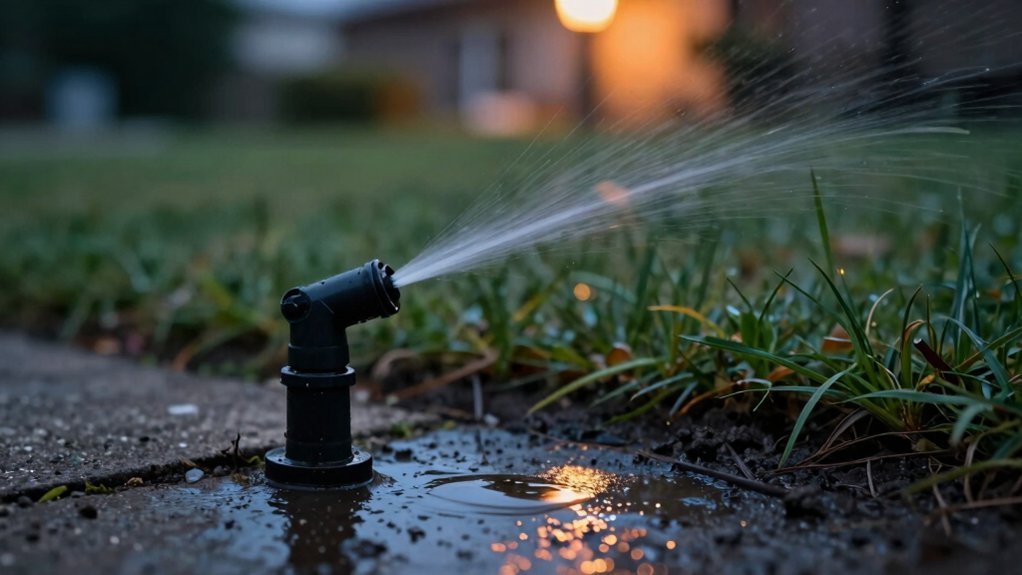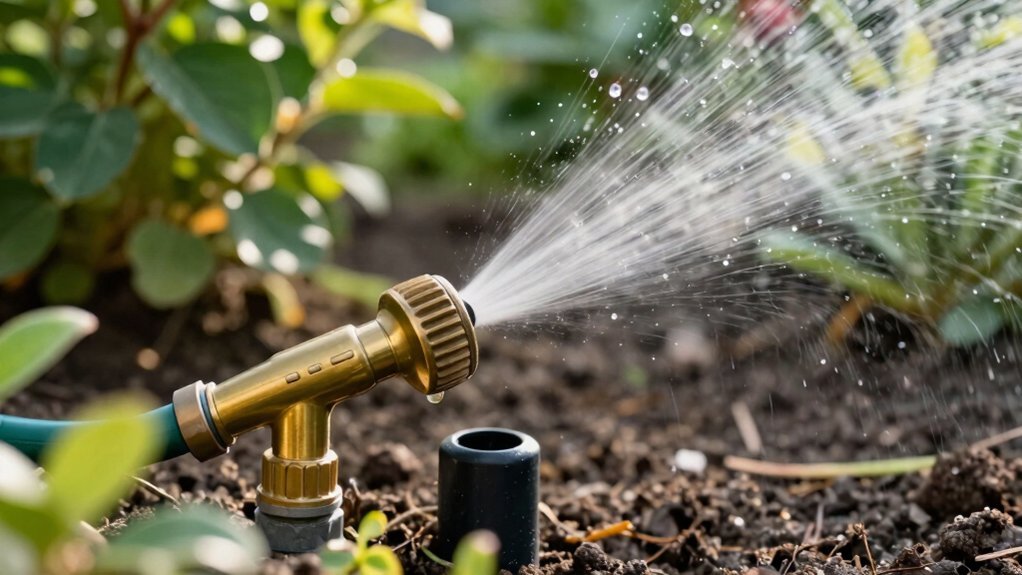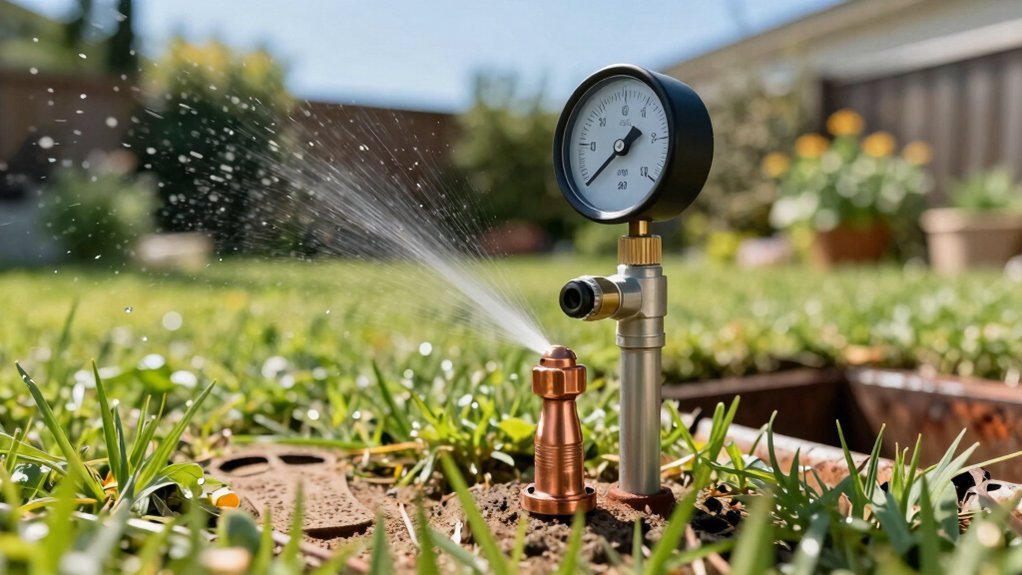
Run your sprinkler in 10‑minute bursts spaced evenly through the week, aiming for 0.5 inch per session until you hit the lawn’s weekly target of 1–1.5 inches. Adjust the total run‑time based on sprinkler type—pop‑up heads need about 13–16 minutes per zone, rotary heads 40–60 minutes, and soil texture (clay shorter 7–14 minutes, sandy 20–30 minutes). Schedule early‑morning runs (4‑6 AM) for best efficiency, and use a rain gauge to trim time after precipitation. Continue for you’ll uncover fine‑tuning tricks for seasonal changes.
Set a Lawn Watering Schedule: Weekly Water Needs
A healthy lawn needs roughly 1 – 1½ inches of water each week, which translates to about 1 – 1.5 hours of sprinkler runtime spread over several days. To set a schedule, calculate the weekly volume and split it into 20‑30‑minute sessions that deliver ½ inch per event, ensuring water reaches the 6‑inch root zone. Water every other day or three times weekly when temperatures sit between 70‑80°F; cut back to one‑two times below 60°F and increase to three‑four times above 90°F. Use a rain gauge to adjust for natural precipitation, avoiding excess that shallow roots or disease. Aim for deep, infrequent watering to maximize water penetration and prevent runoff, especially on clay soils where longer, less frequent cycles are essential. Proper timing also helps prevent fungal growth by allowing foliage to dry between watering sessions. Consistent moisture from the sprinkler supports photosynthesis by providing the water needed for chlorophyll to convert sunlight into energy. Adjust irrigation based on soil moisture sensor readings to fine‑tune watering and avoid over‑watering.

EFFORTLESS REPLACEMENT FOR HUNTER X-CORE & LEGACY MODELS: Easily upgrade your old or damaged Hunter indoor timer. The XC600i reuses existing wiring and mounts in minutes, perfect for replacing legacy models with no learning curve.

Smart Irrigation Control Anywhere: The Orbit B-hyve Indoor Smart Sprinkler Controller provides smart sprinkler timer functionality for efficient yard irrigation

Intelligent Irrigation Control: The Orbit Smart Sprinkler Controller manages watering with a powerful smart sprinkler that supports a completely automatic watering system
Compare Sprinkler Types for Your Lawn Watering Schedule
Choosing the right sprinkler type lets you match precipitation rates to your schedule’s timing and lawn’s shape. For moderate strips (7–45 ft wide), spray head selection favors spray nozzles: they deliver 1.5–3.0 in/hr in a constant fan, covering 10–15 ft radii in quarter‑circle arcs with up to 15 min runs. When you need slower, more precise dosing, rotary nozzles provide 0.4–0.8 in/hr via rotating streams, ensuring uniform water coverage across irregular arcs and allowing up to 60 min runs. Rotor heads extend reach to 30–90 ft, offering 0.2–0.8 in/hr with single or multiple rotating streams for medium‑to‑large lawns. Pop‑up heads, fixed‑pattern and 4 in high, work best at 30–40 psi for 30–45 ft zones, delivering consistent coverage without mixing rates. Fixed and hose‑end models suit small, high‑volume spots but risk runoff if not carefully calibrated. Impact sprinklers are known for their high water usage. Properly grouping plants by soil type can further improve efficiency. Selecting a sprinkler with a low precipitation rate can significantly reduce waste while maintaining healthy growth. Understanding the soil infiltration rate helps you set appropriate watering durations to avoid over‑saturation.


5 Pack of Rotary Nozzles. Adjust arc and radius without tools

Approved for sale/meets pressure regulation legislation requirements in: CA, CO, HI, VT, MA, ME, NY, OR, RI, WA, and Washington DC
Calculate Run‑Time for Your Lawn Watering Schedule
Wondering how long each zone should run? First, determine your weekly water target—1 inch for cool seasons, up to 2 inches in hot months. Convert inches to millimeters (1 inch ≈ 25 mm) and divide by the number of watering days (typically three). For a 10 mm per‑day goal, use the sprinkler’s flow rate: pop‑up or micro spray delivers 35‑45 mm/h, so a 10 mm dose requires 13‑16 minutes per zone. Rotary heads run slower (10‑15 mm/h), needing 40‑60 minutes for the same depth. Adjust for soil moisture: clay holds longer, so you can shorten sessions to 7‑14 minutes, while sandy soil may need 20‑30 minutes. Schedule early‑morning runs to maximize water conservation and maintain healthy soil moisture. Proper watering is the number one factor in turning a struggling lawn around. Understanding flow rate helps you match sprinkler output to the desired water depth. The hose’s flexible tubing allows water to travel with minimal resistance, illustrating how Bernoulli’s principle governs flow speed. Modern systems often incorporate soil moisture sensors to fine‑tune irrigation based on real‑time field conditions.

The pure brass inlet and outlet metal thread are heavy duty and enhance durability. No hassle from frequently installs and uninstalls from hose/faucet.
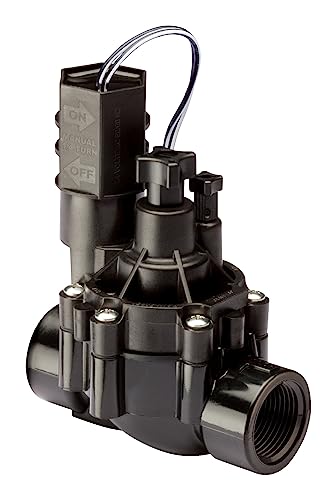
Residential / light commercial grade 1" female threaded inlet and outlet valve with flow control to avoid misting
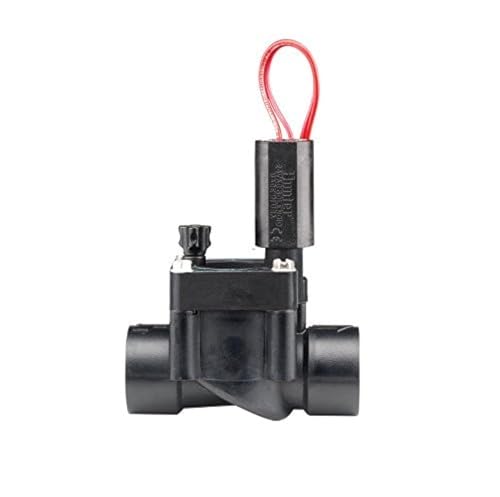
In turn, each model is available in either a flow control or non-flow control version
Quick Can Test: Verify Your Lawn Watering Schedule’s Output
Ever wondered if your sprinkler schedule truly meets your lawn’s water needs? Place empty tuna cans evenly across each coverage zone, using at least two 1.5‑inch gauge cans per zone. Run the sprinklers for a standard 15‑minute interval, timing any early puddling or runoff. After the run, measure water depth in each can with a ruler, sum the readings, and divide by the number of cans to get the average depth. Convert that average to the time needed for one inch using the chart (e.g., 0.5″ in 15 min → 30 min per inch). Compare the result to the 1–1.5 inches weekly target, adjust run‑time accordingly, and repeat the test to check sprinkler coverage and monitor soil moisture levels. Consider soil type when interpreting results, as it influences water retention and infiltration rates. For new lawns, aim for light frequent irrigation to keep the soil consistently moist without waterlogging. Proper root zone moisture is critical during the establishment phase to encourage deep root growth.

【Accurate Measure and Save Water】: 10 pieces rain gauges, the size is 5.12 x 1.89 x 1.57 in, abundant quantity can measure more accurate average precipitation, help to monitor the automatic sprinkler system, and adjust watering effectively and save water

Lets user calculate average rainfall or sprinkler output in a given timeframe

【Durable & Reusable】 Crafted from high-quality transparent plastic, this rain gauge is solid, corrosion-resistant, and less prone to breakage. It withstands outdoor wind and rain, offering long-lasting performance and reusable functionality for all your water measurement needs.
Choose 10‑Minute Bursts Over Long Cycles
After confirming your sprinkler’s output with the tuna‑can test, switch to 10‑minute bursts instead of a prolonged run. Set each zone for a 10‑minute pulse, then pause for an equal interval before the next pulse. This pulsating pattern delivers water in short, controlled bursts, achieving targeted water conservation while minimizing evaporation losses. The brief on‑time lets soil absorb moisture, reducing runoff and preventing compaction. Adjust flow between ¼ and 2 gpm to match plant demand, and use catch‑can readings to verify even distribution. By repeating the 10‑minute cycle, you maintain healthy root growth, lower utility costs, and keep turf stress low during hot periods. This method maximizes efficiency without over‑saturating the lawn. Proper head‑to‑head coverage ensures uniform water distribution across the lawn. Incorporating a soil moisture sensor can further fine‑tune each burst based on real‑time moisture levels. Optimizing zone overlap reduces redundant watering and promotes consistent coverage across the entire landscape. Proper sprinkler spacing minimizes water pressure loss and improves overall system performance.
Seasonal Run‑Time Adjustments for Summer, Fall, Spring
You’ll adjust your sprinkler’s run‑time each season by setting a percentage on the controller that scales all zones from the July baseline of 100 %. In summer, keep the controller at 100 % for July, drop to 96 % in June, and reduce to 88 % in August, using 10 % increments or smart‑controller auto‑adjustments. Sprinkler ban dates vary by municipality, so verify local regulations before scheduling summer watering. For fall, set September to 67 % and October to 43 %, scaling back frequency as plants enter dormancy; guarantee a minimum 10 % reduction in late fall. In spring, begin April at 54 %, raise to 74 % in May, and consider 25 % in March where appropriate. Fine‑tune each setting with soil moisture monitoring and micro climate considerations, rounding to the nearest 10 % and correcting dry spots by adding 10 % if needed. Seasonal adjustment allows easy watering with the seasons. Residents can also mitigate the impact of the ban by installing rainwater harvesting systems to capture and reuse runoff.
Water Early (4‑6 AM) for Maximum Efficiency
Adjusting seasonal run‑time percentages sets the baseline, but the real efficiency comes from when you actually water. Water early, between 4–6 AM, to exploit cool temperatures, high humidity, and low wind. This window cuts evaporation by up to 50 % and delivers deeper soil penetration, fostering stronger root development. Choose a proper sprinkler selection that distributes water uniformly, then follow consistent maintenance of head alignment and pressure to avoid runoff. Early watering lets grass blades dry before nightfall, minimizing fungal risk. If 4–6 AM isn’t feasible, schedule the next‑best slot before 10 AM, still avoiding midday heat. By timing irrigation to this early window, you maximize water use efficiency and protect lawn health. Lawns typically need 1‑1.5 inches of water per week. Proper sprinkler spacing ensures even coverage and prevents water waste. Optimizing spray radius helps match the water distribution to the specific plant type and soil condition, further improving uniformity. Automated systems can also integrate soil moisture sensors to fine‑tune watering cycles based on real‑time ground conditions.
Troubleshoot Over‑/Under‑Watering in Your Lawn Watering Schedule
When your lawn shows yellow patches, spongy soil, or persistent runoff, it’s likely over‑watering; conversely, dull gray‑blue spots, wilted blades, and footprints that linger indicate underwatering. First, run a screwdriver soil test: if the tool penetrates 6 inches easily, cut back watering; if it meets resistance, the soil is dry and needs more water. Adjust your schedule by pausing irrigation after rain, then aerate and improve drainage to prevent excess moisture. For dry zones, deep‑water 3‑4 consecutive days, then switch to a 1‑2‑3‑2‑1 cycle to promote root growth. Monitor rainfall patterns with a rain gauge and adjust sprinkler run‑times accordingly. Finally, adjust soil fertility to balance nutrient uptake and reduce stress from improper moisture levels. Use a soil core sampler to compare moisture content across multiple spots.

Accurate Soil Moisture Detection: The XLUX Soil Moisture Meter can tell you if the soil deep inside your pot or garden is dry, moist or wet; whereas your eyes and fingers can only determine the moisture level of the soil surface. The probe is 5.5 inches (14 cm) longer than regular styles, allowing it to measure the soil moisture at the bottom of larger and deeper flower pots.
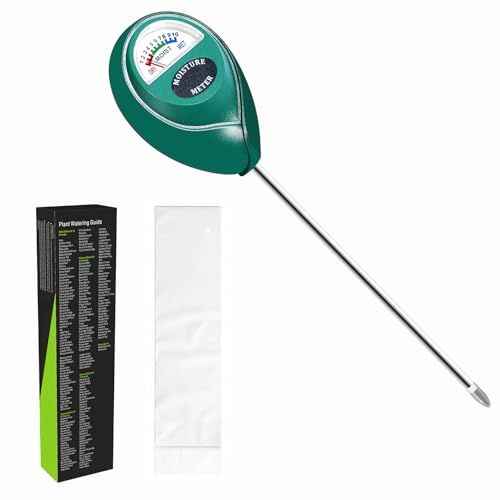
Trusted Since 2015: Become one of the many plant lovers who rely on the proven accuracy of XLUX. Established in 2015, our soil moisture meter has earned over 60,000+ verified ratings for its consistent performance. While many many newer brands come and go, we provide the long-term reliability and quality that American households have trusted for over a decade.
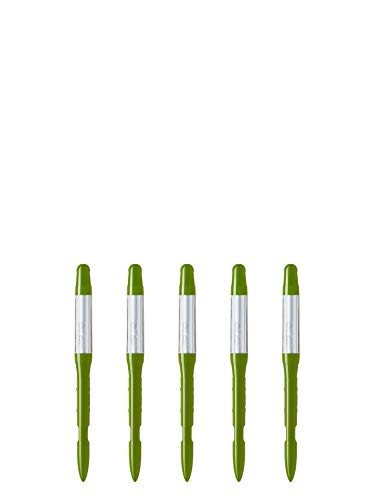
Dimensions: 0.4 x 0.3 x 4.7 inches (small) - Intended for pot sizes of 2, 2.5, and 3 - Ideal for small succulents