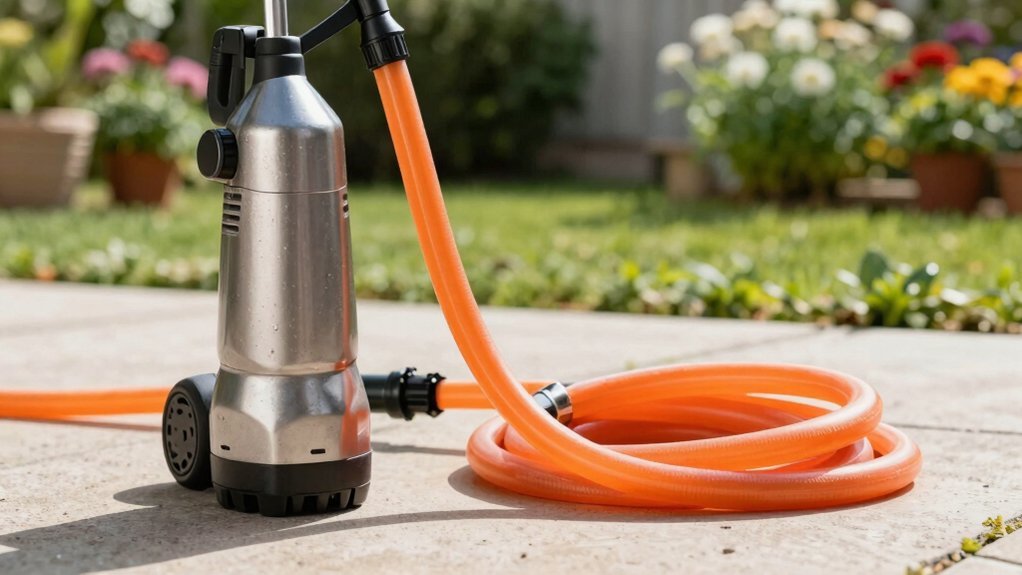
You need a GHT (non‑tapered NH‑type) thread that matches your sprinkler’s 3/4‑inch or 5/8‑inch hose ID for a leak‑free, tool‑free connection and proper pressure. Verify the thread angle is 60° NPT or 55° BSP and use a pitch gauge to confirm 11.5 TPI. Choose PTFE tape for NPT or pipe‑dope for BSP, and inspect the washer seal on the female end. If your hose runs longer than 75 feet or you need higher flow, a larger‑diameter GHT hose will keep spray patterns even and cycles short. Keep reading to uncover the full compatibility checklist.
What Is a GHT Thread and Why It Matters
Garden‑hose threads (GHT) are the standardized, straight‑tapered threads that connect hoses, spigots, sprinklers, and nozzles in residential outdoor water systems. You’ll find GHT defined by ANSI as a non‑tapered, NH‑type thread, most commonly 3/4‑inch (11.5 NH) or 5/8‑inch, that guarantees uniform standards across US garden equipment. The design relies on a hand‑tightened washer or O-ring, not thread interference, to create watertight connections. When you screw a male connector into a female fitting, the knurled exterior gives you grip while the internal gasket compresses, forming a pressure bond that prevents leaks. Because the threads are straight, you can attach and detach components quickly without tools, maintaining reliable, leak‑free flow for low‑pressure domestic irrigation. The O‑ring must be fully pressed to ensure a proper seal. Selecting the correct washer size is essential, as mismatched dimensions can cause water leakage and reduce flow efficiency. NPT threads are tapered and designed for high‑pressure applications, which is why they are not suitable for typical garden hose connections. Standardized GHT sizes simplify replacement and compatibility across different manufacturers.
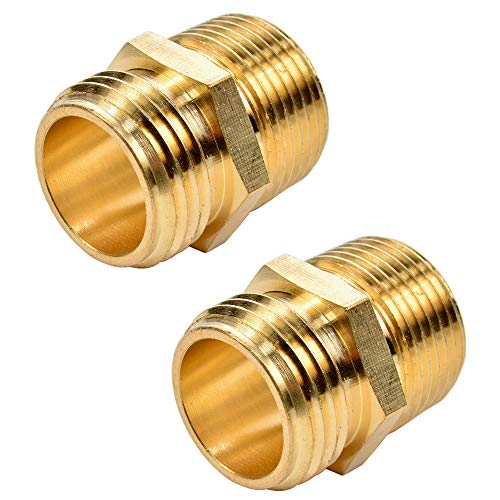
3/4" to 3/4" Male hose adapter, Adapter for connecting hose or fittings of different types

3/4" Hose Barb Fitting - The OD is 19mm, fit for hoses with 3/4 inch ID. The other end is standard 3/4" GHT FEMALE, easy to connect other outdoor watering and gardening systems.

Package includes: Solid brass 3/4" FHT Barb Fitting (4 pieces) + additional rubber ring (4 pieces)
Avoid Common GHT/NPT/BSP Mistakes
When you mix GHT, NPT, and BSP fittings without checking their thread geometry, you’ll quickly encounter leaks and damaged components. First, verify the thread angle: NPT uses a 60° tapered profile, while BSP employs a 55° parallel form. Use a thread pitch gauge to confirm pitch and measure taper at the first and fourth threads; a mismatch signals a cross‑threading concern. Never assume nominal size equivalence—½″ BSP does not match ½″ NPT. Choose the correct sealant: PTFE tape works for NPT’s tapered seal, whereas pipe‑dope or anaerobic sealant suits BSP’s parallel threads. Finally, inspect surface texture; sharp NPT peaks must not meet rounded BSP valleys. Proper identification prevents gaps, leaks, and component damage. Understanding fluid flow control is essential for reliable irrigation system performance. The nozzle’s conversion of pressure energy into kinetic energy illustrates how energy transformation drives fluid acceleration. A well‑designed nozzle can reduce pressure by restricting flow, converting pressure energy into kinetic energy and demonstrating the principle of energy conversion.
Match Hose Inner Diameter to GHT Sprinkler Nozzles
Choosing the right hose inner diameter is essential for matching the flow capacity of your GHT‑compatible sprinkler nozzles. Measure the hose ID with a caliper; a 5/8‑inch ID typically balances volume and handling for residential systems, while a 3/4‑inch ID supports high‑flow nozzles over longer runs. Verify that the GHT male end mates with the nozzle’s female threads—most integrated nozzle designs use a 3/4‑inch GHT connector. Align the ID with the nozzle’s GPM rating to maintain ideal sprinkler pressure, keeping the system within the 25‑70 PSI range. Undersized IDs cause pressure drop and uneven distribution, especially on multi‑nozzle setups. After assembly, test flow to confirm that the hose ID delivers the required pressure for the nozzle’s precipitation rate and radius. Garden hose diameters affect flow rate and pressure stability. Longer hose runs increase friction loss, so consider using a larger diameter to compensate for the added pressure drop. Friction loss can be mitigated by selecting smoother‑inner‑wall hose materials.

Extreme all-weather flexibility with durable outer cover resists abrasion and UV

Extreme all-weather flexibility

Package Includes: Solid brass 5/8" FHT Barb Fitting (4 pieces) plus additional rubber ring (4 pieces) for complete installation
When to Upgrade to Larger‑Diameter GHT Hoses
If your irrigation run stretches past 75 feet, you’ll start to notice a sharp pressure drop that a ½‑inch GHT hose can’t compensate for, making it essential to step up to a larger‑diameter hose. At 75‑100 feet, pressure loss becomes significant; a 5/8‑inch hose restores flow by reducing friction, while a 3/4‑inch hose delivers 27 gpm versus 9 gpm for ½‑inch. For large lawns, the wider bore maintains even spray patterns and shortens watering cycles. High‑volume tasks—filling troughs, running multiple sprinklers, or pressure washing—require the extra capacity of 5/8‑inch or 3/4‑inch hoses. Proper hose maintenance prevents blockages that could cause unexpected water pressure issues, and selecting the correct diameter avoids unnecessary weight while ensuring reliable performance. Choosing a heavier duty hose further reduces the risk of kinking on longer runs. The spray angle also affects how far the water can reach. To minimize pressure loss, consider the friction coefficient of the hose material when planning longer runs. Understanding Bernoulli’s principle helps explain how pressure and velocity interact within the hose.

Ultra-Lightweight & Durable Hybrid Garden Hose: Crafted with advanced PVC and rubber-polymer hybrid technology, Our 25 feet heavy duty garden hose is lighter than traditional heavy-duty water hoses yet incredibly durable, to meet your daily garden requirements.The middle woven layer ensures non-fading, abrasion-resistan, perfect for daily gardening, commercial tasks, and outdoor use.
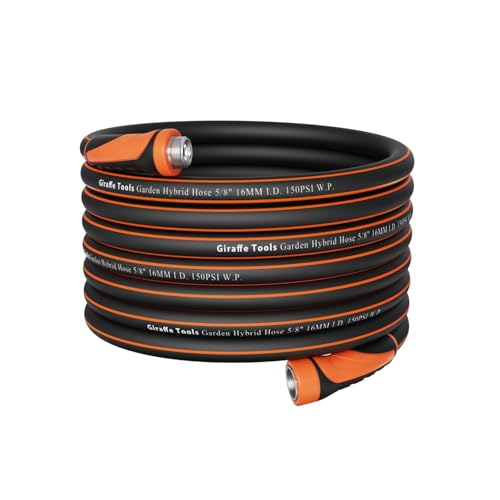
Ultra-Lightweight & All-Weather Flexibility: Experience unmatched portability with our ultra-lightweight hose, designed for effortless handling. Its all-weather flexibility ensures reliable performance in any climate—from freezing winters to scorching summers—making it the perfect choice year-round.
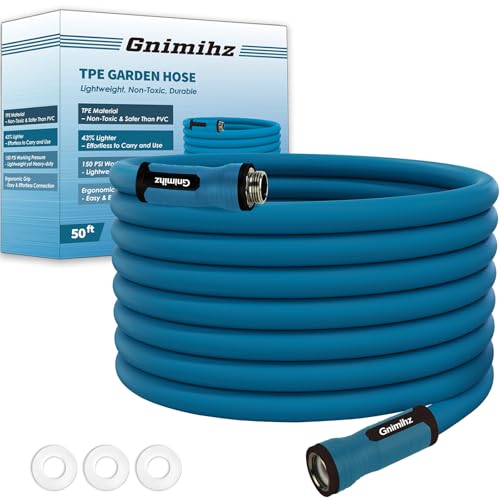
[ Stand Out from the Crowd ] Unlike ordinary hoses made of PVC or hybrid polymers, this Gnimihz 5/8-inch water hose is crafted with premium TPE material—and the difference is night and day. Lightweight like fabric/expandable hoses, with high water flow & durability of a traditional heavy duty 5/8-inch rubber hose.
Compatibility Checklist for GHT Threads Before Buying
A quick compatibility check saves you from costly leaks and mismatched fittings. First, perform proper ght thread identification by measuring the hose’s inner diameter; it must be 3/4‑inch. Then, use a thread‑pitch gauge to confirm 11.5 TPI on both male and female connectors, and verify the outer thread diameter matches the 3/4‑inch GHT standard. Inspect the female end for a washer seal, ensuring a straight‑thread profile. Next, conduct verifying ght thread specifications: compare product labels with ASME B1.20.7 compliance, and confirm the faucet or sprinkler uses GHT, not NPT, BSPP, BSPT, or metric M threads. Finally, test fit the male to the female GHT before purchase; a smooth, hand‑tight engagement indicates compatibility and prevents leaks. Connecting multiple hoses can reduce water pressure if the total length exceeds the recommended limit. A proper seal is essential for leak‑free operation when installing connectors. Selecting a hose with a higher pressure rating can enhance cleaning power for demanding pressure washer tasks.