You’ll find that fire sprinklers cut residential fire‑death risk by up to 90 % and lower the odds of dying in a reported fire by 80 %. A single head contains about 90 % of home fires, suppressing 99 % of them, and reduces average property loss from $45 K to roughly $2 K. Water use drops dramatically—341 gal versus 2,935 gal for a hose—thanks to automatic shut‑off. Keep going to uncover the broader community and environmental benefits.
Why Sprinklers Can Slash Fire‑Death Risk by Up to 90
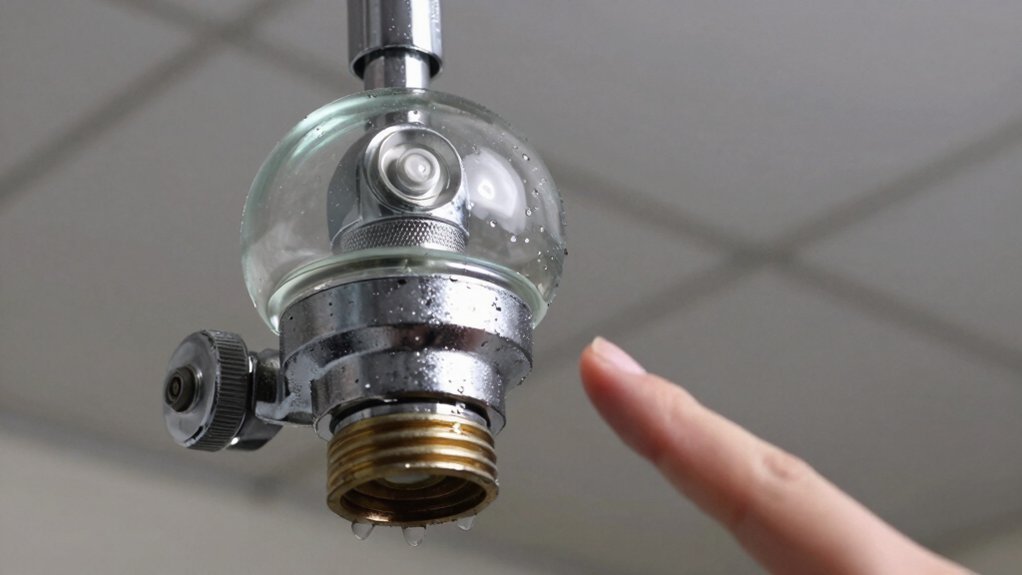
A single sprinkler can cut fire‑death risk by up to 90 %, and the data backs it up. You’ll see civilian fire death rates drop 89 % when sprinklers are present (2015‑2019) and the odds of dying in a reported fire fall 80 % in sprinklered properties. This translates into improved occupant safety and faster incident response, because a single sprinkler controls a home fire 90 % of the time and activates in 77 % of cases. Operationally, sprinklers fire in 92 % of fires large enough to trigger and contain 96 % of those. The containment statistics—95 % of flames confined to the room of origin and five or fewer sprinklers activated in 97 % of fires—demonstrate that early water deployment curtails smoke and heat spread, protecting lives and reducing firefighter exposure. Wet‑pipe systems are the most widely installed type of fire‑sprinkler system. Sprinklers are activated by heat, not by touch, because the thermal element expands only when exposed to fire‑heat temperatures. Standard sprinklers typically trigger at 155 °F when the ambient temperature reaches the activation threshold.

Compact Design: With dimensions of 1x1x8 inches, this rooftop sprinkler is compact and can fit in most spaces.

🛠️ EASY TO INSTALL – Features a standard 1-inch inlet connection for fast, tool-free setup with most residential water or irrigation systems.

How Sprinklers Detect Fire and Their Reliability
When a fire ignites, hot air rises and reaches the ceiling‑mounted sprinkler heads within seconds, causing the heat‑sensitive components—glass bulbs, fusible links, or bimetallic strips—to activate at their calibrated thresholds (typically 135 °F–165 °F). You’ll notice that each head works independently, so water is released only where the temperature exceeds the set point, limiting waste and avoiding false alarms. Scalable detection designs let you expand coverage without redesigning the whole system, while integrated sensor reliability—via addressable panels, smoke‑heat detectors, and electronic feedback—confirms fire presence before discharge. Wet, dry, pre‑action, and deluge configurations each meet NFPA standards, ensuring consistent response times and compliance across residential and commercial installations. Proper regular testing is essential to verify that these mechanisms function correctly when needed. Hydrostatic pressure testing validates the integrity of the piping network before activation. Routine inspection of sprinkler heads helps prevent corrosion and mineral buildup that could impair activation.
What One or Two Sprinklers Do to Contain Most Home Fires
If a fire starts in a room, the sprinkler head nearest the heat will activate within seconds, and that single head alone contains about 90 % of residential fires. You’ll see rapid activation because each head works independently, triggering at 155 °F, while surrounding heads stay closed. Data show 99 % of fires with one operating sprinkler are effectively suppressed, and 90 % of all home fires are contained by that one head. When a second head joins, the containment rate climbs to 82 % for two‑head operations, protecting adjacent rooms without flooding the house. The system’s limited water output—15‑26 gpm per head—delivers enough flow to cool heat and smoke while avoiding the massive water damage typical of hose lines. This compliance‑focused design meets fire‑code requirements and maximizes safety with minimal water exposure. Modern systems also integrate heat‑sensing technology to detect fire conditions rapidly. Dry‑pipe systems keep the pipes empty until a fire triggers a valve, preventing water damage in unheated spaces. Sprinkler systems operate independently of smoke detectors, which are separate safety devices that solely detect smoke and trigger alarms.

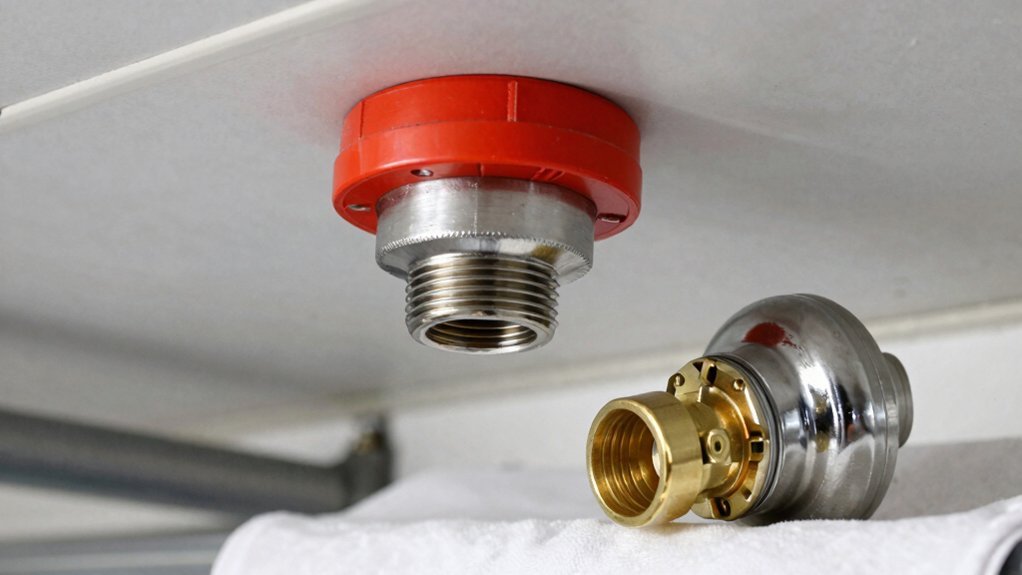
UL, CUL & FM Certified-FM Approved 3053441 and UL / CUL Listed EX6430. 1/2 " NPT (National Pipe Thread) American thread fire sprinkler heads. Underwriter Laboratories Listed. These 1/2 inch NPT pendent fire sprinkler heads fit new installation and replacement for residential, commercial and industrial fire protection systems. Trusted by contractors and property managers, they offer inspector-verified, code-compliant fire safety solutions and support bulk ordering for construction projects

UL, CUL & FM Certified-FM Approved PR470732 and UL / CUL Listed EX6430. 1/2 " NPT (National Pipe Thread) American thread fire sprinkler heads. Underwriter Laboratories Listed. These 1/2 inch NPT pendent fire sprinkler heads fit new installation and replacement for residential, commercial and industrial fire protection systems. Trusted by contractors and property managers, they offer inspector-verified, code-compliant fire safety solutions and support bulk ordering for construction projects

Conceals Holes for Various Sprinkler Types: Our escutcheon plates are designed to conceal holes cut for recessed sprinklers, ensuring a polished look for your fire sprinkler system.
How Much Property Loss Is Cut – From $45 K to a Few Thousand
About 90 % of residential fires see property damage drop from the $45 K average in unsprinklered homes to just a few thousand dollars when a sprinkler system is installed. You’ll notice that average loss falls to $2,166—a near‑70 % reduction—while structure‑fire loss is 55 % lower. Nationwide, fire‑related property damage hit $9.5 billion in 2013; sprinklers cut that figure by roughly half to two‑thirds in protected occupancies. The data show a 30 % lower overall loss and a 34‑68 % drop for buildings with sprinklers. This modest investment yields lifesaving returns, turning a potential $45 K hit into a few thousand dollars, and aligns with compliance standards that prioritize risk mitigation and cost‑effective protection. Installation costs vary based on building size and the type of sprinkler system chosen. Buildings exceeding square‑footage thresholds often must install sprinklers under the International Building Code. Fire extinguishers remain required in many jurisdictions to address fires that sprinkler systems may not fully suppress.

Standard 1/2" NPT (National National Pipe Thread)Threaded End Fire Sprinkler Fitting.

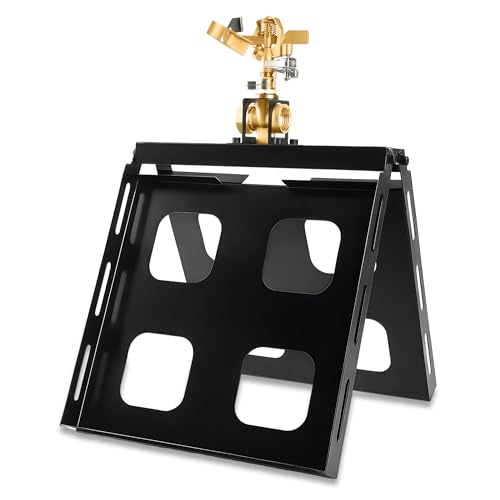
Tested Coverage: Covers up to 3300 sq ft at 60 PSI in light-wind conditions to help wet down shingles and nearby roof areas as part of wildfire-season preparation
Why Sprinklers Use Far Less Water Than Fire Hoses
A single sprinkler typically consumes only 341 gallons to control a fire, whereas a fire hose averages 2,935 gallons—about eight‑and‑a‑half times more. You’ll notice that sprinklers activate at 13‑20 gallons per minute, while hoses push roughly 250 gallons per minute, a flow‑rate gap that compounds over the 7‑12‑minute response delay firefighters face. Because only the nearest sprinkler fires, water targets the hot spot precisely, limiting runoff and supporting water conservation. In contrast, hose crews must arrive, connect, and sustain high‑volume streams, increasing total water usage and saturating structures. This rapid, localized response improves fire containment, reduces collateral damage, and aligns with compliance standards that prioritize efficient resource use. Firefighters typically arrive 7‑12 minutes after a 911 call. The system’s automatic shut‑off engages once the fire is extinguished, preventing unnecessary water discharge. Sprinkler systems have been shown to reduce casualty rates by suppressing flames before they can spread widely. Efficient water distribution is also a key benefit for agricultural crops such as corn and soybeans, where uniform irrigation supports higher yields.
What Community and Environmental Gains Come From Sprinklers
Sprinklers cut through fire hazards by delivering pinpointed water where it’s needed, which translates into measurable community safety gains and environmental benefits. You’ll see that fire‑spread protection boosts neighborhood resilience, cutting flashover risk and safeguarding firefighters. Data from Prince George’s County and Scottsdale show zero deaths and dozens of rescues, confirming an 80 % lower fatality likelihood. Localized water use curtails smoke and toxic emissions, preserving nearby green spaces and reducing runoff. Because damage stays confined, demolition waste drops, delivering reduced waste and pollution. Developers reap lowered developer costs: single‑access roads, fewer basement windows, and tee turnarounds cut infrastructure expenses, while incentives in Altamonte Springs offset 85‑125 % of sprinkler installation. The net effect is safer streets, cleaner ecosystems, and more affordable, compliant construction. Proper installation also requires waterproof conduit to prevent corrosion and electrical hazards. Elevator shaft fire codes often mandate sprinklers to protect vertical travel openings and limit smoke spread. Pulling a fire alarm activates the fire alarm system, which then signals the sprinkler control valve to discharge water in the affected area. Signal to valve ensures rapid response and coordinated fire suppression.