You can technically run indoor sprinkler loops on thermostat wire, but it isn’t code‑compliant or ideal. Thermostat wire is CL2R/CL3R rated for fire protection, has moisture‑resistant insulation, and solid copper conductors, yet it lacks a direct‑burial rating and is only rated to about 90 °C, making it unsuitable for most sprinkler environments. Its smaller gauge can cause excessive voltage drop, especially over long runs, risking unreliable valve actuation. Proper color‑coding, waterproof splices, and surge protection are essential, and a switch to 16‑AWG UF‑type sprinkler wire is usually the more suitable choice. Continue for a detailed step‑by‑step guide.
Is Thermostat Wire Suitable for Indoor Sprinkler Runs?
Can thermostat wire work for indoor sprinkler runs? You can use 18 AWG thermostat wire for indoor sprinkler loops when indoor meet indoor accessibility and residential feasibility requirements. The cable’s CL2R/CL3R rating protects fire spread in vertical riser installations, and its moisture‑resistant insulation handles dry indoor environments up to 90 °C. Solid copper conductors guarantee low‑voltage stability, and the brown jacket aids identification behind walls. Although thermostat wire lacks a direct burial rating, it matches sprinkler‑wire gauge and can be labeled correctly for indoor use. Guarantee the circuit remains class 2, avoid mixing with 240 VAC lines, and verify that the installation complies with local code. This approach offers a cost‑effective, technically sound solution for residential indoor sprinkler systems. wiring diagrams provide visual guidance for connecting controllers, valves, and power supplies correctly. The main pipe distributes water from the source to each zone, ensuring consistent pressure throughout the system. low‑voltage control circuits can be integrated for monitoring and alarm functionality.
How Do Code and Rating Requirements Differ for Thermostat vs. Sprinkler Wire?
A 24‑V thermostat circuit is classified as Class 2 low‑voltage and is largely exempt from the full NEC, whereas a sprinkler system must meet the local electrical code for low‑voltage irrigation, including a direct‑burial‑rated cable and a white common wire. You must check code compliance: thermostat wire lacks direct‑burial rating, so its climatic exposure suitability is limited to indoor, temperature‑sensitive environments. Sprinkler wire, often 16‑gauge UF‑type, is rated for underground burial, moisture, and temperature extremes, satisfying irrigation code mandates. The NEC exempts Class 2 thermostat circuits from conduit requirements, but sprinkler wiring must follow low‑voltage irrigation standards, using a white common and color‑coded zone conductors. Substituting thermostat wire in a sprinkler run violates rating requirements and jeopardizes safety. Proper conduit selection, such as EMT or PVC, helps protect sprinkler wiring from physical damage and moisture. Additionally, Schedule 40 PVC is frequently used for irrigation tubing due to its pressure rating and code acceptance.

SPECIFICATIONS:12/2AWG, 100 ft length; rated 600 volts, Durable Copper Construction Features two solid copper conductors with a PVC jacket
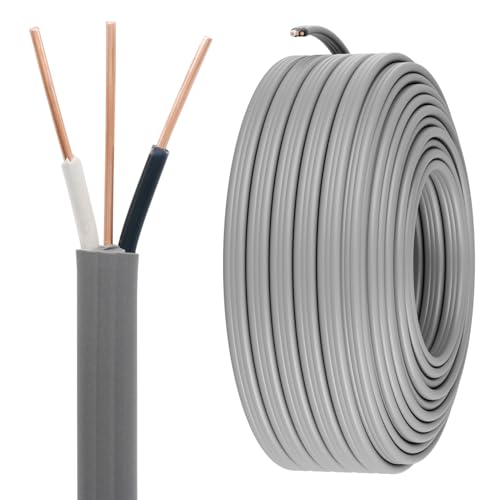
PERFORMANCE: UF‑B 12 AWG solid copper conductor with ground wire; delivers consistent electrical conductivity for reliable outdoor/indoor connections

Professional Grade: 18-gauge copper conductors with color-coded insulation for easy valve identification
How Does Gauge and Voltage Drop Affect Sprinkler Performance?
When you size the wire for a sprinkler system, the gauge you choose directly determines the voltage drop and, consequently, the solenoid’s ability to open reliably. Higher gauge numbers mean smaller diameter and higher resistance, so a 20 AWG run will lose more voltage than a 14 AWG run of equal length. Use the V = 2 × L × I × R formula to calculate drop; keep it below 4 V for 24 VAC solenoids, which tolerate down to 20 VAC. Remember the impact of temperature on resistance: buried wire stays cooler, reducing drop, while hot conditions raise resistance and worsen the effects of excess voltage drop. For long runs or multi‑valve circuits, select 12 AWG or larger to maintain adequate voltage and reliable valve actuation.

Low Voltage Wire : 12/2 gauge black and red speaker wire is ideal for low voltage applications such as 12V/24V DC circuit connections, home or car speakers, home appliances, single color LED light strip, lamps, automotive, boat etc
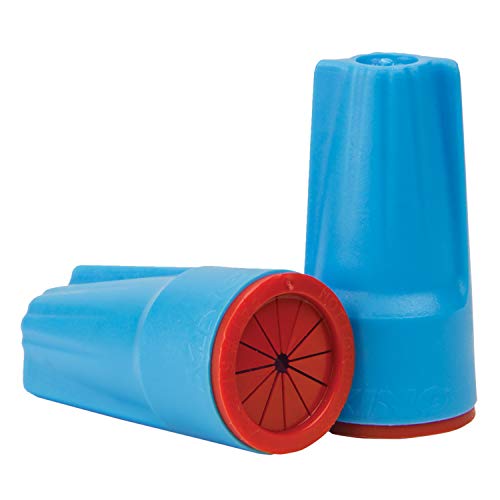
For connections exposed to condensation, water, vapors or dust

【Specification】22 Gauge 5 conductor wire(Black & Red & Yellow & White & Green). Black PVC Jacket. 10FT/3M. Max input voltage: 300V(also can for 5V / 12V / 24V). Maximum current: 4.5A. Rated working temperature from -20℃/-4℉ to 80℃/176℉. Material:PVC+Tinned Copper.:VW-1 and FT1
What Color‑Coding Practices Prevent Mis‑Connections in Sprinkler Systems?
Voltage drop isn’t the only factor that can cause valve failures; wiring mistakes often lead to the same downtime. You prevent mis‑connections by applying a consistent color coding scheme that matches industry standards. Assign red, white, blue, green, and brown to conductors 1‑5, then extend with black, yellow, orange, purple, and gray for conductors 6‑10. Use white or green as the common wire, linking all valves on the manifold. For zone control, keep each valve’s wire a unique color—red for zone 1, yellow for zone 2, blue for zone 3, and so on. Label both valve and controller ends, and seal every splice with waterproof connectors. Test each connection with a multimeter before burial to verify continuity and polarity. The common wire should be white to comply with most electrical codes. Properly sized low‑voltage AC power sources ensure reliable valve operation and reduce energy consumption. Selecting a proper‑rated UV‑resistant cable helps prevent degradation when buried directly underground. A well‑grounded system can also prevent sprinkler wire shock by safely diverting stray currents.
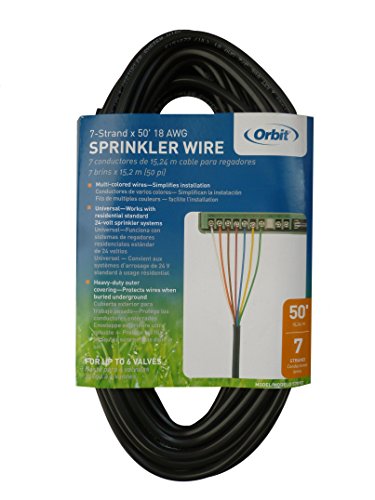
Professional Grade: 18-gauge copper conductors with color-coded insulation for easy valve identification
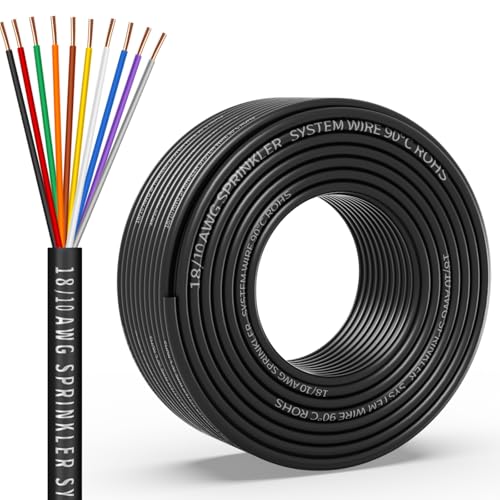
HIGH CONDUCTIVITY: The 18/10 sprinkler system wire uses 10 solid copper conductors. Pure copper ensures stable and efficient current transfer, ensuring reliable and long-lasting performance of your irrigation system

🏴JIZHGRAD YARD FLAGS➣Made of PVC flag and high -carbon steel wire pole. The flag color is bright and not easy to fade, and it is not easy to tear. These poles can easily penetrate the soil without deformation.
When Is a Pigtail Coil or Surge Protector Needed for Sprinkler Wire?
If you’re installing a Rain Bird decoder or any 2‑wire irrigation loop, you’ll need a pigtail‑equipped surge protector whenever the wire run exceeds 500 ft, the ground‑path resistance could rise above 50 Ω, or the system is exposed to potential lightning strikes. Install an LSP‑1 protector at the end of each run and repeat every 500 ft to keep grounding resistance under the 50 Ω limit. Do not rely on coiling configuration for surge protection; coils do not mitigate voltage spikes. Use pigtail‑connected surge suppressors in tower boxes or pivot panels, and guarantee each protector is properly grounded. This arrangement meets decoder standards, prevents equipment damage, and maintains warranty compliance. Regularly inspect the wiring for corrosion and damage to catch early signs of deterioration. Always verify that connections are sealed with waterproof connectors to prevent moisture intrusion. Proper rain sensor integration can further reduce unnecessary watering cycles.
How to Label and Document Thermostat‑Wire Sprinkler Installations?
After installing surge protectors to keep the line under 50 Ω, the next step is to label and document the thermostat wire now serving the sprinkler system. Use masking tape or pre‑printed thermostat labels on each conductor before you disconnect it. Assign letter designations (R, W, Y, G, C) that match valve terminals, then add zone‑specific colors—brown for station 1, red for station 2, etc. Photograph every connection, write a color‑to‑terminal table, and note any unused wires. Record terminal variations such as W/O‑B or R/Rc/Rh. Post a color‑code diagram near the control board for future maintenance. Follow wire sizing recommendations and select waterproof connector options to protect outdoor joints. Check the sprinkler control box location before starting any work. Remember to call 811 before digging to avoid damaging underground utilities. Local building codes often require a permit for sprinkler installations, so verify with your municipality before proceeding.
When Is 16‑AWG Sprinkler Wire a Better Choice Than Thermostat Wire?
Why choose 16‑AWG sprinkler wire over thermostat wire? When you have underground pipe connections, 16‑AWG’s direct‑burial rating protects against moisture, soil chemicals, and temperature swings—thermostat wire isn’t certified for burial. Its thicker gauge reduces resistance, so long runs from an external power supply to distant valves experience minimal voltage drop, unlike 18‑AWG thermostat conductors. The wire also supports pigtail coils that absorb surges during lightning, safeguarding solenoids. Color‑coding for sprinkler zones adds a white common plus colored control wires, preventing the HVAC‑specific palette that can cause circuit errors. Manufacturing standards tailor 16‑AWG to irrigation voltages and environmental demands, making it the reliable, code‑compliant choice for outdoor systems. Proper backflow prevention is essential to keep contaminated water from entering the potable supply, and many local codes require a backflow preventer for irrigation systems. Installing a backflow preventer helps prevent cross‑connection contamination and complies with safety regulations.

【Specification】 100FT 16/2 Conductors, SPT-2 black PVC insulation, pure copper, VW-1 fire resistant, maximum working volt 300V. Great for low voltage use.

Multi-Use Audio Cable – With 500 feet of total speaker cable, this bulk spool of 16AWG audio wire is perfect for home surround sound and speaker systems, both inside and outside. The bulk spool makes installation quick and easy without the need to pull multiple wires and the durable, insulated, UV-resistant jacket keeps everything protected.

Professional Grade: 18-gauge copper conductors with color-coded insulation for easy valve identification
Step‑by‑Step Thermostat‑Wire Install for Indoor Sprinklers
How do you install thermostat‑wire for an indoor sprinkler system safely and efficiently? First, verify the 18 AWG wire is CL2 or CL3R rated and measure the run to avoid voltage drop. Plan a conduit or cable‑tray path, using riser‑rated cable for vertical sections and keeping it away from 240 VAC lines per NEC. Strip ½ inch from each conductor, label any non‑standard colors, and match red, white, yellow, green, and blue to the valve’s terminals. Secure the wire with staples or ties, maintaining a 90 °C dry environment. Connect each conductor with low‑voltage connectors, test continuity, then power the controller and cycle zones. Document and label all connections to support long‑term maintenance and enhance design flexibility. Proper water pressure ensures consistent spray coverage across all zones. Garden hose threads are a low‑pressure alternative to NPT connections for flexible hose applications. Understanding sprinkler zone layout helps balance water distribution and reduces runoff.

[About Our Thermostat Cable] - 18 Gauge 2 Conductor , CL2, ETL Complied, temperature Rating: -20°C~ +60°C, voltage Rating: 150.

[About Our Thermostat Cable] - 18 Gauge 2 Conductor , CL2, ETL Complied, temperature Rating: -20°C~ +60°C, voltage Rating: 150.

⚡【True Gauge 18 AWG – 0.04in Solid Copper Conductor】Built with 99.97% oxygen-free (OFC) solid copper conductors and true 0.04in(1.02mm) standard diameter for superior conductivity and reduced voltage drop. Ideal for 24V HVAC controls, thermostats, doorbells, security/alarm wiring, and other low-voltage control systems under 30V.