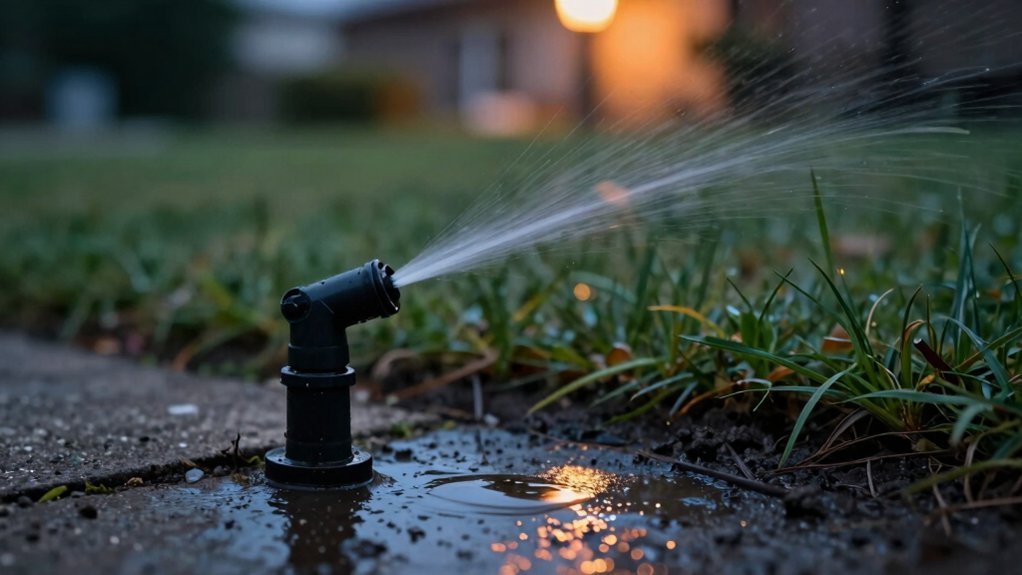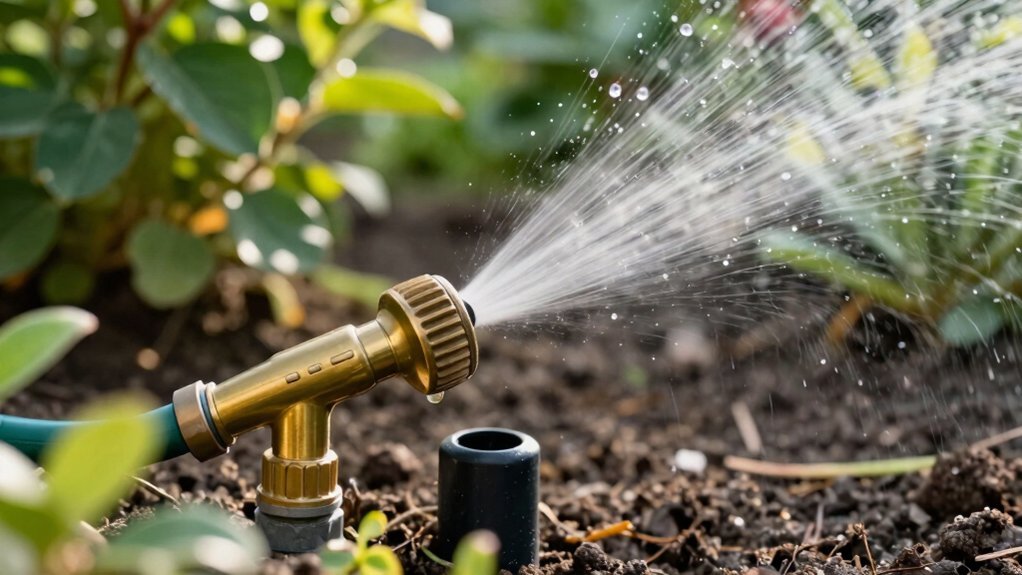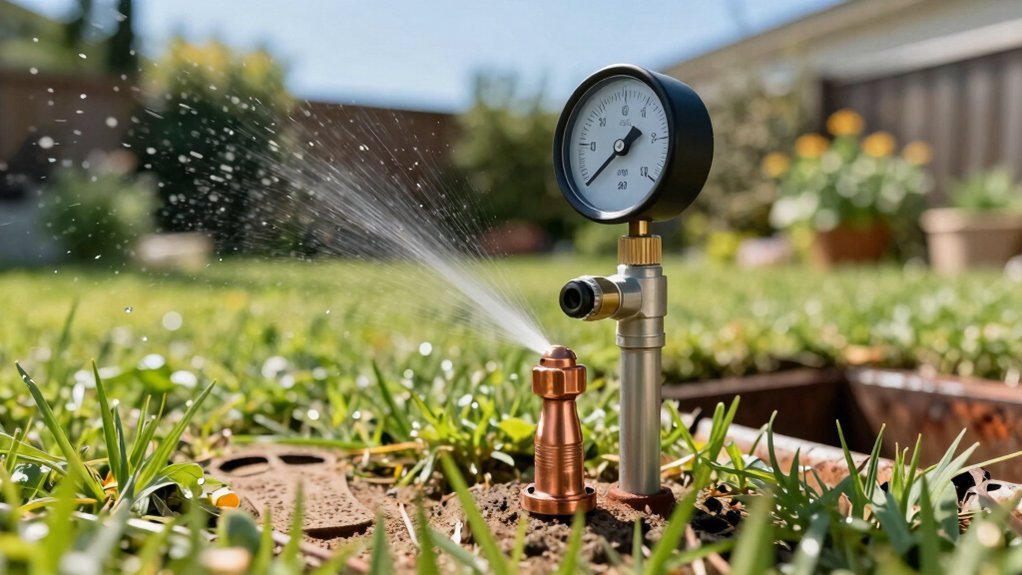
You’ll find that oscillating sprinklers work great for most gardens because they sweep a low‑velocity, fan‑shaped curtain of water that matches rectangular or irregular beds, delivering rain‑like droplets that soak soil evenly without runoff. The heart‑shaped cam keeps the arm moving at a constant, slow pace, so each nozzle sprays the same rate, conserving water and protecting delicate seedlings. Adjustable width, length, and angle let you fine‑tune coverage to your plot’s size and shape, and modern models add pressure‑regulating heads and moisture sensors for extra efficiency—keep reading to uncover how to install, adjust, and maintain them on slopes.
What an Oscillating Sprinkler Is and Why It’s Ideal
An oscillating sprinkler is a garden‑watering device that sweeps a narrow tube of nozzles back and forth, creating a fan‑shaped curtain of water that can cover rectangular areas up to roughly 20 × 30 feet. You’ll notice the spray arm rotates on a heart‑shaped cam that moves at about one revolution per minute, driven solely by water pressure. The internal turbine converts flow into motion, so no electricity or batteries are needed. Adjust knobs let you fine‑tune width, length, and angle, giving you precise control over the spray pattern. Because the water is delivered as a steady, low‑velocity fan, you achieve water conservation benefits—less runoff, deeper soil infiltration. The design requires low maintenance operation; the pressure‑relief valve and spring‑loaded disc protect the mechanism, and the unit has no moving parts that need frequent service. This combination of efficiency and simplicity makes the oscillating sprinkler ideal for rectangular lawns and garden beds. The directional control mechanism uses sliding tabs with a rotary detent to alter oscillation travel and switch rotation direction. Properly sizing the zone based on water pressure ensures even distribution and prevents over- or under‑watering. Zone zoning helps match the sprinkler’s output to specific plant water needs. The flow dynamics of the fan‑shaped spray promote uniform moisture penetration across the entire coverage area.
How an Oscillating Sprinkler Provides Even Coverage
A well‑designed oscillating sprinkler delivers uniform water because its heart‑shaped cam drives the spray arm at a constant, low speed, making the fan‑shaped curtain sweep evenly across the entire rectangular area. You’ll notice the cam’s 1 rpm rotation, coupled with a 2088:1 gear ratio, keeps the spray tube moving slowly enough for each nozzle to deposit the same volume per foot. The 17‑nozzle bar creates a fan that spans up to 20 × 30 ft, and the back‑and‑forth motion matches the lawn’s edges, eliminating dry spots and puddles. Adjustable coverage settings let you narrow the angle or shorten the length, preserving uniform watering patterns while avoiding overspray onto sidewalks or driveways. This precise control guarantees consistent hydration across any rectangular garden. The sprinkler’s wide base ensures stability even on high‑pressure water lines. Proper sprinkler spacing calculations help achieve uniform coverage while conserving water. Sprinkler head spacing must consider spray radius and water pressure to avoid overlap and runoff. Selecting the correct nozzle type is essential for maintaining consistent flow and pressure across the spray area.
Why Its Rain‑Like Spray Protects New Plantings
The even coverage you just saw translates directly into a rain‑like spray that safeguards fresh seedlings. Your sprinkler’s tiny fan‑shaped nozzles release low‑impact droplets that fall gently, mimicking natural rainfall without blasting delicate shoots. The oscillating arm and heart‑shaped cam keep pressure uniform, so each pulse lands softly, allowing soil to absorb before the next spray arrives. This intermittent delivery prevents seed washout and promotes gentle root establishment by keeping the medium consistently moist but never saturated. By avoiding high‑pressure jets, you reduce erosion, leaf damage, and disease risk. The result is a steady, even wetting that supports new plantings while preserving soil structure. Properly timed irrigation can also conserve water by matching application rates to plant needs. Understanding flow rate helps you fine‑tune the system for optimal coverage. Selecting the right low‑flow sprinkler head ensures uniform irrigation across varied plant zones.
Match Sprinkler Reach to Your Garden’s Size and Shape
Choosing the right reach starts with measuring your garden’s dimensions and comparing them to a sprinkler’s coverage specs. Measure length and width, then match those numbers to a unit that offers a spray width between 13‑55 ft and a range of 23‑68 ft. For a rectangular lawn up to 4,000 sq ft., a model like the GARDENA AquaZoom, with a 22.9‑68.9 ft reach, fits perfectly; set the dial to sweep the exact width you need. Adjust the one‑directional setting if you have a narrow strip or a newly seeded patch, ensuring moisture control needs are met without overspray. Record the pressure (40‑80 PSI) and check the flow dial during each sprinkler maintenance routine to keep performance consistent. Proper head height optimal coverage helps achieve uniform water distribution while minimizing waste.
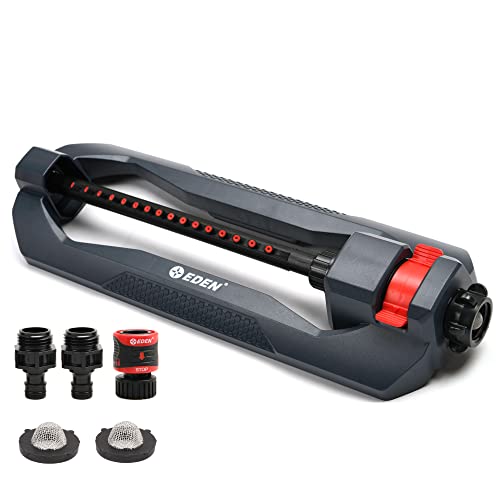
16 PRECISION NOZZLES- Provides even, consistent watering coverage for lawns and gardens up to 3,600 sq. ft..

16 clog-resistant spray nozzles provide even watering with coverage up to 4,069 sq. ft. (378 sq. m.) in a compact design

20 precision nozzles provide maximum coverage up to 4,500 sq. ft. for healthy grass and growing gardens
Water‑Saving Features of Modern Oscillating Sprinklers
Wonder how much water you can actually save with today’s oscillating sprinklers? You’ll see that multi‑stream rotational nozzles cut precipitation from over 2 in/hr to about 1 in/hr, giving soil time to absorb water instead of runoff. The heart‑shaped cam and gear‑drive precision keep each nozzle delivering matching rates, which boosts distribution uniformity by roughly 45 %. Sensors linked to soil moisture monitoring stop irrigation as soon as the ground is wet, while weather‑based controllers provide energy efficient automation that adjusts flow in real time. Pressure‑regulated heads reduce misting, and low‑stream trajectories target root zones directly, cutting evaporative loss. Upgrading to high‑efficiency heads can trim water use by 30 % without a full system overhaul. The MP Rotator Nozzle features a spring‑loaded retract mechanism that keeps the nozzle clear of debris when not in use. Selecting the appropriate sprinkler head type ensures optimal coverage and further reduces waste. Choosing a nozzle with a compatible material rating helps prevent leaks and extends system lifespan. Understanding soil absorption rates is essential for matching sprinkler output to the garden’s capacity.

FULL-SIZE COVERAGE IN A COMPACT DESIGN: Get the power of a full-sized oscillating sprinkler in a space-saving form—covering up to 4,000 sq. ft. to easily water large lawns, gardens, and newly seeded areas.

NOTE: Compatible only with standard 3/4" US water pipes (see image 2). During installation, ensure the quick-connect fittings and filter nozzles are fully sealed with no leaks.

FULL-SIZE COVERAGE– Get the power of a full-sized oscillating sprinkler in a space-compact form—covering up to 4,000 sq. ft. to easily water large lawns, gardens, and newly seeded areas.
Install, Adjust, and Keep Your Sprinkler Durable on Slopes
Saving water with multi‑stream nozzles is great, but those same efficiencies can’t help if the sprinklers slip or erode on a slope. First, locate your water source, then dig 150 mm trenches for pop‑up heads. Use a measuring tape to mark exact positions, placing heads uphill of each other to curb erosion. In rocky soil, lay flexible piping to ease trenching. Guarantee 50‑75 % spray overlap and choose rotary nozzles for a slow, steady stream. Apply Innovative zoning methods: separate uphill, mid‑slope, and downhill zones, assigning shorter run times uphill and even shorter downhill to avoid pooling. For slopes 5‑15 %, employ Specialized terrain tactics like pressure‑compensating heads and ground‑cover plants. Cycle‑and‑soak (2‑5 min on, 15‑20 min off) prevents top‑dry, bottom‑soggy conditions, preserving durability. Adding an extra sprinkler in the middle area can improve coverage on uneven ground. Properly managing sprinkler water runoff helps prevent the spread of contaminants and protects nearby ecosystems. Burying sprinkler lines at a depth of 6‑12 inches helps maintain consistent pressure and protects against frost damage.

Releases water in a stream spray, full-circle pattern; amount of water flow is adjusted by turning the dial on the bubbler; Ideal for watering groundcover, decorative grasses, flower and vegetable gardens, as well as trees and shrubs

Includes five 10' 180 degree Nozzles and filters
![M METERXITY 50-Pack 7.9GPH Pressure Compensating Drippers, Drip Irrigation Emitters for Garden Lawn/Pots Plant Irrigation Systems, Drip Sprinkler Heads [Black+Yellow]](https://m.media-amazon.com/images/I/51I9QAw1i8L._SL500_.jpg)
[Multipurpose Use] - This drip irrigation emitter is widely applicable and suitable for irrigation in greenhouses, nurseries, citrus trees, fruit trees, seasonal crops, and various types of trees. It can also be used in home gardens, flower beds, vegetable gardens, and other similar settings