If your building’s floor area tops 5,000 sq ft, its occupant load hits 30 or more, or it rises 55 ft (or exceeds two stories), NFPA 13 and the IBC require a sprinkler system. Business occupancies are capped at 7,500 sq ft in Massachusetts, while educational Group E spaces only need sprinklers past 12,000 sq ft. Height‑based triggers, elevator shafts, chute rooms, and large combustible cavities also force coverage. These thresholds set the baseline, and the next sections will show how the codes apply to your specific project.
When Size & Occupancy Require Sprinklers
When a commercial building’s floor area exceeds 5,000 sq ft, code forces you to install an automatic sprinkler system; the same rule applies if a remodel or expansion pushes the fire‑rated area past that threshold. You must then compare the project to alternative occupancy thresholds: business occupancies may stretch to 12,000 sq ft nationally, but Massachusetts caps them at 7,500 sq ft. Educational (Group E) structures trigger full sprinklers only past 12,000 sq ft. During renovations and expansions, recalculate the fire‑rated footprint; any increase that moves the total above the applicable limit mandates sprinkler installation. Keep the calculation precise, reference the specific code clause, and document the new square footage to verify compliance before final approval. Sprinklers are required in elevator shafts when the shaft serves a fire‑rated floor area exceeding the sprinkler threshold defined by the applicable building code. Properly designed sprinkler heads can rapidly suppress fire and limit damage before the fire spreads. Dry‑pipe systems remain empty until a fire activates the valve, ensuring water is only present when needed.

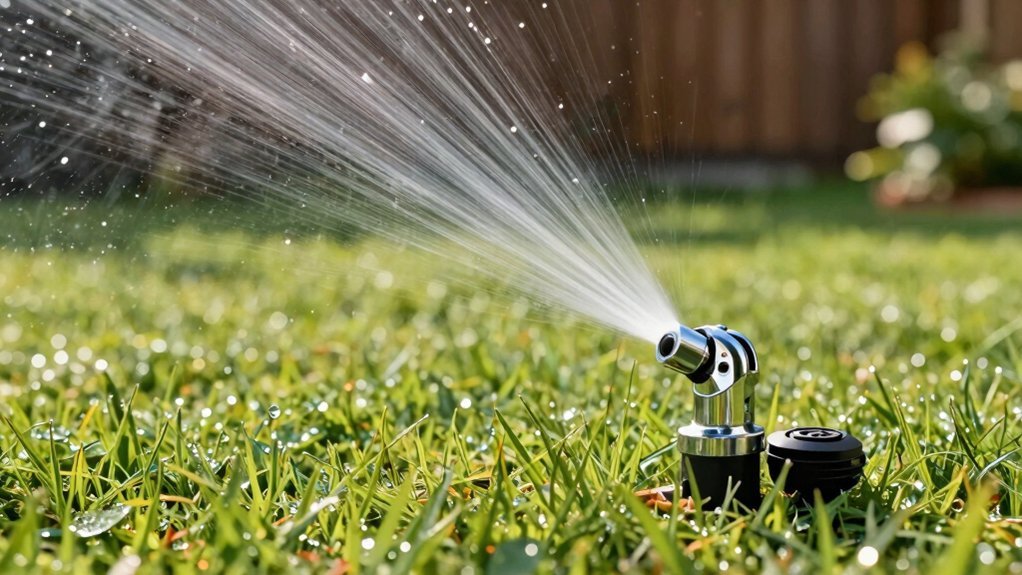
Effortless Yard Irrigation Setup: The Orbit All-in-One Automatic Watering System simplifies yard irrigation with a complete 2-zone automatic sprinkler system designed to deliver consistent watering

ULTIMATE FLEXIBILITY FOR ANY GARDEN SHAPE – Place sprinklers exactly where you need them- Perfect for lawns, flower beds, raised gardens, and more.

【Upgraded Tube Design & Water Saving】 Our adjustable garden watering system is upgraded to 1/2” diameter to support high water pressure. The 1/2” tee connector in the package so you can easily set up 2 drip irrigation systems as needed. Garden watering systems minimize stage water loss by recharging water directly to plant roots. While traditional irrigation often results in wasted water, this drip irrigation system saves up to 70% of water, no need for manual watering, saves water.
Height & Occupant Load Triggers That Override Simple Sprinkler Rules
If a building’s finished floor sits 55 ft or higher above the nearest fire‑department vehicle access and its occupant load reaches 30 or more, the code overrides the simple square‑footage rule and mandates an automatic sprinkler system for that story and all lower levels to the exit discharge. You must evaluate building proportions against this height‑occupant trigger, because the rule applies regardless of overall floor area. Accessibility limitations for fire‑department apparatus dictate the 55‑ft threshold; once met, a 30‑person load forces sprinklers on the affected story and every level beneath the discharge point. Group A occupancies amplify the effect: any A‑2, A‑3, or A‑4 fire area with 30+ occupants above the access level triggers sprinklers throughout, even if the total square footage is modest. This code‑driven approach supersedes simple area calculations. Properly designed sprinkler zones can also protect high‑risk storage areas such as closets, reducing fire spread and damage. Fire extinguishers remain essential for controlling incipient fires before the sprinkler system fully activates. Early life‑safety data shows that sprinkler‑equipped buildings experience significantly lower injury rates during fire events.
Key Sprinkler Code References (NFPA 13, NFPA 13R, IBC, NFPA 101)
Because the sprinkler requirements differ across NFPA 13, NFPA 13R, the IBC, and NFPA 101, you must cross‑reference each code to determine which mandates apply to your project. NFPA 13 sets the benchmark for commercial and high‑hazard installations, demanding detailed hydraulic design options, flow‑test validation, and vented wet systems. NFPA 13R limits residential coverage to four stories and 60 ft, allowing reduced exit spacing and eliminating heat detectors when paired with NFPA 13 systems. The IBC ties sprinkler zones to fire‑alarm zones, permits specific exterior wall openings, and defines travel‑distance limits for manual pull stations. NFPA 101 integrates life‑safety requirements, mandating valve supervision and aligning sprinkler classifications with occupancy hazards. Across all references, riser system requirements include hydraulic design information signs and sectional control valves that indicate status for zones exceeding twenty heads. Sprinklers and smoke detectors operate as separate safety systems and are not combined in a single unit. Effective sprinkler systems can reduce fire damage by up to 90 % and significantly improve occupant survival rates.

DURABLE MATERIAL: Made from .020″ Rust-Free Aluminum for durability and longevity.

One‑Point Streets, Basements & Concealed Spaces: Special Sprinkler Cases
The cross‑referencing of NFPA 13, NFPA 13R, IBC, and NFPA 101 shows that sprinkler mandates shift dramatically once a story lacks the required openings; that is where one‑point streets, basements, and concealed spaces become special cases. For a one‑point street, if the fire‑area exceeds 1,500 ft² you must install sprinklers throughout the story, regardless of ventilation requirements or electrical classification. Basements over 1,500 ft² without exterior openings trigger automatic sprinkler coverage, and terminal rooms for rubbish or linen chutes need protection even if the rest of the building is sprinkler‑free. Concealed spaces follow NFPA 13: combustible cavities larger than 160 ft³ or lacking fireblocking demand sprinklers, while non‑combustible insulated spaces are exempt. IBC partial‑system rules apply to these isolated areas, ensuring compliance without unnecessary full‑building coverage. Local jurisdictions often require a permit verification process before installation to confirm that the design meets all applicable codes. Proper color coding of fire‑suppression piping helps inspectors quickly identify these special‑case installations.


Waters your lawn automatically the whole season
Applying Code Rules to Real‑World Projects
When you start a project, the first step is to map the occupancy, floor‑area, and building height against the relevant code tables—NFPA 13, IBC Chapter 9, and NFPA 101—to see whether the 5,000 ft² fire‑area trigger or the 55‑foot height threshold applies. Next, compare the occupancy group to the NFPA 13 sprinkler‑area allowances: groups A‑4, B, F, M, and S can exceed the limit if sprinklered, while assembly halls with over 300 occupants automatically require protection. Apply the IBC multiplier for multi‑story buildings—three‑times the allowable area when a sprinkler system is present—to determine if your project stays within code. Management considerations include budgeting for phased installations, allowing you to install sprinklers on lower floors first and expand upward as occupancy changes, while still meeting the height‑based mandates. Properly assess sprinkler head spacing to ensure adequate coverage at greater ceiling heights. The system’s main pipe must be sized to maintain sufficient flow and pressure throughout the network. Optimal layout should also consider hydraulic calculations to balance pressure across the network.

UL, CUL & FM Certified-FM Approved 3053441 and UL / CUL Listed EX6430. 1/2 " NPT (National Pipe Thread) American thread fire sprinkler heads. Underwriter Laboratories Listed. These 1/2 inch NPT pendent fire sprinkler heads fit new installation and replacement for residential, commercial and industrial fire protection systems. Trusted by contractors and property managers, they offer inspector-verified, code-compliant fire safety solutions and support bulk ordering for construction projects

Durable replacement outer trim ring for recessed fire sprinkler escutcheons; restores a clean, professional ceiling finish by reusing the existing inner ring without removing the sprinkler head.

INDISPENSABLE TOOL TO HAVE AT HOME OR OFFICE: Quickstop fire sprinkler heads emergency shutoff tool can shut off an accidentally activated fire sprinkler in seconds, reducing water damage and keeping the rest of the building safe by allowing the other fire sprinklers in the system to remain active while waiting for the damaged head to be replaced.
Practical Sprinkler‑Requirement Checklist for Your Project
Mapping occupancy, floor‑area, and height against NFPA 13, IBC Chapter 9, and NFPA 101 gives you a clear trigger list, so you can instantly see whether your project meets the 5,000 ft² fire‑area, 12,000 ft² educational, or 55‑foot height thresholds. First, confirm the fire‑area classification; if it exceeds 5,000 ft² for commercial or 12,000 ft² for Group E, sprinklers are mandatory. Next, check story count and overall height—any building over 55 ft or more than two stories triggers full coverage. For existing buildings, any remodel that pushes fire‑area past 5,000 ft² or adds a new hazard zone compels a retrofit. In new construction, apply NFPA 13 spacing tables, guarantee closets and bathrooms are protected, and verify that occupancy loads (e.g., >300 in assembly) meet IBC requirements. Use this checklist to validate compliance before design finalization. Properly sizing the system also depends on the selected sprinkler type, such as a rotary head for large lawns. Understanding water distribution efficiency helps reduce waste and improve overall system performance. Hydraulic calculations ensure each zone receives adequate flow without excessive pressure loss.

Compliant with NFPA 13 and 25 fire safety standards This fire sprinkler cabinet holds up to 6 spare sprinkler heads to help meet fire code compliance for systems with 300 or fewer sprinklers, as required by NFPA guidelines for emergency readiness.

Ensure your building is compliant with a Spare Head Fire Sprinkler Cabinet. Every building should have spare fire sprinkler heads in case of emergency! For fire sprinkler systems adhering to NFPA 13 and NFPA 25 guidelines, you should have a supply of at least 6 spare fire sprinkler heads for a system with 300 or fewer sprinklers. This fire protection box allows for storage of up to 6 spare heads, able to fit 1/2 in. NPT fire sprinkler heads, or, using the “knockouts,” 3/4 in. NPT heads.

TOOL-FREE INSTALLATION AND BROAD COMPATIBILITY: Fits most pop up sprinkler bodies for fast no-tool replacement delivering instant upgrades to your irrigation system.