You’ll quickly find that a garden‑hose thread (GHT) isn’t an NPT thread; it’s a straight, non‑tapered 3/4‑inch × 11.5 TPI fitting that relies on a rubber washer for sealing, whereas NPT uses a 1:16 taper, metal‑to‑metal interference and requires PTFE tape or sealant. GHT maintains a constant internal diameter, while NPT narrows as it tightens, creating compression at the joint. The washer vs the tape difference stems from those geometry and sealing methods, and if you keep going you’ll uncover how to adapt each system safely.
GHT vs NPT: The Bottom‑Line Difference
When you compare GHT and NPT, the bottom‑line difference lies in their thread geometry: GHT uses straight, non‑tapered threads, while NPT employs tapered threads that tighten as they’re screwed together. GHT’s straight threads maintain a consistent internal diameter, giving predictable water‑flow capacity for garden hoses but limiting pressure tolerance to low‑pressure residential use. NPT’s tapered design creates compression at the joint, allowing higher pressure tolerance for industrial, hydraulic, and gas applications, though it can slightly restrict flow due to thread interference. GHT relies on rubber washers or gaskets for sealing, eliminating the need for tape or sealant, whereas NPT requires thread sealant or Teflon tape to prevent leaks. These fundamental differences dictate suitability: GHT for outdoor irrigation, NPT for high‑pressure systems. Garden hose thread standards vary by region, affecting compatibility with fittings. Choosing the correct thread size ensures a leak‑free connection between hoses and sprinkler heads. Properly securing the connector with a twist‑on clamp helps prevent leaks and maintains consistent flow.
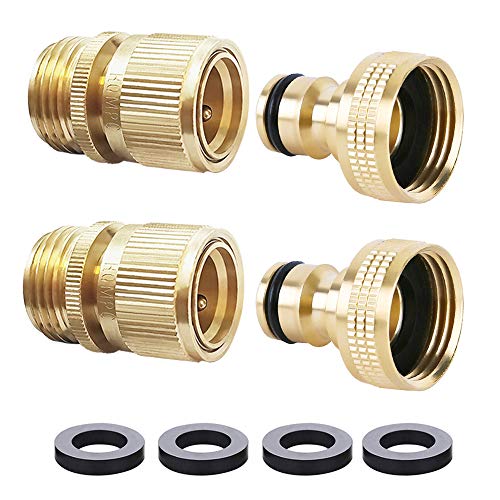
★【Standard 3/4 Inch GHT Garden Hose Quick Connect】-This garden hose quick connect sets including 2 brass female connectors + 2 brass male connectors+4 free washers.Use this hose quick connect fittings You can enjoy it work perfectly with any standard garden hose,faucets,hose bibs and watering devices.

Package include: 6 female quick connectors and 6 male quick connectors, 6 extra garden hose rubber washers

Lead-Free Brass: Litorange is a Better Choice that can ensure a clean, leak-free connection
Identifying GHT vs NPT on the Job
If you need to tell GHT from NPT on the job site, start by checking the thread geometry: NPT fittings taper toward the end while GHT threads stay parallel from end to end. Observe the exterior; a knurled pattern signals GHT. Use calipers to measure outer diameter—parallel diameters confirm GHT, tapered diameters confirm NPT. Apply a thread pitch gauge; 11.5 tpi indicates NPT. Verify size: common GHT couplings are 3/4″ (11.5 NH) or 5/8″. Identify gender—male threads protrude, female threads recess. Choose fittings based on hydraulic compatibility: GHT suits low‑pressure, tool‑free disconnections, while NPT handles high‑pressure, sealed connections. Accurate identification guarantees proper fitting selection and reliable system performance. NPTF fittings provide a metal‑to‑metal seal without sealant. Understanding sprinkler pressure helps optimize flow rate and spray pattern for efficient irrigation. Maintaining water pressure within the optimal 40‑80 psi range ensures both GHT and NPT connections perform reliably. A nozzle converts pressure into speed, illustrating why pressure drops as fluid accelerates.
How GHT and NPT Differ in Thread Shape & Pitch
Having identified GHT versus NPT by geometry and knurling, the next step is to compare their thread shape and pitch. NPT uses a 1:16 taper, so its major diameter shrinks toward the end, while GHT remains straight and uniform. Both employ a 60‑degree included angle, but the taper prevents full thread profile compatibility. NPT’s 1/2‑inch and 3/4‑inch sizes run 14 TPI; GHT’s 3/4‑inch equivalent runs about 11.5 TPI, creating a pitch mismatch that blocks proper engagement. Visually, NPT threads narrow, whereas GHT threads keep the same diameter, giving clear visual size differentiation. The blunt NPT crests and sealing roots contrast with GHT’s knurled, straight profile, reinforcing their distinct applications. This conversion of pressure energy to kinetic energy is explained by Bernoulli’s principle. The differing designs also affect how each component handles fluid flow control.
Why GHT Gets a Washer and NPT Needs Tape?
Because GHT relies on a compressible rubber washer to create a seal, you simply hand‑tighten the connection until the washer is fully seated; the washer’s deformation provides the leak‑proof barrier without any additional material. The washer sits on a protruding nipple, and its compression delivers washer protection that tolerates low‑pressure garden‑hose flow while preventing cross‑thread damage. In contrast, NPT threads taper and rely on metal‑to‑metal interference; the taper leaves microscopic gaps that can leak under higher pressures. You consequently apply PTFE tape as a preventive measure, winding 2‑3 clockwise layers to fill spiral paths and secure a uniform seal. The tape compensates for imperfect threads, while GHT’s design eliminates the need for any auxiliary sealing aid. The hose’s flexible tubing also contributes to overall flow efficiency, as Bernoulli’s principle explains how pressure and velocity interact within the system. Selecting a hose with a pressure rating that exceeds the washer’s maximum output helps prevent burst failure during high‑pressure operation.
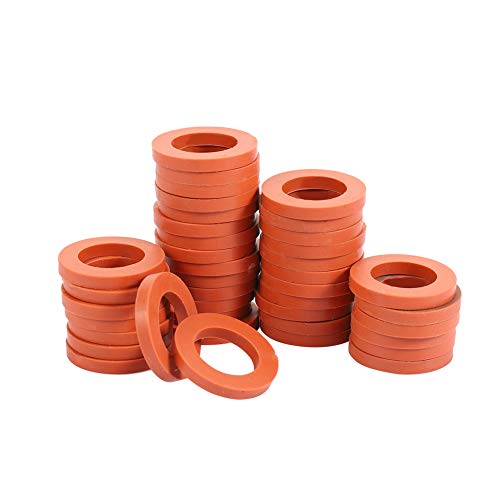
The hose washers are made from heavy duty thermoplastic rubber construction.

SOLUTION: Superior All-Rubber Seal for all hose leak stopping!

Package include 2 pcs 3/4" garden hose caps with washers.
Adapting GHT ↔ NPT: Connectors & Installation Tips
When you need to join a garden‑hose thread (GHT) to a National Pipe Thread (NPT) fitting, the key is selecting the proper adapter and following the correct sealing steps for each side. Choose a brass or stainless‑steel NPT‑to‑GHT adapter; the material offers corrosion protection and resists seasonal weatherproofing challenges. Wrap PTFE tape or apply joint compound on the male NPT side, then hand‑tighten the female GHT end with its washer—no extra lubricant required. For reverse conversion, use a GHT‑to‑NPT adapter, apply tape to the female NPT threads, then secure the male GHT with a washer. Tighten the NPT portion with a wrench, avoiding over‑compression, and verify alignment to prevent cross‑threading and leaks. This method guarantees durable, weather‑proof connections. Selecting the right fitting material can prevent leaks and extend the lifespan of your irrigation system. Using a lead‑free hose further reduces health risks when water is stored or transported. Check hose size to ensure it matches the heater’s inlet/outlet dimensions.

Connection Size - 3/4" GHT Male x 3/4" NPT Female thread. O.D x I.D about 1 inch x 1 inch. NOTE: Thread size is a nominal pipe size and it does not represent the actual diameter, please check the size you need before ordering. Feel free to contact us if you have any questions.

ESSENTIAL AND EFFECTIVE ADAPTER - Choosing the matching thread type is crucial for maintaining and installing equipment. As proper and effective fittings to convert 3/4" GHT to 3/4" NPT Male, these brass adapters perform better with good liquid-tight, no need to worry about flow restriction and leaks. They should be one of the best components you can find for thread conversion.

Package include:2 PCS 3/4" Female GHT x 1/4" Female NPT Adapter,Extra 2 Pressure Washers.1 Pack Sealing Tape.