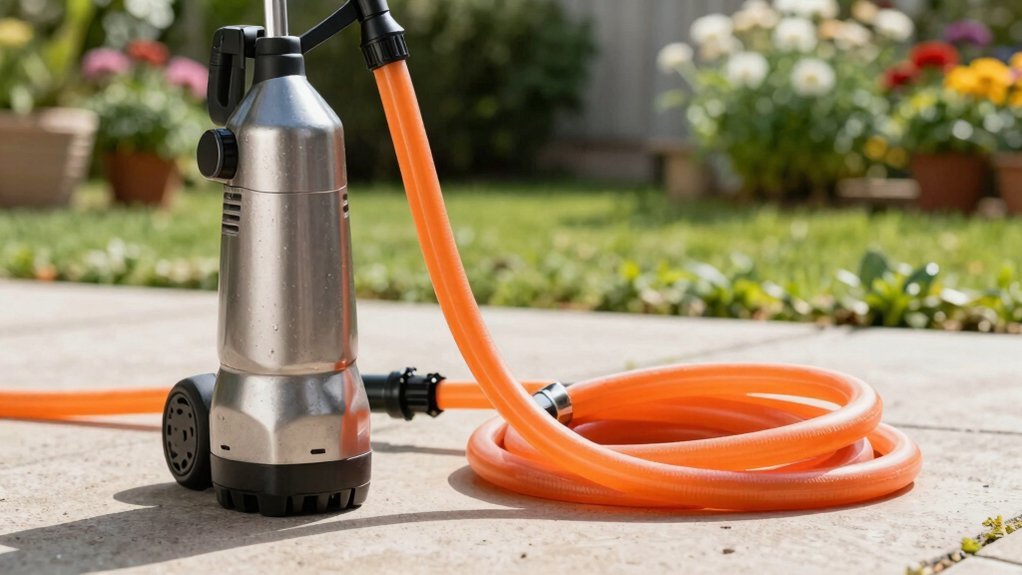
Garden hose filters can noticeably improve water quality by stripping out chlorine, heavy metals, and pesticide residues, so you’ll deliver cleaner water to plants, pets, and household tasks. The filtration media target these contaminants, reducing chemical stress on foliage and preventing buildup in aquariums or pet bowls. Studies show that filtered water can boost plant growth and enhance pet health compared with untreated tap water. Uncover the specific filter types and maintenance tips that maximize these benefits.
Which Garden Hose Filter Gives the Best Water Quality?
Among the top garden‑hose filters, the Clear2O Garden & Pet Filter consistently delivers the highest water‑quality results. In a filter quality comparison, its 1 micron solid carbon block outperforms the Twinkle Star’s sediment‑only design and the Camco Pure Carbon’s hard‑water focus. Water test results show Clear2O reduces lead and heavy metals by over 95 % and cuts herbicide residues to below detection limits, while maintaining a 2.5 GPM flow comparable to GrowRite’s KDF‑55 system. GrowRite’s 40,000‑gallon capacity benefits longevity but lacks the micron‑level filtration needed for trace contaminants. Guardian Filtration’s 8,000‑gallon rating removes 99 % of broad contaminants but does not match Clear2O’s extensive water‑quality improvement. 40 mesh screen provides an extra layer of protection against larger debris, extending filter life and reducing maintenance. Choosing a hose that is lead‑free further ensures that the filtered water remains safe for consumption. Proper hose length and diameter also affect pressure, so selecting a hose that balances water pressure with reach can optimize overall system performance.
How Filters Remove Chlorine, Heavy Metals, and Pesticides?
How exactly do garden‑hose filters strip chlorine, heavy metals, and pesticides from your water? Activated carbon filtration adsorbs chlorine, chloramine, and volatile organic compounds, while carbon block media target pesticide residues and herbicides. Heavy‑metal removal relies on KDF and ion‑exchange media that chemically bind lead, arsenic, mercury, and other toxic ions. Sediment pre‑filters trap rust, sand, and silt, preventing fouling of the carbon stage and ensuring contact time. Thorough water testing confirms reductions of up to 50 % for chlorine, 70 % for lead and arsenic, and measurable pesticide drops. By coupling activated carbon with KDF and ion‑exchange layers, you achieve a multi‑barrier system that protects soil microbes, prevents plant toxicity, and improves overall garden health. Filtered water also helps preserve beneficial microorganisms in compost tea, enhancing plant nutrition. Potable water can be safely used for drinking if the system is well‑maintained and complies with local health guidelines. Regularly checking sprinkler water quality ensures the system remains effective and safe.
What Water‑Chemistry Changes Boost Plant Growth?
Ever wonder which water‑chemistry tweaks actually boost plant growth? You’ll see that pH, nutrient availability, and alkalinity impacts dominate the equation. A pH around 8.1 maximizes diatom health and keeps CO₂ uptake efficient; pushing toward 8.5 stalls growth. Alkaline water, rich in calcium from rocks, ties up nitrogen, potassium, phosphorus, and micronutrients, making them unavailable to roots while feeding algae. Lowering alkalinity releases those nutrients, improving nutrient availability for foliage and fruit. Tap water often contributes trace phosphates (≈3 ppm), which can spark a modest boost. Maintain pH within the suitable range, avoid excess alkalinity, and guarantee dissolved nutrients remain bioavailable—these adjustments directly translate to healthier, faster‑growing plants. The experiment showed that tap water produced the tallest average plants. Implementing a drip‑system design can further reduce water waste and improve distribution uniformity. Proper pressure regulation ensures that each sprinkler head receives the optimal flow for consistent coverage. Proper pressure distribution helps achieve uniform watering across the garden.
Installation & Maintenance: Keep Your Filter Performing at Peak Efficiency
Optimizing plant growth starts with the right water chemistry, but those benefits evaporate if the filter isn’t installed correctly. Turn off the main supply, gather clamps, wrenches, screws, anchors, and mounting brackets, then place a towel and bucket under the valve. Mount the pre‑filter bracket using hex bolts and washers; for wood, use metal‑sheet tapping screws, for concrete, use steel anchors. Attach the housing head with provided hex bolts, hand‑tighten, then finish with a spanner wrench. Cut the hose, insert it into the barb fitting, and secure with a clamp—push‑to‑connect fittings work in under three minutes. Verify arrow direction, tighten all connections snugly, and apply leak prevention strategies such as swivels and O‑ring lubrication. Inspect and tighten regularly, replace cartridges when flow drops, and flush the system slowly after installation. Garden hose filter ensures that debris does not clog the system. Consider the local soil type when selecting a filter to match the garden’s water‑retention needs. Installing a backflow preventer can protect the potable water supply from contamination. The double‑check valve provides an extra layer of safety against backflow.
Real‑World Results: Faster Plant Growth, Cleaner Pet Water, and Higher Yields
Evidence shows that filtered irrigation can transform garden outcomes, delivering faster plant growth, cleaner pet water, and higher yields. You’ll see blueberries and strawberries perk up within weeks, while avocado trees maintain robust health. The filter strips chlorine, chloramines, heavy metals, and excess dissolved solids, so pets drink toxin‑free water that matches nursery standards. In the soil, eliminated chlorine protects microbial diversity, preserving the microbiome that fuels nutrient cycling and overall plant essentiality. Minerals stay available, compost and mulch retain balance, and plants convert tap water into nourishment rather than stress. Users report higher yields, reduced plant loss, and sustained performance across tens of thousands of gallons—all at a fraction of the cost of untreated water. The system can treat up to 40,000 gallons of water before replacement. Automated watering also enables precise moisture control, which can conserve water by delivering only what plants need. Consistent moisture from a well‑designed sprinkler system promotes healthy root development and supports photosynthesis for a lush, thriving lawn. Choosing a low‑flow nozzle can further cut hourly consumption from 300‑600 gallons to well below 200 gallons.