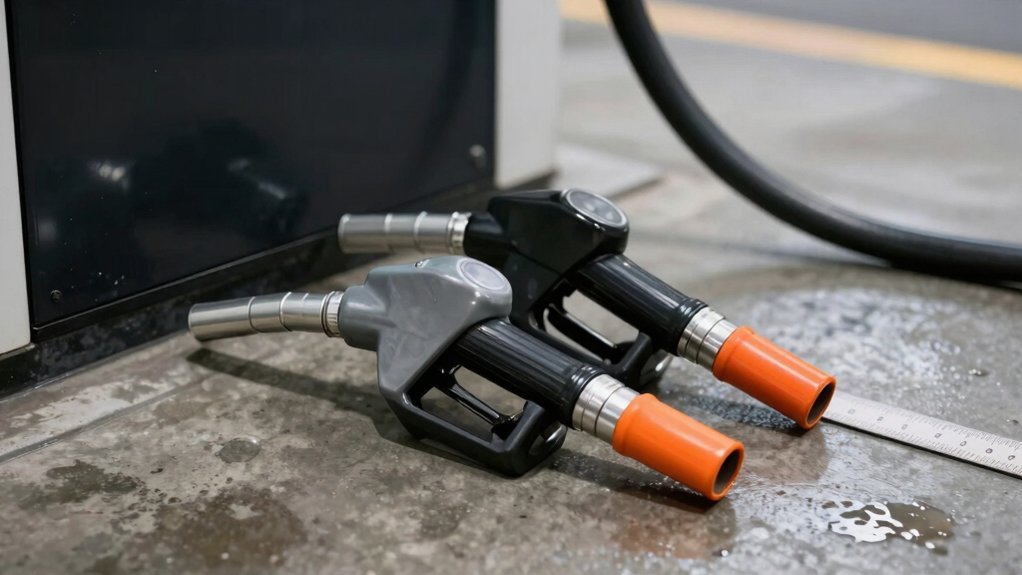
Your pump clicks off because the venturi‑based sensor in the nozzle senses a premature vacuum or pressure spike, often from a kinked fuel line, a worn check valve, the wrong nozzle size, or a tilted nozzle that disrupts airflow. This forces the diaphragm to close the valve before the tank is truly full. Vapor pressure fluctuations in the EVAP system or weather‑induced vapor buildup can also trigger the sensor. Adjusting nozzle angle, checking lines, and using the proper nozzle size usually solves it, and the next section explains how to diagnose deeper issues.
Why Your Fuel Pump Clicks Off Early
If the pump clicks off before the tank fills, it’s usually the mechanical venturi system in the nozzle detecting a pressure change too early. The venturi’s sensing tube lets air escape until fuel backs up, then a vacuum pulls the diaphragm and trips the shutoff lever. When you have kinked fuel lines or worn check valves in the filler neck, fuel backs up into the tube sooner, creating that vacuum prematurely. Kinks restrict air flow, while a worn check valve may stick open or closed, both forcing the venturi to sense “full” before the tank actually is. Inspect the filler neck for kinks, replace cracked rubber sections, and verify check‑valve operation to eliminate early click events. A clogged vapor recovery sensor can also cause the pump to shut off early by misreading pressure changes. Using the wrong fuel nozzle size can also trigger premature shutoff due to mismatched flow characteristics. Diesel nozzles are larger and cannot fit into a gasoline pump’s smaller opening, preventing accidental cross‑fueling.
How EVAP Pressure Makes the Pump Click Off
When the EVAP system can’t vent air fast enough during refueling, pressure builds in the tank and the nozzle’s sensing tube registers a false “full‑tank” vacuum, pulling the diaphragm and shutting the pump off. The vent valve and charcoal canister normally allow vapor flow interruption to equalize pressure; if they’re clogged or the canister is saturated, vapor pressure fluctuations rise. Those fluctuations push back on the fuel‑rise, creating a premature vacuum signal that trips the nozzle’s shut‑off lever. You’ll notice a rapid click‑off, a slowed fill rate, and possibly a check‑engine light. Diagnose by inspecting the vent valve, canister, and purge lines for blockages, and perform a pressure test to confirm proper venting. The sensing port is the tiny hole near the end of the nozzle that detects the pressure change. A mass flow plateau indicates the nozzle may be choked, similar to fluid dynamics in gas pipelines. A venting blockage can also cause the EVAP system to over‑pressurize, leading to the same premature shut‑off behavior. Selecting the correct nozzle size helps maintain proper flow and pressure, reducing the risk of evap vent issues.
How Nozzle Angle Triggers the Click‑Off Sensor
Ever wondered why a slight tilt of the pump nozzle can shut the fuel flow instantly? When the nozzle tip deviates from vertical, the tiny sensing port at the spout end can be hit by fuel mist early, creating sensor misalignment issues. This misalignment blocks the airflow that keeps the diaphragm balanced, triggering airflow disturbance dynamics that mimic a full‑tank condition. The resulting vacuum pulls the diaphragm down, releasing the steel balls that pop the valve and cause the click‑off. To prevent it, fully insert the nozzle, withdraw 1–2 cm, then rotate the handle off‑vertical. Maintaining a moderate angle reduces turbulence, keeps the port clear, and preserves steady airflow through the sensing tube. The nozzle’s design converts pressure energy into kinetic energy, increasing fluid velocity and lowering static pressure, as described by Bernoulli’s principle. This conversion illustrates how static pressure drops as velocity rises. Understanding the role of a nozzle in shaping flow helps diagnose click‑off issues.

The nozzle with NPT threads, 3-notch hold open clip, full grip guard
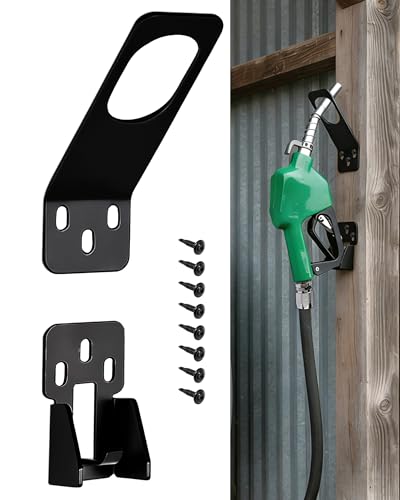
Universal Compatibility: Designed to securely hold both 3/4" and 1" NPT standard auto-shutoff fuel nozzles for versatile use across different fueling systems
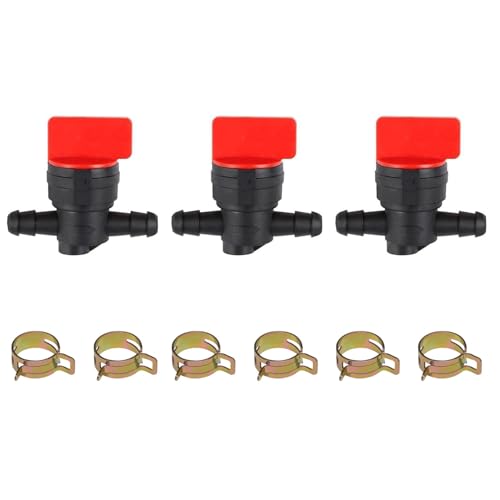
Universal straight 1/4 inch fuel cut-off valve, fit for many small engines with 1/4" inner diameter fuel line, such as riding lawnmowers, garden tractors, push mower, pressure washers, go kart, dirt bike, snowblowers etc.
How Pressure and Splash‑Back Close the Pump Valve
Because the pump’s Venturi tube creates a low‑pressure zone, the diaphragm attached to it is pulled upward, unlatching the valve lock and allowing the main valve to close. The diaphragmatic lift also opens a vent that lets air in, counteracting excessive suction. When tank pressure rises, the secondary diaphragm senses the back pressure, pushes the pilot plug shut, and seats the regulator ball, sealing the flow. Splash‑back from turbulent fuel can force vapor or liquid up the fill neck, triggering the same diaphragm closure prematurely. If nozzle contamination blocks the venturi throat, pressure drops diminish, causing delayed shutoff. Likewise, a pressure sensor failure may misread tank pressure, preventing the valve from closing at the correct setpoint. This effect is amplified when the pilot plug is obstructed by wet gas, which can prevent proper seating and cause intermittent clicking. The reduction in flow speed through a constricted nozzle increases kinetic energy, which is converted to lower static pressure, a principle known as the Bernoulli effect. Understanding the momentum‑change thrust relationship helps diagnose why the nozzle clicks off under varying flow conditions. Selecting a hose with a higher pressure rating ensures the system can handle the peak pressures without bursting.

[Specifications] ID: 3/8"(9.5mm); OD: 2/3"(17mm). Minimum Bend Radius: 3.9"(100mm). Wall thickness: 3mm.

Parameter: Maximum working pressure: 500 PSI. Burst pressure: 1720 PSI. The temperature range: -40°F to 212°F. The minimum bend radius: 75 mm.

【Size】ID: 3/8" (10mm), OD: 2/3" (17mm), Length: 10FT
When Weather and Pump Design Worsen Click‑Off Problems
Cold mornings can make a pump’s click‑off trigger sooner because the lower ambient temperature slows vapor escape, increasing suction in the venturi sensor, while hot days raise fuel vapor pressure and can overload the diaphragm’s response. You’ll notice that fuel tank capacity fluctuations amplify this effect: a partially full tank creates a larger vapor head, and a nearly full tank leaves little room for pressure equalization, so the sensor reaches its shut‑off point faster. Charcoal canister degradation compounds the problem by slowing vapor purge, forcing the vent tube to fill with fuel sooner. In warm weather, higher vapor pressure pushes liquid back into the sensing hole, while cold weather reduces vent flow, both creating premature vacuum that trips the diaphragm. Adjusting trigger pressure or using a lower‑flow nozzle can mitigate these weather‑driven click‑offs. The venturi sensor detects pressure changes by sensing a drop caused by the constriction in the nozzle. This conversion mirrors the thermal‑to‑kinetic process used in turbines, where heat energy is transformed into high‑velocity fluid flow. The flow acceleration in a diverging nozzle follows the same principles of compressible flow that govern the venturi’s response.
Quick Fixes for Pump Click‑Off and When to Call a Mechanic
Weather‑induced vapor pressure shifts can make a pump click off, but you can often correct the symptom on the spot before it turns into a repair. Insert the nozzle at three‑quarters depth, rotate the handle to four o’clock, and squeeze the trigger gently in short bursts to improve venting and reduce splashing. Choose a slower flow rate if the pump offers it, and avoid topping off after the first shutoff. Visually inspect the filler neck and exterior hose for debris, kinks, or sagging sections that could be restricting fuel flow. Shine a light into the vent hose, feel for soft spots, and blow air through to clear minor blockages. If these quick fixes don’t stop the clicking, you’re likely identifying fuel system deterioration—call a mechanic to replace damaged hoses, test the EVAP canister and solenoid, and perform pressure diagnostics. The vent solenoid may be clogged, preventing proper venting and causing the pump to shut off prematurely. Adjusting irrigation timing based on seasonal temperature can also help prevent pressure fluctuations that trigger clicking. Properly winterizing your system before temperatures drop below freezing point can reduce the risk of pressure spikes that cause pump shut‑offs. Adding a freeze‑protective drain to your sprinkler lines can further safeguard against water expansion during cold snaps.