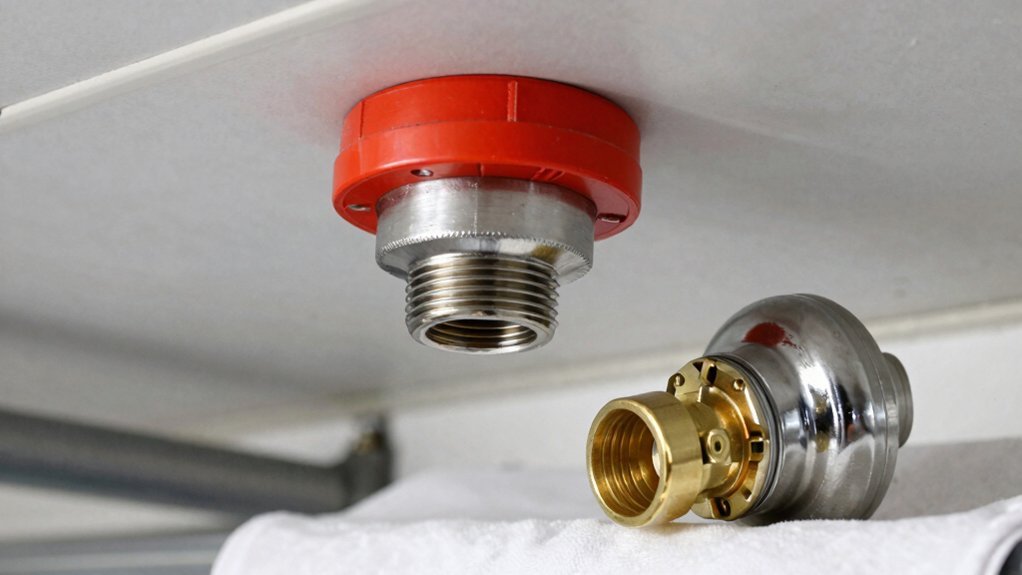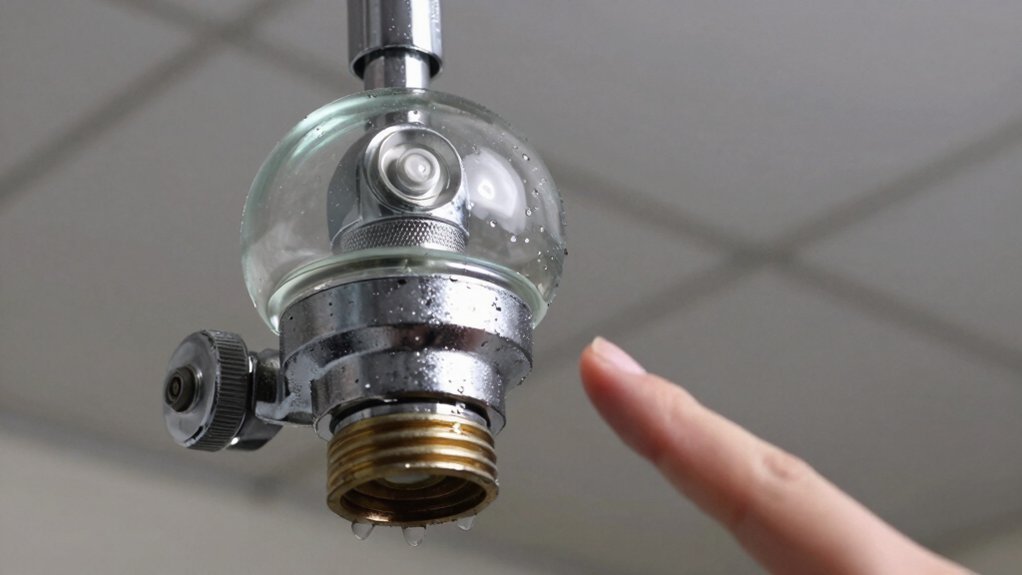
You’ll find a heat‑sensitive bulb or fusible link inside each sprinkler head that bursts at 135‑165 °F, instantly opening a valve. Pressurized water from a wet‑pipe network then sprays through the deflector, covering the floor and suppressing the fire. The system runs only when that temperature is reached, preventing false alarms, and once activated it delivers 10‑26 gpm for 30‑60 minutes until a technician shuts it off. Keep reading to uncover the different system types and post‑activation steps.
Heat Detection and Activation in Apartment Sprinklers
A typical apartment sprinkler head detects fire by sensing a rapid temperature rise, not smoke, and activates individually. You’ll find a heat‑sensitive element—either a glass bulb or a fusible link—calibrated to a specific burst temperature. The bulb contains liquid that expands as the heat penetration rate exceeds the material’s thermal inertia, building pressure until the frangible glass shatters at 135 °F–165 °F. A fusible metal link melts at a comparable temperature, disengaging the valve. Both mechanisms respond to localized thermal energy, preventing premature activation from ambient heat. Color‑coded bulbs (orange = 135 °F, red = 155 °F) guide installation. Because each head operates independently, only the sprinkler nearest the fire opens, limiting water damage while delivering immediate flow through wet or dry system piping. Modern systems also integrate wet pipe technology, which keeps pipes filled with water for instant discharge. The rapid activation of wet‑pipe systems makes them especially suitable for residential environments. Properly timed shutdown during frosty conditions can also protect the system from frost damage.
Common Apartment Sprinkler System Types in Multi‑Unit Buildings
Heat‑sensitive heads trigger only the nearest sprinkler, but the way water reaches those heads depends on the system architecture. In a wet‑pipe network, water fills every pipe under pressure, so activation releases water instantly; this is the default in heated, above‑freezing apartments. Dry‑pipe designs replace water with pressurized air, delaying discharge until the head vents the air—ideal for unheated garages where freezing is a risk. Pre‑action systems add a detection stage; a separate fire signal opens a valve before water fills the pipes, providing extra protection in mixed‑use towers. Deluge units open all heads simultaneously after a central trigger, serving high‑hazard zones. NFPA 13R layouts limit sprinklers to essential rooms, balancing life‑safety and cost. Continuous sprinkler system monitoring and tailored risk mitigation strategies guarantee each architecture operates within code and protects occupants. Sprinklers and smoke detectors are separate safety systems, each playing a distinct role in fire protection. Studies show that sprinkler systems can reduce fire‑related property loss by up to 70 % compared to unsprinklered buildings. Proper closure fire assessments help determine when sprinklers are required in storage spaces.

COVERAGE: Sprays up to 24 ft. in diameter, covering 452 sq. ft. when set to a full circle.
Comprehensive Pack: the package includes 30 pcs 1/2 sprinkler heads, enabling wide area coverage; The bulk pack ensures you have enough misting nozzles even for extensive irrigation schemes, delivering sustained, uniform, and effective coverage across your fields or gardens
What’s Inside an Apartment Sprinkler Head? Bulb, Fusible Link & Deflector
When fire‑generated heat reaches 135–165 °F, the glass bulb or fusible link inside the sprinkler head ruptures, releasing the pressurized water that the pipe cap holds back. The bulb contains a liquid that expands at a calibrated rate; the fusible link is a metal alloy that melts at the same temperature range. Both act as the primary pressurized components governing response sensitivity. Downstream, the deflector plate—pendant, sidewall, or concealed—shapes the discharge pattern, directing water into an umbrella or lateral spray. The deflector’s geometry determines coverage radius and flow distribution, ensuring water reaches the floor area where the fire ignites. Together, the heat‑sensitive element, pipe cap, and deflector form an integrated, self‑activating suppression unit. A sprinkler will only discharge when sufficient heat is applied, not from a touch.


INDISPENSABLE TOOL TO HAVE AT HOME OR OFFICE: Quickstop fire sprinkler heads emergency shutoff tool can shut off an accidentally activated fire sprinkler in seconds, reducing water damage and keeping the rest of the building safe by allowing the other fire sprinklers in the system to remain active while waiting for the damaged head to be replaced.
Water‑Supply Options for Apartment Sprinklers: Wet‑Pipe, Dry‑Pipe & Pre‑Action
If the building’s climate stays above 40 °F, a wet‑pipe system is usually the simplest and fastest choice: the pipes stay full of pressurized water, so activation of any sprinkler head releases water instantly. You benefit from high water supply reliability, minimal components, and low system inspection frequency. In colder zones, choose a dry‑pipe layout: air‑filled lines hold water back until a sprinkler opens the dry‑pipe valve, then water flows after a brief delay. This prevents freezing and maintains supply reliability while demanding slightly higher inspection frequency. For data‑centers or archives, install a pre‑action system: a detection module opens a pre‑action valve, filling dry pipes only after heat triggers the sprinkler. This adds detection hardware, reduces accidental discharge, and requires the most rigorous inspection schedule. Proper fire code compliance often mandates a sprinkler system for multifamily dwellings exceeding three stories. Buildings larger than 5,000 sq ft typically require automatic sprinklers based on occupancy and height limits. The dry‑pipe valve remains closed until a sprinkler head is activated, ensuring the system stays empty until needed.
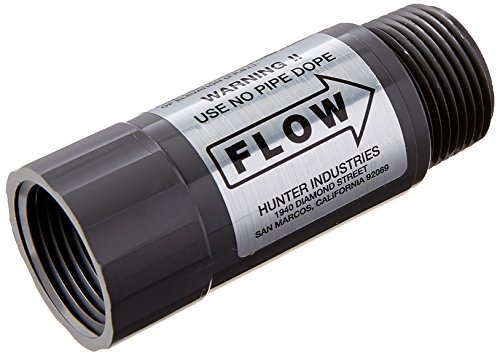
With the Hunter HCV, this will never be a problem again

BUILT-IN FLOW CONTROL FOR ZONE PRECISION: Control water flow to each irrigation zone and prevent overwatering. Helps improve system efficiency, reduce misting, and support healthier landscapes.
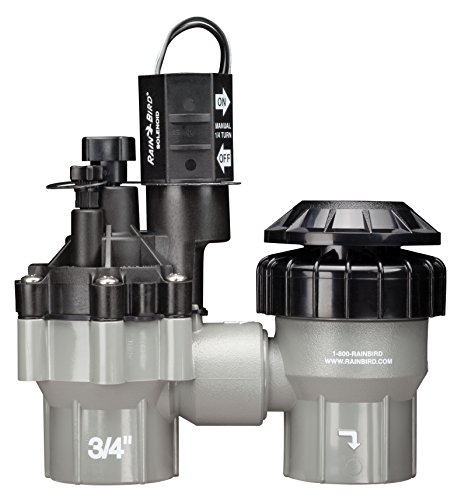
Professional grade 3/4" anti-siphon valve with flow control; compatible with any standard sprinkler timer
What Happens After an Apartment Sprinkler Fires? Flow, Duration & Shut‑Off
After selecting the appropriate supply system, the moment a sprinkler head reaches its activation temperature it opens, and water rushes through the pipe network at 10‑26 gpm per head. In a typical apartment, the activated head runs for 30 minutes, extending to 60 minutes on concrete floors, while mains‑connected systems stay on until the isolator valve is closed. You’ll hear a steady flow, then a gradual decline as pressure drops. Building staff or fire responders manually shut off the system via the valve, after which a licensed technician begins the repair process. The technician inspects each head, replaces damaged components, and restores pressure. Simultaneously, post activation documentation is compiled for insurance and fire‑department records. The system’s heat‑sensitive glass bulbs are designed to burst at a specific temperature, triggering the water release. Most standard sprinklers activate at 155 °F (68 °C), though high‑temperature variants may require higher thresholds.
Apartment Sprinkler Myths Debunked
A common misconception is that a fire in an apartment triggers every sprinkler head, flooding the unit. In reality, each head reacts only to heat between 135 °F and 165 °F, so typically one or two heads discharge. NFPA 13D and local legal regulations for apartment sprinklers require this selective activation, preventing a chain reaction. The reliability of apartment sprinkler systems exceeds that of ordinary plumbing; leaks occur in roughly one in six million installations. Smoke alarms detect smoke but never trigger sprinklers, because the system is heat‑only. A single head releases 15‑24 gallons per minute, far less than a fire‑hose’s 50‑150 gallons, limiting water damage. Modern heads blend into ceilings, maintaining aesthetic integrity while meeting stringent safety standards. 1‑inch water meter is often required for proper system pressure. Properly designed systems can significantly reduce casualty rates in residential fire events. Sprinkler automation can also be integrated with smart home hubs for remote monitoring and water usage optimization.
Tenant Maintenance Tips for Apartment Sprinkler Systems
The myth that a fire triggers every sprinkler head gives way to a practical reality: tenants can help keep the system reliable by performing regular visual inspections. You should examine each head every three to four months for obstructions, corrosion, or tampering, and verify that control valves stay fully open, locked, and accessible. Weekly checks of system gauges and pressure readings catch low‑pressure or air‑lock conditions early. Monthly backflow‑preventer tests and alarm‑valve verification guarantee proper water flow during activation. Clean heads annually or quarterly if grime accumulates, and cover them during painting or messy work. Remove any objects that block spray patterns, and keep records of all inspections. These actions fulfill tenant safety responsibilities and satisfy sprinkler maintenance duties. Also ensure a minimum clearance of 12 inches between fixtures and sprinkler heads to maintain unobstructed water spray. Identifying the head type by its nozzle shape helps confirm it matches the intended coverage area. Understanding the role of the main line is essential for diagnosing pressure issues.