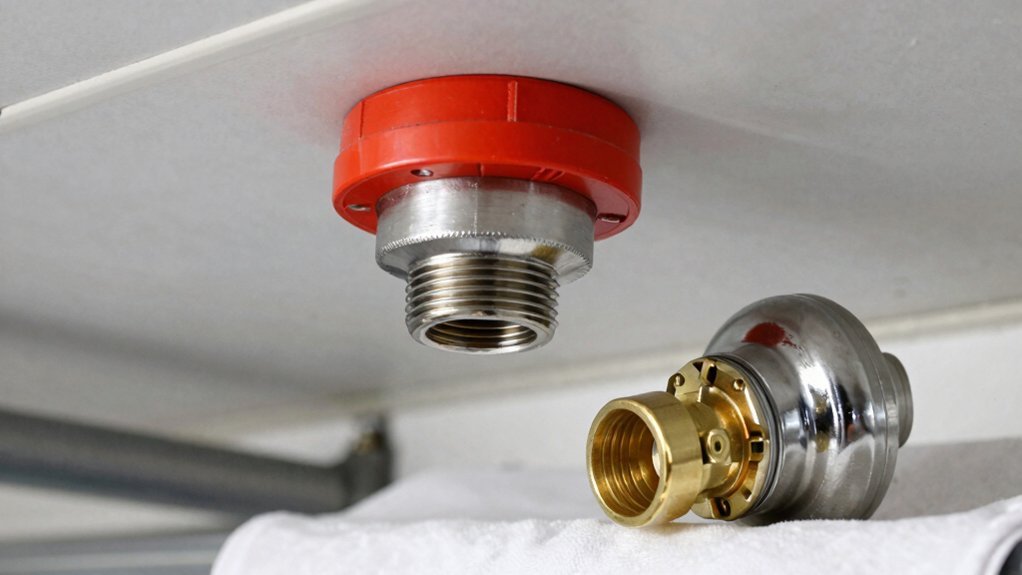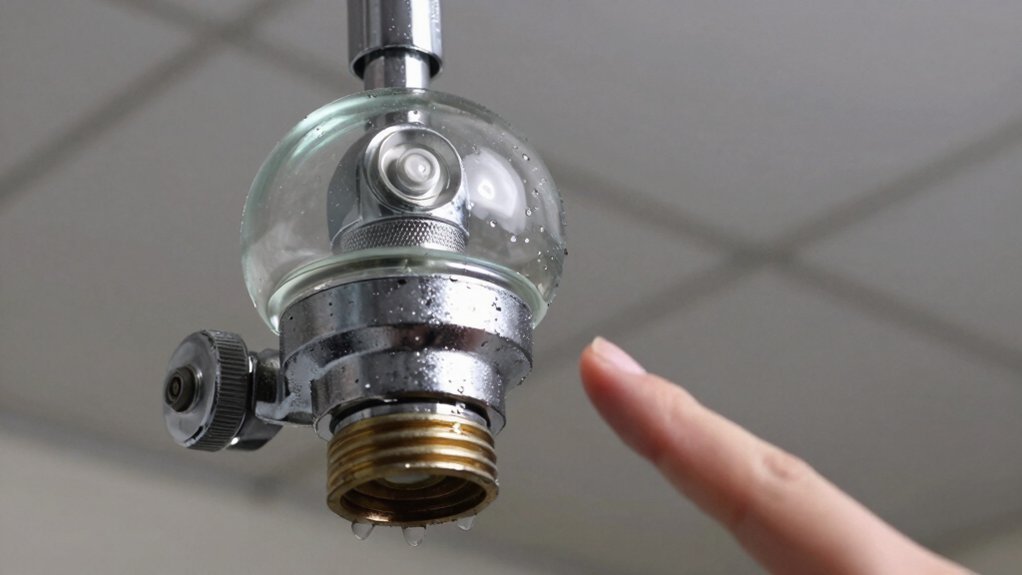
You should pick upright sprinklers when ceilings exceed 24 ft or when obstructions need a deflector 1–12 in. below the roof, because they stay clear of debris and prevent ice buildup. Choose pendant heads for flat ceilings under 30 ft, especially where a low‑profile, easily inspected spray is required; they fit tight spaces and give quick visual checks. Both types must meet clearance, pressure, and fire‑code rules, and the right choice hinges on height, obstruction, and compliance—more details follow.
How to Choose Between Upright and Pendant Sprinklers
Why bother debating the choice? You evaluate ceiling accessibility, pipe layout, and visual impact. Upright sprinklers attach to pipe tops, so they suit inaccessible or high‑heat zones; pendant units hang from drop ceilings, simplifying installation on suspended grids. Compare installation cost: upright heads often require additional brackets and wrench‑boss fittings, raising labor and material expenses, while pendants use standard hangers that shave minutes off the crew’s schedule. Aesthetics matter too—pendant heads blend with the ceiling and can be concealed behind decorative plates, whereas upright heads remain visible, hanging down and potentially disrupting interior design. Weigh these factors analytically, then select the system that meets functional requirements without compromising budget or visual standards. Proper spacing between a sprinkler head and a wall is essential to avoid spray damage, maintain optimal coverage and meet fire safety codes. Designers must also verify that the chosen head type complies with the maximum ceiling height limits defined in NFPA 13.
Choosing Upright Sprinklers for High Ceilings & Obstructions
Having weighed ceiling accessibility and visual impact, you now need to focus on the physics of high‑ceiling installations and the presence of obstructions. Upright sprinklers remain effective above 50 ft when mounted 1–12 in. below an unobstructed ceiling; any contact with the ceiling distorts the spray pattern. Align the deflector orientation parallel to the roof or ceiling, especially on pitches ≤2:12, to preserve the intended horizontal throw. For sloped roofs exceeding that pitch, follow NFPA 13 Section 8.6.4 to adjust the deflector angle and maintain coverage. Apply the three‑times rule for light‑hazard obstructions within 18 in. of the deflector, and use the four‑times rule when extended coverage is required. Guarantee purlin clearance meets the 760 mm lower link limit to avoid biased activation. Ceiling height over 30 ft triggers additional design area requirements. Properly sizing the nozzle based on water distribution ensures uniform coverage and minimizes runoff. Designing for large-area applications may require multiple zones to meet flow and pressure constraints. Sprinkler systems can reduce fire‑related property loss by up to 55 percent when correctly installed.
Choosing Pendant Sprinklers for Flat Ceilings & Open Spaces
A pendant sprinkler system works best on smooth, flat ceilings because its convex deflector delivers a predictable, dome‑shaped spray that can be modeled accurately with NFPA 13 calculations. You’ll select pendant heads when the ceiling is level, unobstructed, and the space demands uniform coverage—typical ideal space applications include commercial offices, schools, malls, and multi‑family residences. The 5.6 K‑factor models such as Viking VK3021 or Tyco TY323 provide standard flow rates, while flat‑spray variants reduce head clearance for suspended ceilings. Installation limitations arise from the need to hang heads directly from overhead piping; they cannot be used in dry‑pipe systems and require clear access for maintenance. Adjustable escutcheons permit up to 2″ drop, allowing concealed or visible mounting to match aesthetic or fire‑code requirements. The upright sprinkler activates at 200°F, using a green glass bulb to signal fire detection. Rapid fire suppression helps minimize property loss and can lower insurance premiums. Sprinklers and smoke detectors operate as separate fire safety systems that work together to protect lives and property.
What Design Differences Mean for Coverage and Maintenance of Sprinkler Types
Choosing pendant heads works well on flat, unobstructed ceilings, but the design of the sprinkler itself dictates how that choice translates into real‑world performance. An upright’s concave deflector throws water upward, then it falls in a fan that wraps around beams, ducts, and shelving. This geometry also promotes ice accumulation prevention because debris slides off the dome. A pendant’s convex deflector creates a downward conical spray that blankets open space efficiently, yet it can be obstructed by protruding vents. With regards to mounting flexibility, uprights mount directly on branch lines and fit tight or inaccessible ceilings, while pendants hang from overhead pipe or drop ceiling with an escutcheon. Maintenance access follows the same logic: upright heads stay clear of debris, reducing inspection frequency, whereas pendant heads are visible for quick blockage checks. Standard spray sprinklers are the most common type used in both residential and commercial applications. Proper water pressure ensures even distribution and prevents misting. The valve’s pressure‑sensitive mechanism opens when water pressure reaches a set threshold, initiating flow through the nozzle. The wet‑pipe system’s always‑filled pipes enable rapid response, a key advantage over dry‑pipe designs.
Quick Decision Checklist: Ceiling Height, Obstructions, and Code Requirements
When evaluating a space, start by checking ceiling height, obstruction layout, and the relevant NFPA 13 code limits; these three factors directly dictate whether an upright or pendant sprinkler will meet coverage and compliance requirements. Measure the ceiling; if it exceeds 24 ft, consider upright sprinklers, especially on sloped ceiling installation up to an 8:12 pitch. For ceilings under 30 ft, pendant units work if their deflectors sit 1‑4 inches below the peak and 6‑8 inches below unobstructed areas. Verify obstructions: keep a minimum 4‑inch gap from soffit faces, and place upright deflectors 3‑12 inches below ceiling in crowded zones. Apply deflector positioning considerations per NFPA 13, ensuring sidewall models maintain 4‑6 inches from walls and beams follow the 3‑12‑inch rule. Set rule allows omission of additional sprinklers beneath soffits up to 24 in wide. Building size thresholds in the International Building Code often trigger sprinkler requirements when floor area exceeds 1,500 sq ft for certain occupancies.