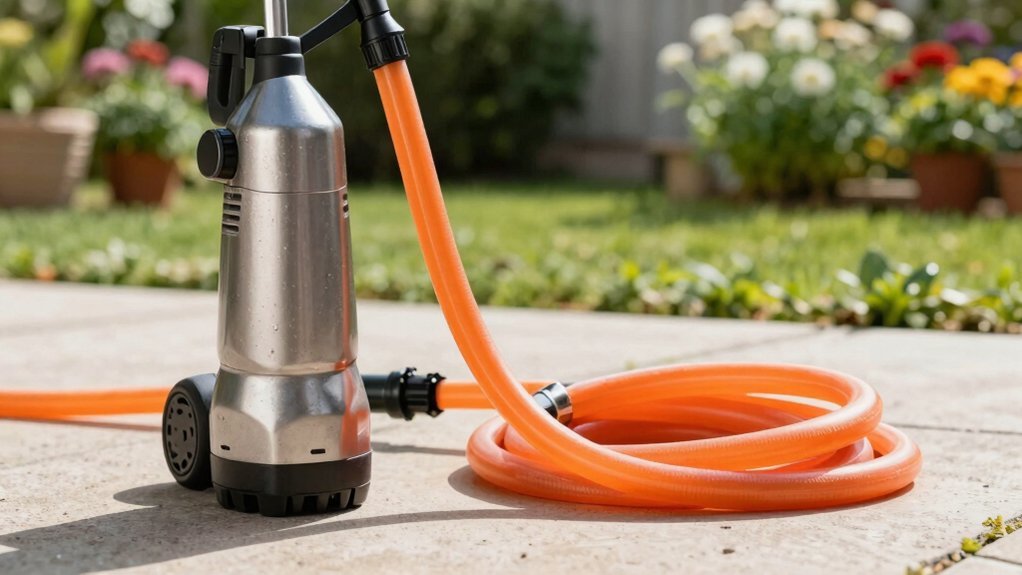
On a sunny day, water in a garden hose can climb to about 60 °C (140 °F), far above the 49 °C (120 °F) burn threshold for children and pets. Solar radiation dominates heat gain, especially for dark‑colored hoses that absorb the full spectrum. Ambient air adds only a modest offset, while longer exposure and recirculation can push temperatures higher. Flushing the hose before use typically drops the peak below the 30 °C safety benchmark. If you keep reading, you’ll uncover how to test and mitigate these risks.
Can Garden Hose Water Reach Dangerous Temperatures?
When the sun beats down on a garden hose, the water can quickly climb into dangerous temperature ranges; measurements show it can reach 60 °C (140 °F) in extreme heat and exceed 49 °C (120 °F) when ambient air sits between 28 °C and 35 °C. You’ll see that a water recirculation system—where water remains static in the hose—magnifies heat gain, especially after several minutes of exposure. Data indicate that after three to four hours in direct sunlight, temperatures can rise to 130‑140 °F, easily surpassing the 43 °C scald threshold for healthy skin. Children, infants, and pets exhibit heightened sensitivity, with documented second‑degree burns at 49 °C. Reducing exposure duration by flushing the hose before use lowers peak temperature, keeping water below the 30 °C safety benchmark. Hoses left out all day can reach temperatures high enough to cause second‑ and third‑degree burns. Stagnant water in a heated hose can also promote bacterial growth, increasing the risk of illness if consumed. The Bernoulli principle helps explain how pressure changes affect flow speed when the hose is heated. Ground temperature can further influence hose water temperature, especially during cooler nights when the soil retains heat.
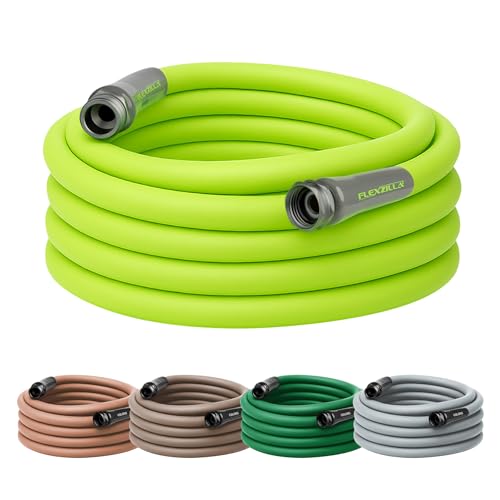
AWARD-WINNING: HGTV, USA Today and Best Reviews voted Best Overall Garden Hose

Durable Garden Hose: Made of 304 stainless steel and multi-layer flexible inner tube, its structure is stronger than traditional rubber water pipes. Also it can withstand dog bite, dragging through wall edges and ground and will not break, crack or leak

Commercial grade hot-water rubber hose withstands water temperatures of up to 190° F
How Do Ambient Heat and Sunlight Heat Up Garden Hose Water?
If the hose sits in direct sunlight, solar radiation becomes the dominant heat source, raising water temperature far above ambient air. You’ll notice that heat transfer mechanisms shift from pure convection to a combination of radiation absorption, conduction through the hose wall, and limited convection within the water column. On a 70 °F cloudy day the water climbs to roughly 80 °F, while a mid‑80s °F sunny day pushes it past 100 °F because the hose surface absorbs photons and conducts energy into the fluid. Ambient air temperature adds a modest offset; when shaded, the water tracks the air within ±2 °F. Longer exposure amplifies the rise—one hour can lift 50 gal from 70 °F to 76.5 °F. Nighttime cooling reverses the process, allowing the water temperature to fall back toward ambient levels. The hose provides a 6.5 °F temperature increase due to its length and material properties. The diameter of the hose also influences how quickly heat is transferred to the water. Using a hose with a higher pressure rating can help prevent deformation under thermal expansion. Selecting the appropriate 1/4 inch hose size can also affect heat gain, as smaller diameters have less water volume to absorb solar energy.
Why Do Hose Color and Surface Material Affect Water Temperature?
Direct sunlight already showed how ambient heat raises water temperature, but the hose’s color and material dictate how much of that energy actually reaches the fluid. Dark colors such as black absorb the full solar spectrum, raising water to 49.8 °C, while blue surfaces can reach 56.3 °C on grass despite lower absorption efficiency. Light‑colored hoses reflect radiation, keeping water cooler. Material choice governs thermal conductivity and insulation properties: EPDM rubber conducts heat moderately and tolerates up to +120 °C, PVC has lower conductivity but degrades under UV, and PTFE offers high conductivity with a 260 °C limit. Composite and metallic hoses exhibit distinct insulation behavior, influencing internal temperature rise. Selecting a hose with low thermal conductivity and high insulation reduces water heating in sunny conditions. The optimal hose length balances pressure loss and reach for efficient watering. Understanding flow rate helps match hose diameter to garden water demand.

Lightweight and Flexible Design: Easily maneuver around your garden with this 25-foot, 1/2-inch diameter hose, perfect for light-duty tasks.

【PREMIUM TPU CORE & HEAVY-DUTY LEAK-PROOF VALVE】Upgrade your outdoor chores with our advanced TPU (Thermoplastic Polyurethane) 50ft garden hose. Featuring an exclusive, integrated flow control valve at the hose end, you can adjust water pressure or shut it off instantly without running back to the spigot. Built with a solid, rust-proof valve core and precise threading, it guarantees a 100% leak-free, rock-solid connection for long-term reliability.

Radial reinforcement with a tough, weather-resistant vinyl cover
What Is a Safe Garden Hose Water Temperature Range?
A garden hose that delivers water above 35 °C (95 °F) for extended periods can degrade its polymer walls, cause seals to soften, and increase the risk of second‑degree burns if the stream contacts skin. For safe operation, stay within the manufacturer’s optimum operating temperatures: short bursts may reach 60 °C (140 °F) on polyurethane, but continuous flow should not exceed 35 °C (95 °F). Standard safety limits for human contact and material integrity align with these values; exceeding them accelerates polymer fatigue and can release lead or BPA from PVC components. Choose a hose labeled drinking‑water safe, preferably polyurethane or rubber, and avoid directing hot streams at people. Drain fully after each use and verify that all fittings are lead‑free to maintain compliance with safety thresholds. Ensure the water source is temperature‑controlled to prevent accidental overheating. Sprinkler water safety guidelines recommend regular system checks to avoid contamination. If the water has been exposed to recent pesticide applications, consider pesticide residues before allowing pets to drink.

DRINKING WATER SAFE HOSE: Built with an inner tube made from NSF-certified material, this hose is drinking-water safe and suitable for RV hookups, filling pet bowls, and watering edible plants

Non-Expandable Light Weight Garden Hose - EOOIO 35 feet garden hose is made of blended with rubber and PVC. The outer and inner layers of the water pipe are both mixed materials, while the middle layer is woven material, which has the advantages of lightness, non fading, and abrasion resistance. Lighter than traditional garden hoses, easy to carry and store when going out.
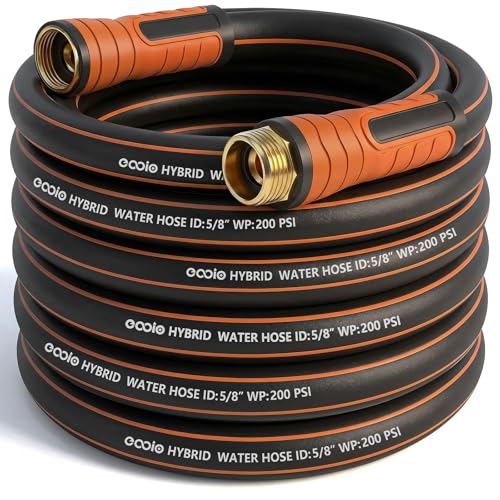
Heavy Duty Non Kinking Garden Hose 35 ft with a Smooth Swivel Handle
What Do Real‑World Measurements Show About Hose Water Heat?
Observations from field tests reveal that hose water temperatures typically sit between 40 °C and 50 °C, with the highest recorded water temperature of 47 °C occurring in a grey hose overlapped on a stand. You’ll notice that black hose No. 1, despite a lower surface temperature, delivered the highest internal water temperature, confirming that hose material properties dominate heat absorption factors. Surface readings ranged from 45 °C to 57.8 °C, yet water stayed within the 39.9 °C–49.8 °C band. Infrared thermometers (Parkside PTIA 1) measured surface heat with ±0.3 °C accuracy above 0 °C, while certified probes captured internal water. Grass placement raised surface peaks to 56.3 °C, but water temperature rose modestly, illustrating that external heat exposure and hose color affect heat transfer, not merely ambient temperature. The principle of evaporative cooling can also be applied to roof sprinkler systems to reduce indoor temperatures efficiently. Using self‑regulating heat tape on hoses helps maintain safe operating temperatures and prevents overheating. Properly insulating the hose during cold weather can prevent freezing and extend its lifespan.
What Temperature Causes Scald Burns From Garden Hose Water?
Field measurements show hose water often sits between 40 °C and 50 °C, but the real danger begins once the temperature exceeds the scald threshold for skin. For healthy adults, water above 43 °C already poses a measurable burn risk; exposure to 48.9 °C for five minutes can produce second‑ or third‑degree injuries. Children and individuals with circulatory or skin disorders reach the same severity at lower temperatures, often as low as 39.9 °C. The primary factors influencing hose water temperature include ambient sunshine, hose material, water flow rate, and length of exposure to solar heating. Mitigating risk of scalding injuries requires shading hoses, using insulated reels, and allowing water to run briefly before contact. Monitoring temperature and limiting exposure duration are essential for safety. Proper sprinkler water testing can also reveal contaminants that may affect overall water safety. Stagnant water in hoses can become a breeding ground for Legionella bacteria when temperatures stay in the 20 °C–45 °C range for extended periods. Regularly inspecting hose connections can prevent leak‑induced pressure loss that might otherwise increase water temperature.
How Can You Test Garden Hose Water Temperature Before Use?
You can quickly assess hose water temperature before use by combining visual cues, a brief touch test, and a simple measurement technique. First, evaluate water color: a faint steam‑like haze or unusual clarity signals heat. Inspect hose exterior for warmth; a hot surface felt with the back of your hand indicates elevated temperature. Next, perform a touch test: hold your hand near the initial spray, then briefly dip a small water sample into a container and feel the temperature with bare skin. For precise data, attach a digital probe thermometer to the hose fitting or use an infrared non‑contact thermometer on the hose exterior. Record the reading within five seconds of collection, then flush the hose for 10‑30 seconds to stabilize temperature before full use. Water can reach 140 °F when left in direct sunlight for extended periods. Proper garden hose operation typically requires water pressure between 40 and 80 psi to maintain consistent flow and temperature control. In colder climates, water in exposed hose sections can freeze if temperatures drop below 20 °F (‑6 °C), so consider using insulated hose reels or heat tape to prevent freezing. Leaving a hose running unattended can cause water waste and increase utility costs.

TEMPERATURE SELECTION: User selectable Fahrenheit and Celsius measurements for convenience and versatility
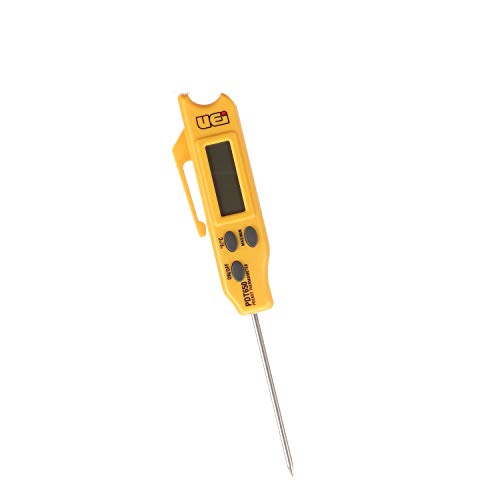
WIDE −58 TO 572°F TEMPERATURE RANGE Folding digital pocket thermometer with a broad −58 to 572°F (−50 to 300°C) range for HVAC, refrigeration and field service work. The 3.5-inch probe reads ambient air or makes direct contact in solids and liquids, with user-selectable °F/°C scales.

Easy-to-read green, yellow, and red tick marks for easy monitoring
When Does Excessive Heat Indicate Your Hose Needs Replacement?
A hose that regularly pushes water above 35 °C during continuous use is already past its safe operating envelope, and surface temperatures exceeding 56 °C signal material breakdown. You should treat any occurrence of water temperatures above 49.8 °C on concrete or 47 °C on grass as a material fatigue indicator. Those temperatures accelerate hose expansion effects, causing the wall thickness to thin and the inner liner to delaminate. When surface readings consistently breach 30 °C in partial shade, the polymer matrix is likely degrading, and the hose will lose pressure‑holding capability. If you notice bulging, cracking, or a loss of elasticity after a hot‑day cycle, replace the hose immediately to prevent scald burns and catastrophic failure. The recent test by the Scripps sister station in Phoenix showed hose water reaching 130 °F under sunny conditions.
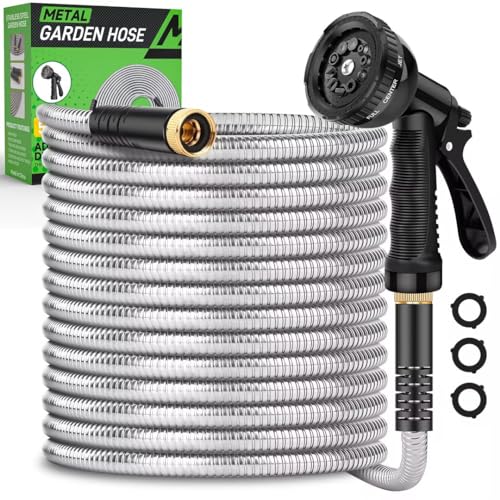
Metal hose: The shell of the garden hose is made of high-quality stainless steel metal, which feels good to the touch and will not rust. At the same time, it can effectively protect the soft inner pipe so that the inner pipe is not easy to break and leak. Garden hose can withstand animal gnawing, can be dragged on various surfaces such as grass, concrete, bushes and stones.

DURABLE AND HIGH PRESSURE PERFORMANCE : SPECILITE heavy duty garden hose features a 5-layer braided design, boasting 450 PSI working pressure & 1300 PSI burst pressure for stable, reliable performance. Exceptionally resistant to abrasion, cuts, punctures, tears, pet chewing—for outstanding durability. Ideal for demanding applications like horticultural irrigation, agricultural operations, construction sites, it delivers unwavering water supply performance to meet all high-intensity usage requirements

No Cracking Or Melting At High Temperatures: Maximum temperatures up to 190°F are class-leading. Gardening hose will not burst or melt in the midday sun on extremely hot summer days. And it can be used to drain water heater sediment or dispose of hot water