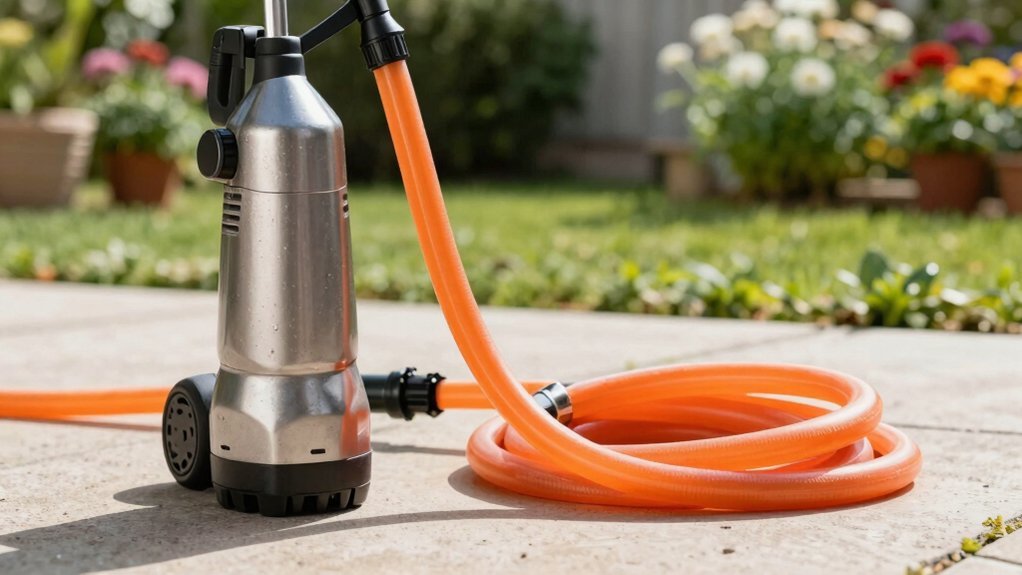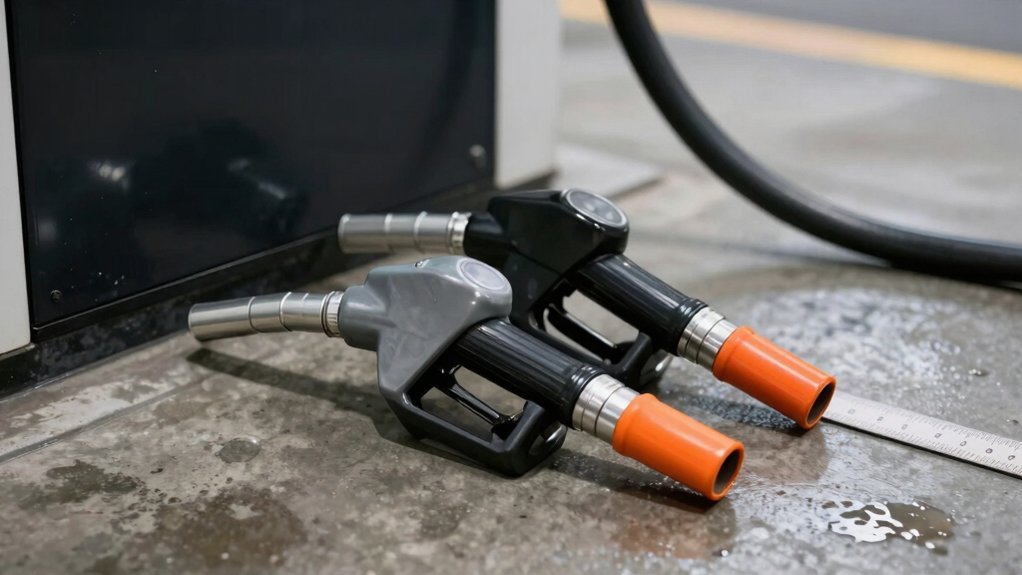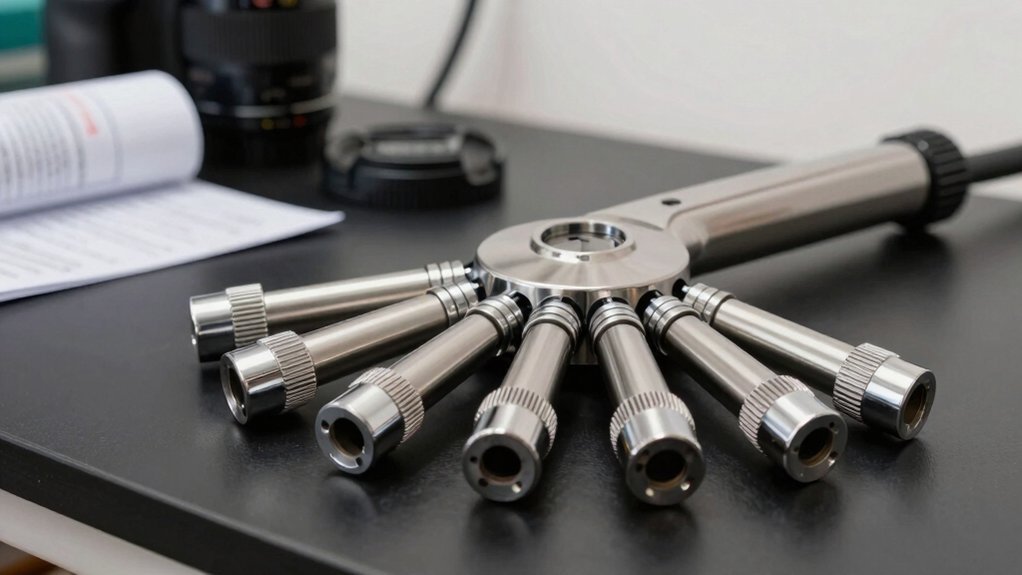
You can’t use a diesel nozzle in a sprinkler because its pressure‑regulated geometry, high‑pressure rating, and fuel‑compatible materials don’t meet NFPA 13, UL, or FM standards, so you’ll get uneven spray, seal degradation, and cross‑contamination. Choose a water‑sprinkler nozzle rated 60‑70 psi, UL‑ or FM‑listed, and sized with the 5940 constant to match your flow‑rate and spacing. Install it with PTFE tape, hand‑tighten, then add one to two wrench turns, and verify vertical alignment. Follow the maintenance schedule to keep coverage above 80 % and avoid clogging, and you’ll find the detailed selection criteria and compliance checks ahead.
Why Diesel Nozzles Can’t Be Used in Sprinkler Systems
Because diesel nozzles are engineered for fuel atomization, not water distribution, they simply can’t meet the functional requirements of a sprinkler system. You’ll find their orifice design lacks the pressure‑regulated geometry needed for the broad, uniform spray pattern fire codes demand. Diesel‑engine nozzles operate at pressures up to 3,000 psi, far exceeding the 50‑150 psi range typical for water‑based suppression, causing flow‑rate inconsistencies that break hydraulic calculations. Chemical compatibility issues arise because diesel‑fuel residues attack seals and O‑rings designed for petroleum, while corrosion risk factors accelerate metal degradation when water contacts the nozzle body. These materials fail FM, UL, and NFPA certifications, so the system remains non‑compliant and unsafe. Using the wrong nozzle can also cause fuel cross‑contamination that damages pump components and voids warranties. The principle of nozzle flow restriction explains how reducing the orifice size can lower pressure and control discharge rate.
What Makes a Water Sprinkler Nozzle Compatible With Fire‑Protection Requirements
A compliant water‑sprinkler nozzle must meet NFPA 13’s performance, material, and testing criteria, delivering the required flow rate and coverage while staying within the 50‑150 psi pressure range and maintaining 18 in. clearance from stored contents. You verify its water discharge characteristics against NFPA 15 droplet size and velocity limits, ensuring the spray pattern matches the hazard’s coverage area. Thermal environment optimization requires the nozzle to operate reliably under expected draft conditions and temperature fluctuations, preserving droplet size and trajectory. Choose UL‑ or FM‑listed construction to guarantee corrosion resistance and structural integrity at 175 psig. Confirm that the nozzle’s pressure drop aligns with system capacity, and that the spray trajectory delivers the prescribed density without exceeding the 90 % water‑supply limit. Fire sprinklers can reduce property damage by up to 70 % when properly installed and maintained. The wet‑pipe system’s constant water fill ensures immediate activation when a heat‑sensitive element triggers. continuous water supply enhances overall fire‑suppression effectiveness. Regular hydrostatic testing verifies the nozzle’s ability to sustain pressure over time.
How to Choose the Right Sprinkler Nozzle Flow Rate and Pressure Rating
Choosing the correct flow rate and pressure rating starts with calculating the required gallons‑per‑minute (gpm) using the 5940 constant: gpm = 5940 × (gpa × mph) ÷ spacing. You then locate that gpm in the nozzle chart, trace left to the psi column, and pick the nozzle whose pressure falls in the middle of the recommended range. For air‑induced nozzles aim for 60‑70 psi; avoid low‑drift sprays below 30 psi. Apply nozzle selection criteria by matching the calculated gpm to catalog capacities, then verify precipitation rate considerations—typically 0.39‑0.45 in/hr for low‑flow or 0.42‑0.52 in/hr for triangle patterns. Adjust pressure using ψ₁ = ψ₂ × (GPM₁/GPM₂)² if travel speed changes, and stay within manufacturer‑specified pressure limits for preferred performance. Full‑circle rotors require twice the flow rate of half‑circle rotors. Understanding nozzle inches per hour helps ensure the system delivers the intended coverage efficiently. Proper pipe sizing is essential to maintain consistent pressure and avoid excessive system resistance. Effective irrigation also depends on dividing the landscape into sprinkler zones based on plant types, sun exposure, and soil conditions.

Complete set: Twinkle Star Pressure Washer Tips contains 1 Black Brass soap nozzle, 1 Red Stainless Steel Nozzle Tip (0 Degree), 1 Yellow Stainless Steel Nozzle Tip (15 Degree), 1 Green Stainless Steel Nozzle Tip (25 Degree), 1 White Stainless Steel Nozzle Tip (40 Degree)

SOLID BRASS: The PowerBlast Super Sweeper water sprayer nozzle is constructed from solid machined brass, made from 100 percent metal with no plastic parts; 7 GPM 80 PSI. 3/4-Inch Thread Inlet

Complete Set: Includes 1 Black Brass soap nozzle, 1 Red Stainless Steel Nozzle Tip (0 Degree), 1 Yellow Stainless Steel Nozzle Tip (15 Degree), 1 Green Stainless Steel Nozzle Tip (25 Degree), 1 White Stainless Steel Nozzle Tip (40 Degree), 1 Blue Brass Rinse Nozzle, 1 Pink Brass Soap Nozzle
Installation Best Practices to Avoid Leaks and Fire Hazards
After calculating the correct flow rate and pressure, the next step is installing the nozzle without creating leak paths or fire risks. Begin by pulling the pop‑up shaft upward and using a small screwdriver to pry out the old nozzle while holding the shaft with fingertip pressure. Flush debris, then insert the new basket or prefilter, ensuring Proper nozzle selection selection the coverage distance. Apply PTFE thread tape, leaving 0.5 cm exposed, and hand‑tighten the nozzle; add only 1‑2 wrench turns to avoid over‑torquing. Align the shaft for vertical plumbness and adjust the arc collar to match the target boundary. Pressurize the system, verify seal integrity, and confirm that the installation complies with adequate system design to prevent leaks and fire hazards. Selecting the appropriate sprinkler head type based on plant water needs and soil absorption rates further enhances irrigation efficiency. Choosing the correct nozzle spray pattern ensures optimal pressure distribution for the specific cleaning task. Head-to-head coverage is essential for uniform water distribution and helps avoid dry spots. Proper nozzle size matching the system’s pressure rating maximizes efficiency and reduces wear.
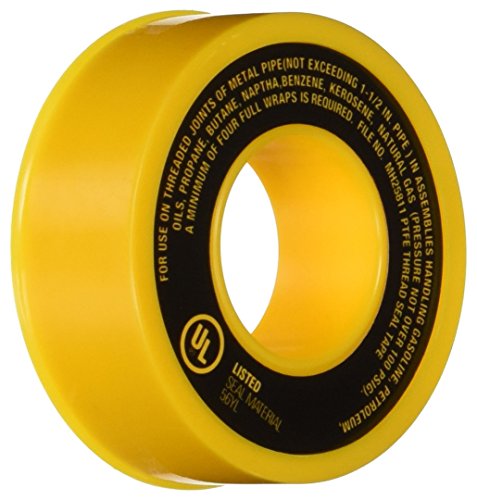
Yellow gas line thread seal tape with PTFE

Has been used to seal fittings carrying water and oil at pressures up to 10,000 PSI
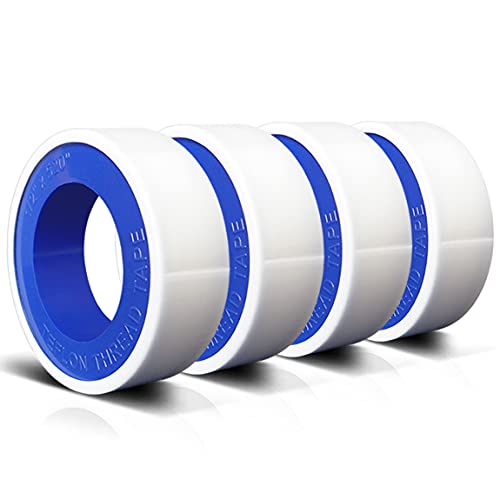
Teflon tape has a sealing function to prevent the leakage of water or gas.
Maintenance Checklist for Long‑Term Sprinkler Nozzle Reliability
When you schedule regular inspections—monthly during peak watering months and at least twice a year for deep cleanings—you’ll catch debris, mineral buildup, and wear before they cause pressure loss or uneven coverage, ensuring each nozzle maintains its rated flow and spray pattern throughout its 2‑5‑year lifespan. Conduct visual checks while the system runs, noting cracked heads, tilted nozzles, or blocked spray. Clean filters and heads twice yearly in warm water with rust remover for 30‑60 minutes, then brush off sand and calcium. Flush valves to clear line sediment. Replace any nozzle that remains clogged after cleaning or shows visible damage, matching the original model to preserve flow uniformity. Verify head‑to‑head coverage exceeds 80 % and adjust patterns to avoid overspray. This routine delivers consistent pressure delivery and cost effective maintenance. Mineral buildup can also cause clogging and reduced spray efficiency if not addressed promptly. Understanding the structural weaknesses of sprinkler heads helps prevent accidental damage during maintenance. A worn nozzle can create thin string‑like streams that disrupt uniform coverage.

3 Pack- Each Set Contains 8 Standard and 4 Low Angle (4) Nozzles

Dimensions: 0.75 x 4.5 x 8 inches

✅ All in One Comprehensive Kit: This complete set includes 10 rotor nozzle trees and 1 specialized adjustment screwdriver. You won't need to hunt for extra parts or tools; Everything required for immediate maintenance is right here, ready to service your irrigation zones