You’ll find a stainless‑steel hose lasts 10‑15 years, outlasting rubber and resisting kinks, UV, and temperature extremes while keeping water clean and free of leached chemicals. Though the upfront price is higher, the cost‑per‑use drops to about $5.70 per year, breaking even in 3‑5 years and saving you from frequent replacements and repair fees. It holds shape under 500‑550 psi, delivering steady flow even in harsh weather. If you keep reading, you’ll uncover how to choose the right length and pressure rating for your garden.
What Makes Stainless‑Steel Hoses More Durable Than Rubber?
Stainless‑steel hoses outlast rubber because their metal construction resists corrosion, UV, and temperature extremes, while rubber degrades under the same conditions. You’ll notice the corrosion resistance immediately when you expose a steel hose to salty soil or acidic fertilizers; the metal stays clean, whereas rubber cracks and softens. The segmented or braided steel design also handles temperature extremes, staying flexible above 350 °F and below –40 °F, while rubber becomes brittle or melts. You won’t worry about punctures or crushing—steel’s military‑grade toughness blocks dents and kinks, keeping flow steady. In addition, steel maintains purity, avoiding contamination that rubber can leach. In harsh climates, the hose endures sun, salt, and abrasives with minimal wear, extending service life and cutting replacement costs. The heavy‑duty brass connectors provide a secure, leak‑resistant connection that outperforms typical rubber fittings. Proper storage, such as draining after each use and keeping the hose in a shaded area, can further extend its 10‑15‑year lifespan. Choosing the right hose length helps maintain optimal pressure and flow, pressure rating is essential for matching your washer’s specifications.

【Professional Metal Garden Hose】SPRIKIR metal garden hose 100 ft is constructed with commercial-grade stainless steel and durable PVC inner hose, abrasion-resistant, durable and flexible. Fearless of rough surfaces or corners or bad weather, The steel material can be bent and move with ease, go around obstacles provide perfect water output.

Long service life, you don't need to worry about replacing hoses every year: TheFitLife metal garden hose is made of heavy duty industrial grade 304 stainless steel. It is sturdy enough to protect the inner tube from punctures, not fragile like the expandable hoses. It offers premium durability and ensures the hose will not rust, corrode, scuff, leak or tear, ensuring for a longer service lifespan.
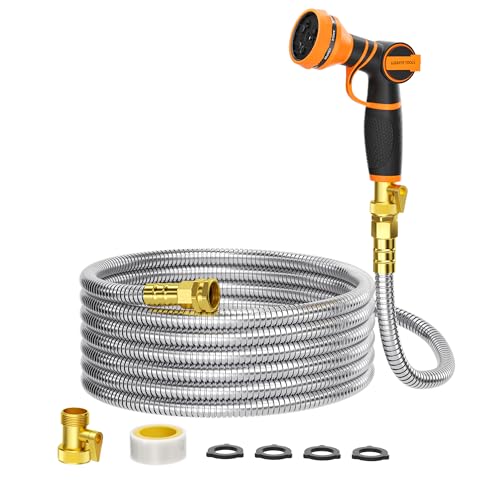
Stainless Steel Garden Hose: Giraffe garden hose is made of commercial grade 304 stainless steel, durable and stronger than rubber hose. Superior corrosion and rust resistance not only protects the inner tube, providing excellent protection against punctures, sharp corners and tears, but also prevents friction damage caused by dragging on the ground and allows it to pass confidently through bushes or barbed wire fences
How Does the Price‑Per‑Use Compare Over Time?
When you break down the numbers, the higher upfront cost of a stainless‑steel hose quickly turns into a lower price‑per‑use because you won’t be buying replacements every year. A $40 stainless hose amortized over a 7‑year lifespan costs about $5.70 per year, versus $30‑$50 annual rubber replacements that total $210‑$350 in the same period. This creates long term cost savings of $150‑$300 and a clear product lifespan extension. The metal hose’s kink‑proof, rust‑proof design eliminates repair and storage degradation costs, so you avoid hidden expenses. After a 3‑5‑year break‑even point, every additional year adds pure savings, making the investment financially sensible for decade‑long garden care. Understanding hose pressure helps you select a hose that can handle the water force without bursting. Larger hose diameters provide higher flow rates, reducing watering time for extensive lawns. Choosing the appropriate gallons per minute rating ensures efficient water delivery for your garden’s needs.

HEAVY DUTY METAL GARDEN HOSE THAT WON'T KINK OR RUST — This 50 ft Bionic Steel PRO stainless steel water hose is built from commercial-grade 304 stainless steel, so it stays kink-free, rust-proof, and puncture-resistant where rubber and vinyl hoses crack, coil, and spring leaks. Lightweight, flexible, and ready for everyday watering, car washing, and yard work.

Stainless Steel Construction: The robust metal exterior shields the soft PVC inner tube, greatly reducing the chances of breaks and leaks. Unlike rubber hoses that can harden and crack under sunlight, this garden hose maintains flexibility and durability in extreme weather, ensuring a longer lifespan
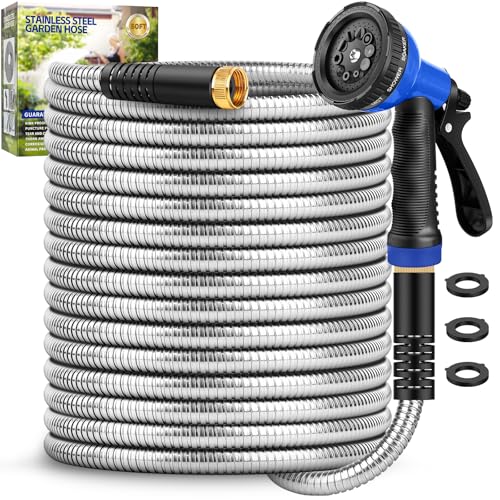
Durable Metal Construction: Ending the yearly replacement cycle for good. This high-pressure metal garden hose is crafted with a high-grade stainless steel outer shell and a robust PVC core. Engineered to resist punctures, abrasions, and rot, this water hose handles rough terrain, thorny rose bushes, and prickly shrubs with ease. Rated up to 550 PSI, it delivers reliable performance for every gardening task
What Water‑Quality Benefits Do Stainless Steel Hoses Provide?
Because stainless‑steel hoses resist corrosion and mineral buildup, they keep the water you spray on plants and soil cleaner than rubber or vinyl alternatives. The 304 alloy forms a passive chromium layer that blocks rust, while marine‑grade 316 adds extra resistance to hard water minerals. You won’t see the chalky residue that builds up in rubber hoses, so your irrigation stays clear and your soil avoids unwanted deposits. Because the material doesn’t leach lead, bromine, antimony, tin, or BPA, it offers strong prevention of water contamination. You also avoid phthalates and other toxic additives found in PVC, meaning the water stays non‑toxic for both plants and any edible produce you grow. The stainless‑steel hose can be pulled straight to palm trees without entanglement, making it ideal for long‑distance watering. Modern garden hoses that are certified lead‑free are also safe for potable use, further reducing any risk of metal exposure. Drinking water from a contaminated hose can lead to gastrointestinal illness due to bacterial or chemical pollutants. Sprinkler water safety guidelines recommend testing water quality before consumption.
Will a Stainless‑Steel Hose Keep the Water Flowing Smoothly?
Your garden’s water will stay steady because the hose’s metal construction prevents expansion and collapse, so pressure never drops mid‑spray. The 304 stainless‑steel shell holds its shape under 500‑550 PSI, delivering consistent water flow even when you crank up the pressure. 360° swivel connectors spread pressure evenly, while heavy‑duty 3/4″ fittings and reinforced rubber gaskets stop leaks. The spiral, interlocking flex design resists kinks, letting you thread the hose around plants without flow interruption. Weatherproof performance means the hose stays flexible in summer heat and winter cold, and the rust‑proof coating prevents corrosion. You’ll notice smoother spray patterns, less effort moving the hose, and reliable delivery season after season. The braided fabric exterior adds an extra layer of protection against abrasion. Most residential hoses operate effectively between 40‑80 psi for optimal water flow. Longer hoses increase friction loss, which can reduce water pressure if not properly sized.

Ultra-Durable 304 Stainless Steel Construction: Crafted from commercial-grade 304 stainless steel, this garden hose outperforms traditional rubber hoses with superior strength and longevity. Resistant to corrosion, rust, and abrasion, it withstands punctures, sharp edges, and friction-even when dragged across rough terrain, bushes, or fences

UNCO stainless steel garden hose is engineered for strength and flexibility, making it perfect for heavy-duty outdoor watering and cleaning tasks.
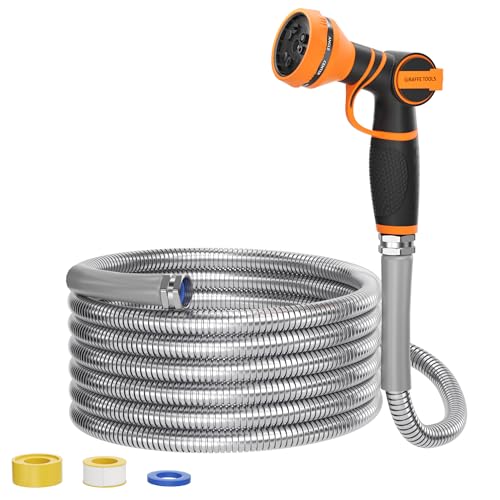
Ultra-Durable 304 Stainless Steel Construction: Crafted from commercial-grade 304 stainless steel, this garden hose outperforms traditional rubber hoses with superior strength and longevity. Resistant to corrosion, rust, and abrasion, it withstands punctures, sharp edges, and friction-even when dragged across rough terrain, bushes, or fences
Is a Metal Hose Right for You and When Is It Worth It?
Should you choose a metal hose? If your seasonal water use requirements include daily watering, heavy‑duty washing, or frequent pet baths, a stainless‑steel hose fits. Its rust‑resistant construction outlasts rubber, handling high pressure without leaks, so you won’t replace it every few years. The 3‑5‑pound weight stays manageable, and the flexible coil bends without kinking, making it suitable for targeted applications like raised beds or narrow pathways. Upfront cost is higher, but long‑term savings and reduced waste justify the price for busy gardeners, landscapers, or coastal users. Conversely, if you water lightly once a month on a small lawn, a cheaper rubber hose may suffice. Choose metal when durability, pressure, and frequent use outweigh initial expense. The hose’s 50‑foot length provides ample reach for most garden layouts. Proper hose length helps maintain consistent water pressure across the entire area. Using a longer hose than necessary can cause pressure loss that reduces washing efficiency. Selecting a hose with a compatible pressure rating ensures safe operation with your pressure washer.

Durable Garden Hose: Made of 304 stainless steel and multi-layer flexible inner tube, its structure is stronger than traditional rubber water pipes. Also it can withstand dog bite, dragging through wall edges and ground and will not break, crack or leak

[Titan Metal Garden Hose] Stands in a league of its own—built for homeowners, professionals and outdoor yard enthusiasts who demand unmatched performance, strength, and reliability from their garden hose. What sets it apart?

Durable & Built to Last: Made with high-grade stainless steel and reinforced PVC inner tubing, our garden hose is designed to resist rust, punctures, and leaks, ensuring longevity and reliability in varying weather conditions.