You’ll find that a sprinkler system’s performance hinges on a controller that schedules watering, a network of 1/2‑inch mainline and smaller tubing that transports water, solenoid‑operated valves that regulate flow, appropriately matched sprinkler heads for uniform coverage, and a backflow preventer that safeguards your potable water supply. Each component works together to deliver precise, efficient irrigation, and the next sections will show how they interact in detail.
What an Irrigation System Controller Does & Why It Matters
When you install an irrigation system controller, it serves as the brain that schedules, initiates, and terminates each watering cycle, ensuring water reaches the right zones at the right times. The controller integrates a clock, valve drivers, and program memory to execute sequential zone activation, close solenoids, and enforce run‑time limits. Closed‑loop designs couple sensing technologies—soil‑moisture probes, rain sensors, and temperature gauges—to real‑time data, enabling automatic adjustments that embody water conservation strategies. You can define multiple programs, each with distinct start times, days, and durations, applying the cycle‑and‑soak method to reduce runoff. Flow monitoring detects anomalies, while manual override and master‑switch functions provide supplemental control. This schematic approach maximizes efficiency, minimizes waste, and aligns irrigation with plant, soil, and climate requirements. Modern timers often include rain‑sensor integration to pause watering when precipitation is detected.

Indoor WiFi sprinkler timer puts control of your sprinkler system in the palm of your hand with intuitive Rain Bird mobile app
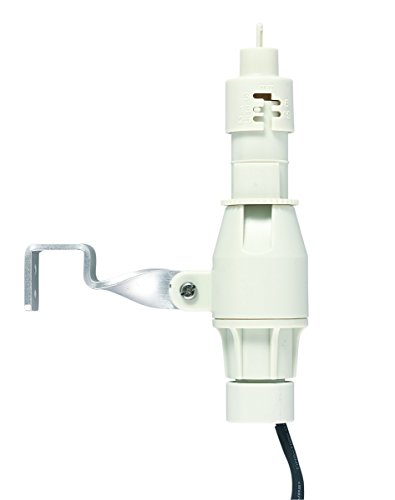
For automatically detecting rainfall or low temperature conditions
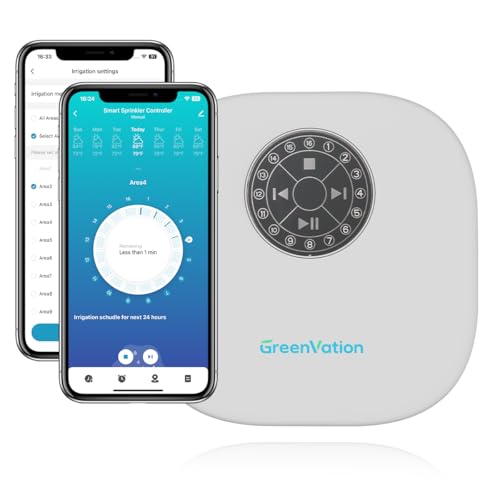
Note: After connecting the controller and successfully pairing it with the Tuya app, please ensure to update the firmware to the latest version within the app.
How Irrigation System Pipes and Tubing Deliver Water
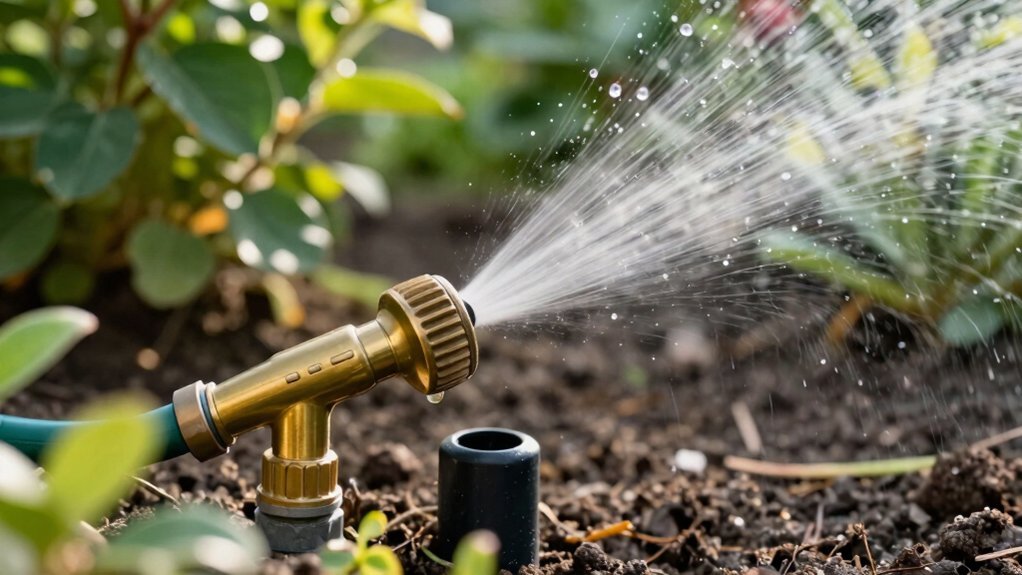
The irrigation system’s pipes and tubing form the conduit network that transports water from the controller‑regulated source to each emitter, driplines, sprayer, or sprinkler. You lay 1/2‑inch mainline tubing near plants, then branch smaller tubing—1/4‑inch punch‑in drippers or 1/2‑inch emitter tubing—using adapters and end caps. Tubing configurations include oval hose for low‑pressure headers, IPS hose for flexible connections, and spaghetti tubing for individual plants. Water flow dynamics depend on diameter, length, and pressure regulation; a 200‑foot limit on 1/2‑inch lines preserves adequate flow, while pressure‑compensating emitters maintain uniform discharge. Secure each segment with stakes, verify that filters and regulators are attached, and guarantee all fittings match the chosen tubing material to avoid leaks. White tubing reflects sunlight, keeping water cooler and reducing algae growth. Properly sizing the mainline prevents pressure loss, ensuring consistent water distribution throughout the system.
How Irrigation System Valves Control Flow
If you need precise flow control, valves act as the gatekeepers that translate electrical commands from the controller into hydraulic movement, opening or closing water pathways within milliseconds. You’ll see a solenoid trigger lift a diaphragm in the bonnet chamber; the metering port regulates pressure differential, and the spring forces closure when the signal stops. Choose a valve that matches system hydraulics—proper valve sizing prevents pressure drop and low‑flow choke. Manual flow control adjustment via the wheel‑shaped handle lets you fine‑tune volume: turn clockwise to reduce, counterclockwise to increase, mimicking a faucet. Use solenoid, butterfly, or ball types for high‑frequency zones, and install a master valve on the main supply to isolate leaks. Operate within 15‑150 PSI, filter debris, and verify that each valve’s GPM rating aligns with pipe dimensions and zone demand. Forward flow valves are especially effective for low‑flow installations. Understanding the pressure‑balanced design helps prevent damage from sudden pressure spikes. Some systems employ a manual valve for zones that do not require electronic control.

BUILT-IN FLOW CONTROL FOR ZONE PRECISION: Control water flow to each irrigation zone and prevent overwatering. Helps improve system efficiency, reduce misting, and support healthier landscapes.

Residential / light commercial grade 3/4" female threaded inlet and outlet valve
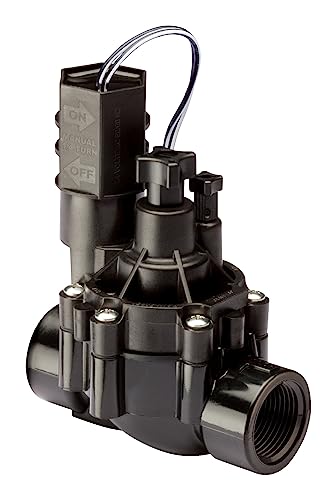
Residential / light commercial grade 1" female threaded inlet and outlet valve with flow control to avoid misting
Choosing the Right Irrigation System Sprinkler Heads for Uniform Coverage
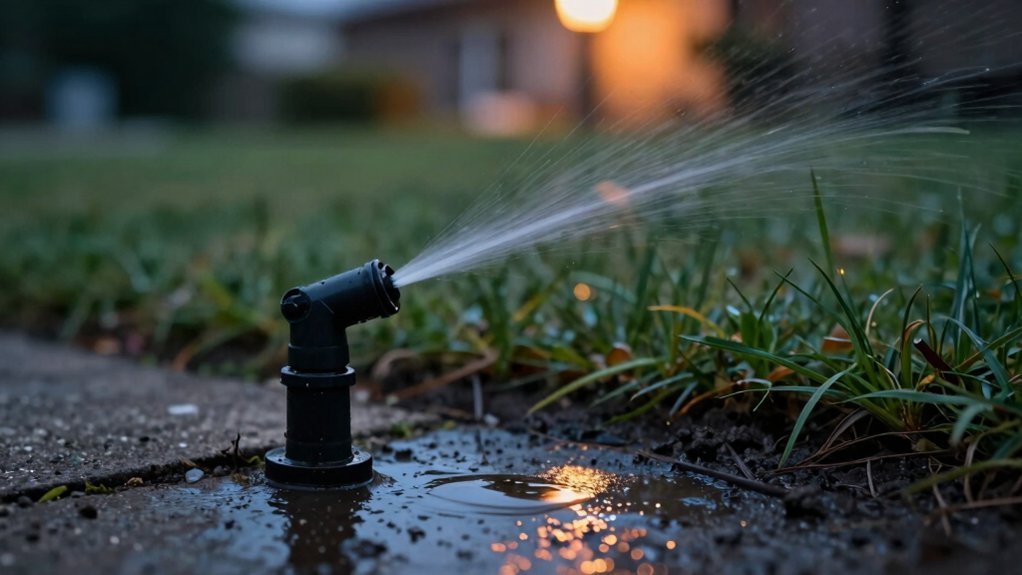
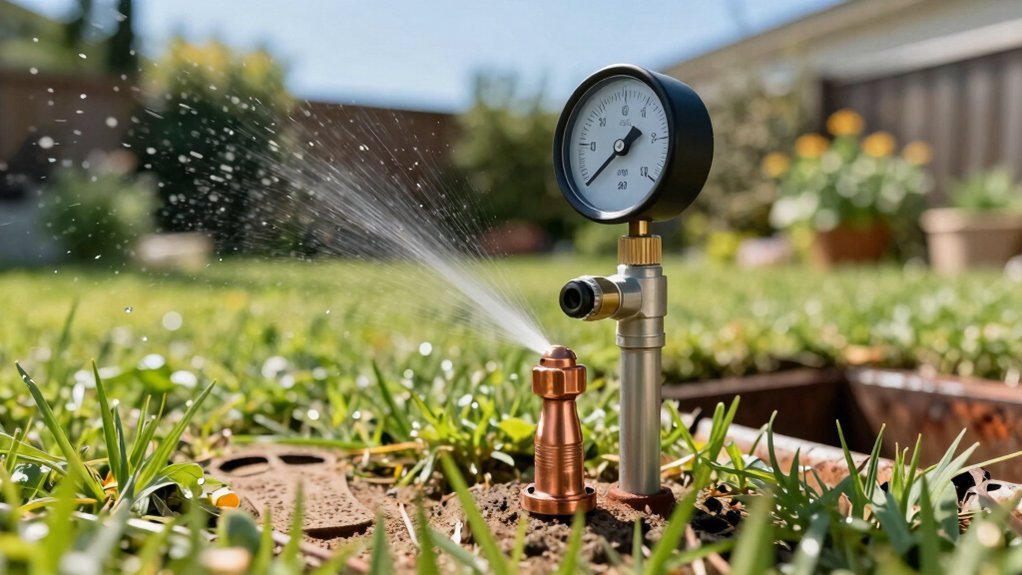
Because uniform coverage hinges on matching sprinkler head characteristics to site conditions, you’ll first evaluate area size, layout, soil type, and terrain slope before selecting a head type. For compact lawns or flower beds, fixed spray heads give a tight fan; choose full‑circle or quarter‑circle nozzles and set pressure around 30–40 psi. Large, open zones benefit from rotor heads—impact or gear‑driven—because their rotating stream reduces runoff and supports adjustable nozzle patterns for irregular geometry. Pop‑up heads provide a hidden profile and work well on varied terrain; select 4‑inch units for grass and 12‑inch for shrubs, ensuring head‑to‑head overlap in triangular or square patterns. Multiple‑stream heads excel on slopes and clay soils, delivering thin streams that maximize water efficiency while minimizing waste. Verify each head’s flow rate matches zone pressure and maintain consistent spacing for uniform distribution. Understanding soil moisture retention helps fine‑tune watering schedules and prevent over‑irrigation. Properly calculating spray radius ensures that each head’s coverage area overlaps just enough to avoid dry spots. Installing heads at the recommended optimal height further promotes even water distribution and reduces runoff.

Approved for sale/meets pressure regulation legislation requirements in: CA, CO, HI, VT, MA, ME, NY, OR, RI, WA, and Washington DC

HEAVY DUTY, LONG LASTING SPRINKLER BODY: Built with an extra-thick body and cap for maximum durability, this pop-up sprinkler resists cracking and leaks, delivering dependable performance season after season for your lawn or garden.
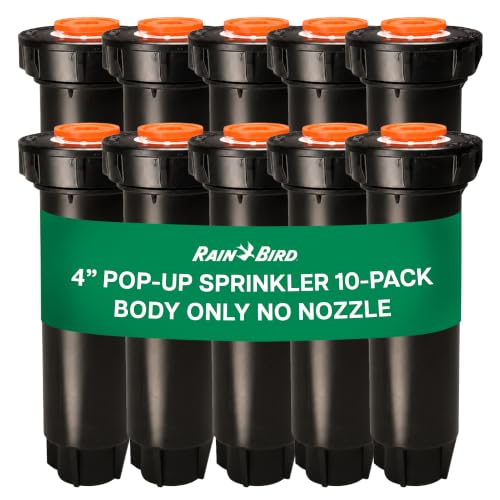
Customize Your Watering Setup - Build an irrigation system that fits your landscape. This 4-in pop-up sprinkler body comes without a nozzle, letting you choose the compatible Rain Bird 1800 Series nozzle that matches your coverage needs. No tools are required for quick nozzle changes.
Backflow Preventers in Irrigation Systems: Safety Essentials
When water pressure drops, contaminated irrigation water can reverse flow and enter your potable supply, so installing a backflow preventer is essential for protecting drinking‑water safety. You must select a device that meets Backflow prevention regulations and place it at the service‑line entry or meter. Check valves provide one‑way flow; pair them or use a series to add redundancy. Atmospheric vents break vacuum, while relief valves discharge excess pressure. Choose an Atmospheric Vacuum Breaker for low‑risk hose use, a Pressure Vacuum Breaker for moderate risk, a Double Check Valve Assembly for continuous pressure, or a Reduced Pressure Zone Assembly for high‑risk zones. Installation must be performed by certified technicians, and Certifying backflow prevention devices requires annual testing—except for basic anti‑siphon valves—to maintain compliance and safeguard water quality. Anti‑siphon valves are the only devices that do not require annual inspection. Properly maintaining these devices helps prevent cross‑contamination of your home’s water supply.